1984 theatre review: Orwell's nightmare reimagined
An all-new 1984 preaches a warped story of love across Scottish stages this autumn. Greg Thomas hails the production and wonders whether a little bit more group-think might actually be the thing that saves us
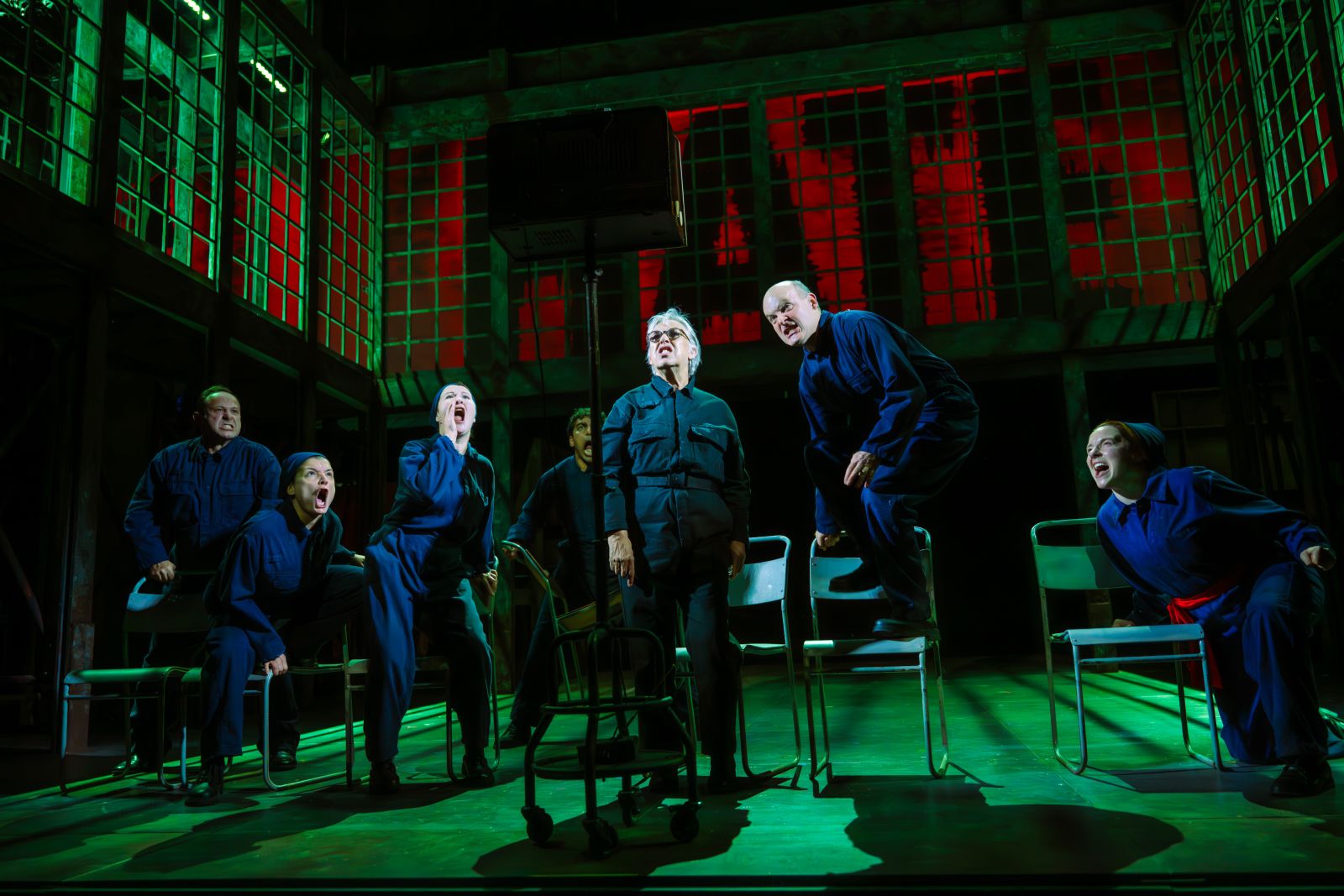
An eccentric, occasionally flawed, yet ultimately deeply powerful adaptation of George Orwell’s 1984, this new stage play from writer Chris Hannan and director Dominic Hill takes the unusual step of placing the drab tragedy of Winston Smith inside a frame narrative. Thus the first scene sees the author himself (real name Eric Blair, played as perhaps a little too cuddly a crank by Jack Tarlton) arriving for treatment at a tuberculosis hospital outside Glasgow, having travelled down from his island fastness in Jura. There, as in real life, he is treated by a doctor (Robert Jack) who fought on the opposing, fascist side in the Spanish Civil War, a conflict which profoundly shaped the writer’s sense of the dangers of totalitarianism, no matter the stripe.
The effect of this is, on the one hand, to present the events that follow as an extended fever dream of sorts, a hallucination populated by figures and scenes from his recent past and the environs of the sick bay. Most obviously, a woman to whom Orwell impulsively proposes en route to his treatment reappears as the forceful, red-haired Julia (Jessica Hardwick), the Junior Anti-Sex League stalwart who turns out to be a rebel in disguise, and in love, for some reason, with the damaged and mousy Winston. It’s an interesting exercise in speculative literary biography, although it arguably mutes the fearfulness of the world dreamt up.
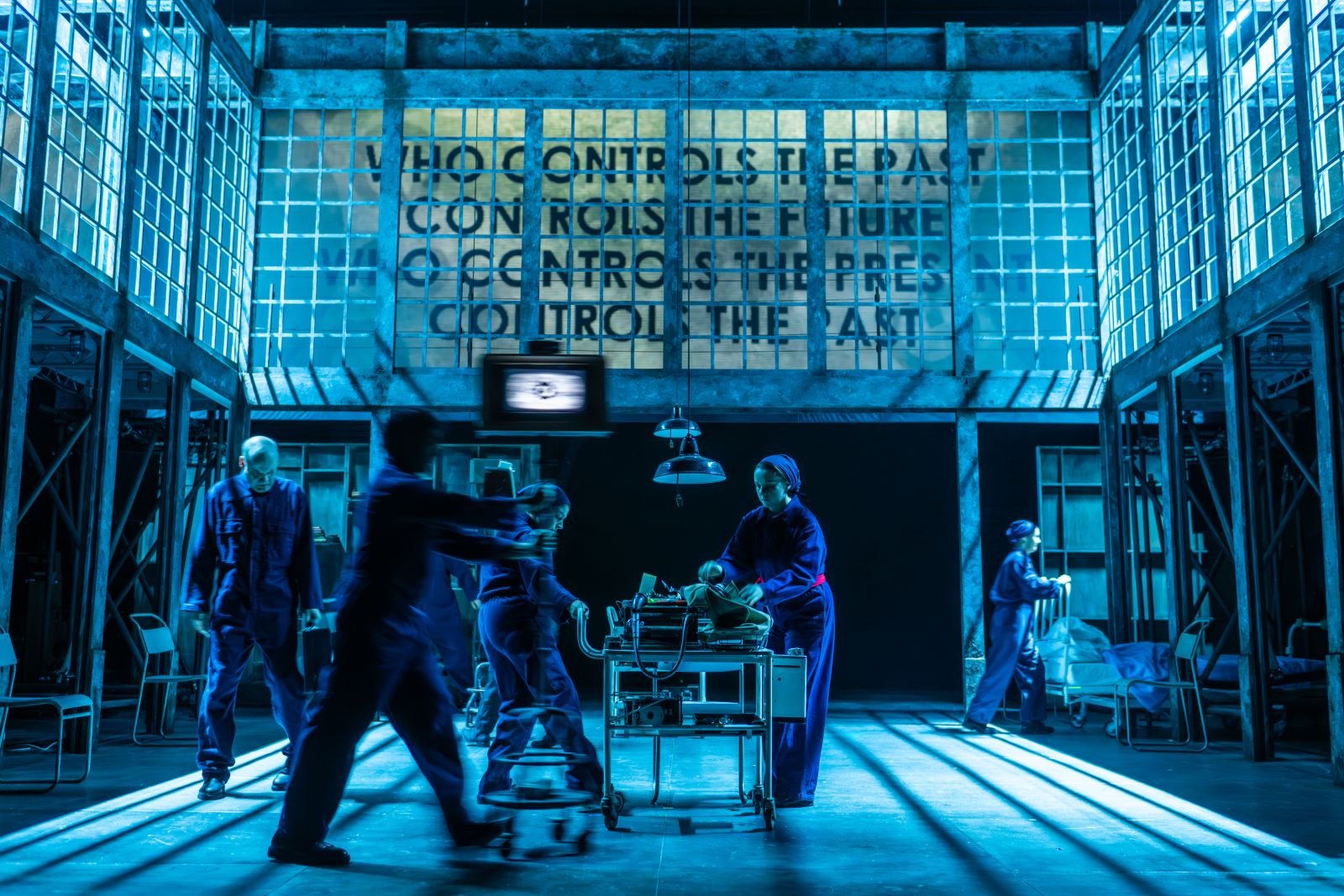
On the other hand, this writerly sleight of hand allows the tyranny of Big Brother’s regime to be presented via a kind of real-time analytical filter. Discussions between Orwell and his sometime Franco-loving lung specialist touch on the need to resolve seemingly irreconcilable differences in a deeper mutual trust and investment in material reality. Is it a bit heavy-handed? Perhaps, but who can deny the force of their arguments at a time when huge swathes of our society feel the most virtuous decision they can take is (paraphrasing Winston at his sad demise) to surround themselves exclusively with people who agree with them, facts be damned?
Then again, in so many ways, Orwell’s Stalinist dystopia is not the horror story for our times. We do not live in an era of state-infiltrated emotional lives but of rampant and gleeful individualism quickened by corporate interests. Indeed, the spectre of Big Brother is seemingly invoked as a nervous tick by the right to fend off even the most cursory gestures towards ideas of collective responsibility. The major challenges to our civilisation (the climate crisis above all) are arguably not to be solved by less group-think but more.
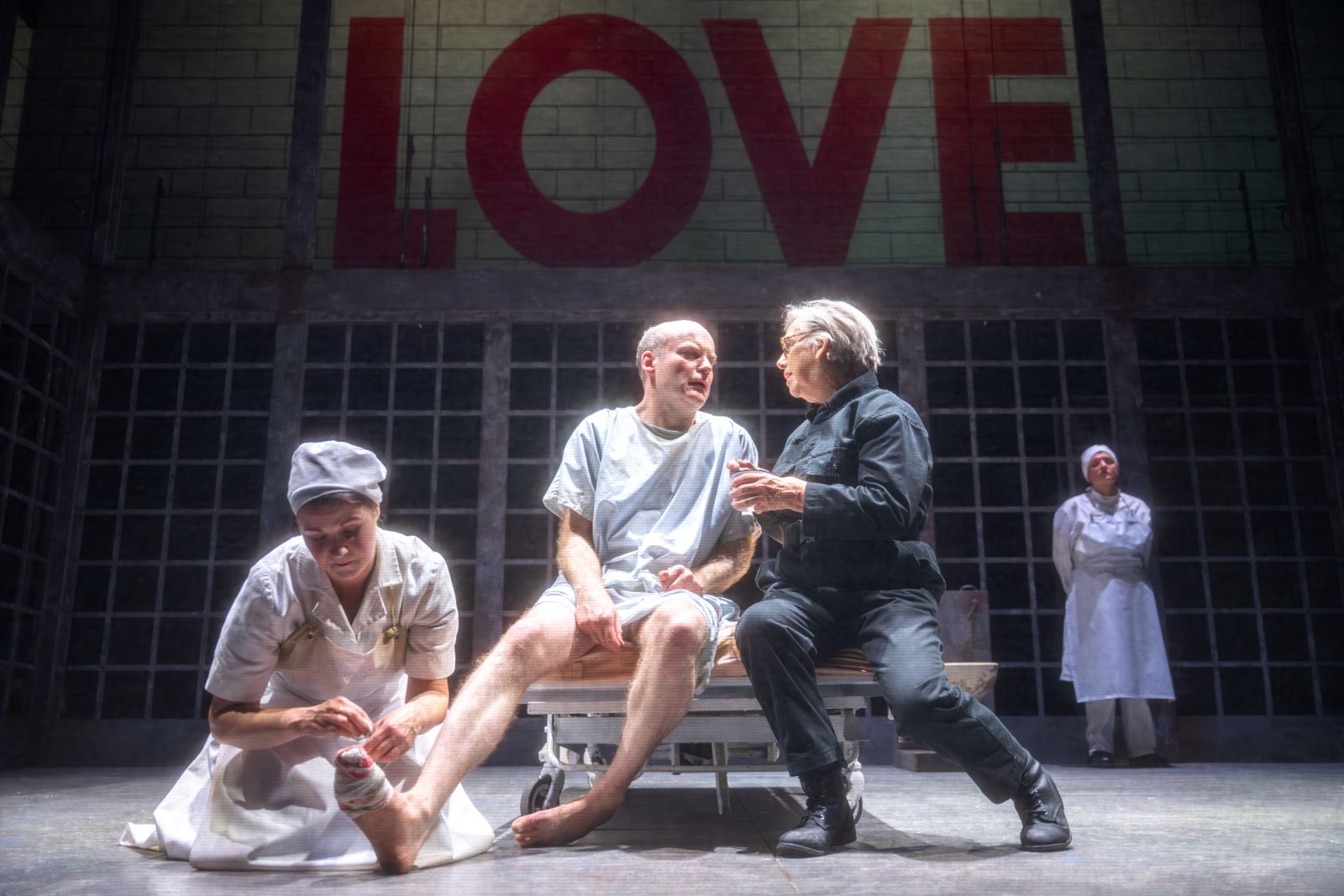
All of this seems moot, however, as the play rattles towards its horrendously lucid climax. A series of short, fragmentary scenes separated by blackouts and peals of harsh electronic noise show Winston and his sometime block-mates being relieved of their spirits in ministry cells. A single word, ‘love’, appears behind wire fencing around the upper level of the set, which has a kind of doomy modernist sanitorium vibe to it (think Finland in winter). Here Tarlton comes into his own, dredging up pitiful shrieks and howls that leave us in pieces too. Dr Dick and Eric have one last conversation which frankly deadens the shock of what has come before, but it stays with us, nonetheless. We understand something of the horror and evil of state-sanctioned violence and fear, and we thank our lucky stars that this dystopia is different from our own.
1984, Dundee Rep, until Saturday 10 October; His Majesty’s Theatre, Aberdeen, Tuesday 13–Saturday 17 October; Lyceum Theatre, Edinburgh, Tuesday 27 October–Saturday 7 November; reviewed at Citizens Theatre, Glasgow.