Kheanna Walker: 'I’m showing that I’m proud to take up space'
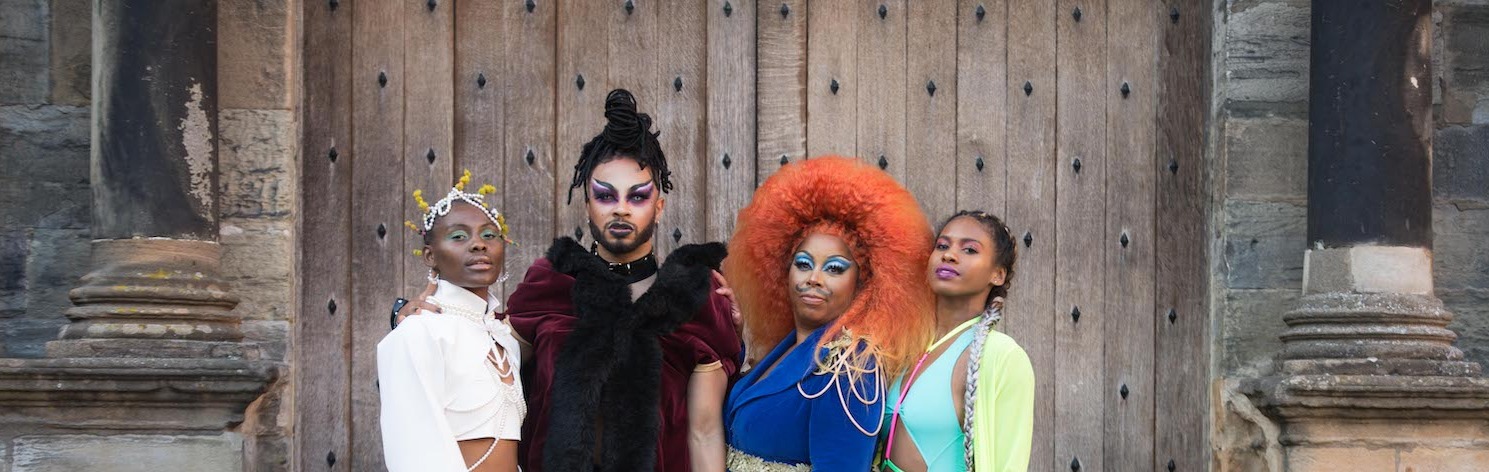
It’s a shocking tale, and doubtless one that’s seldom (if ever) recounted when A Midsummer Night’s Dream crops up on the school curriculum. In 1594, a royal entertainment for James VI was set to take place at Stirling Castle, featuring a lion pulling a chariot. But at the last minute, out of fear for guests’ safety, the lion was removed. It’s thought the incident may have gone on to inspire a joke in A Midsummer Night’s Dream, which was first performed a year later. What the joke fails to mention however, is that replacing the lion pulling the chariot was an unnamed Black man.
‘I was only told about this by Adam [Castle, producer] and Rhys [Hollis, performer] when they sent through the brief of the film,’ says Kheanna Walker, a pole-dance artist and one quarter of the cast of beguiling art film OMOS, which takes this degrading story and stares it down with a powerful 20-minute display of Black artistry. Walker had answered an ad looking for artists to audition for the project, coming at a time when she was on ‘a mission to do more for Black culture, the Black community, Black artistry, Black excellence’.
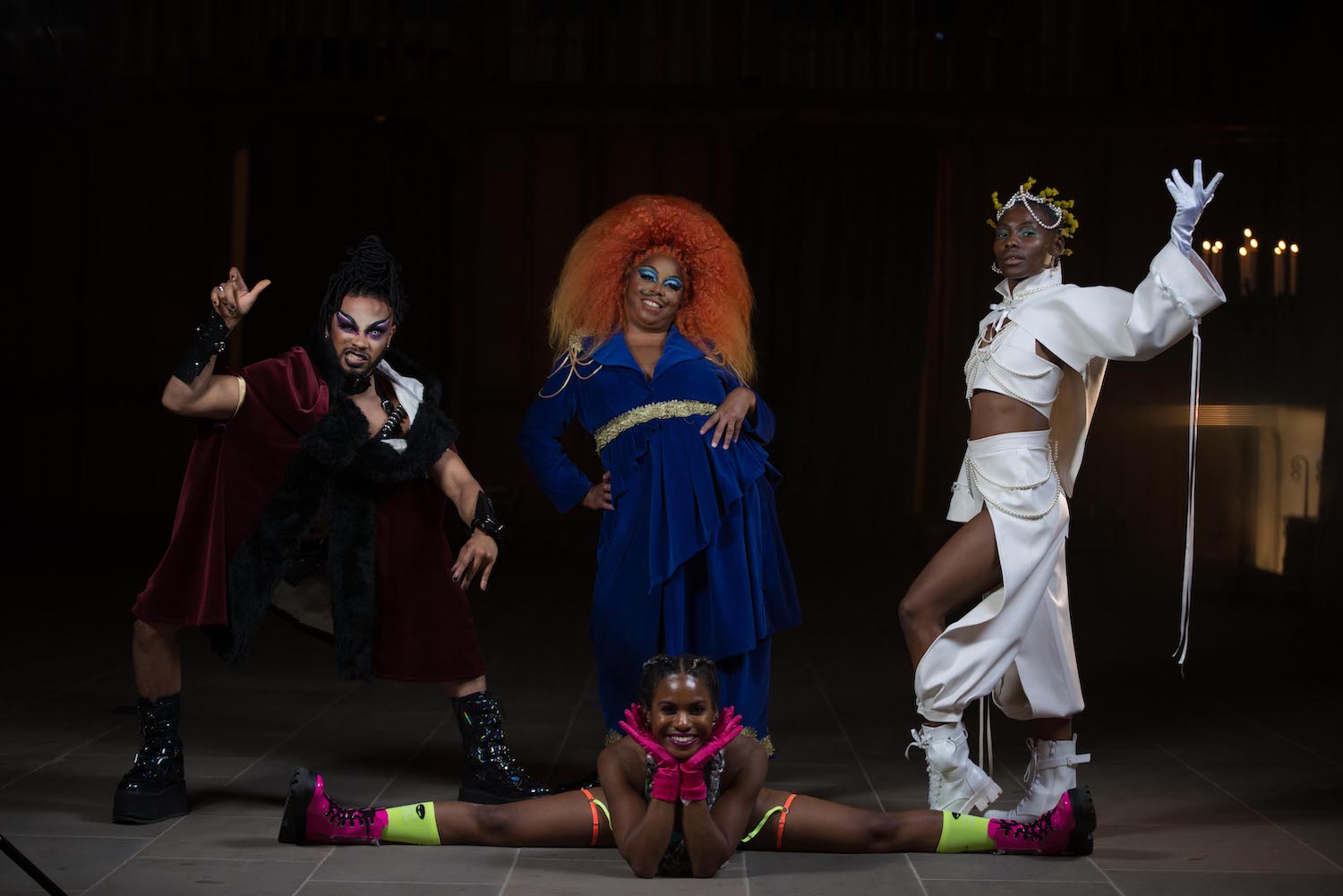
(From left) Rhys Hollis, Andrea Baker, Kheanna Walker and Divine Tasinda / Picture: Washington Gwande
Shocked by the story, she quickly saw how her training as a pole dancer (which Walker says is about ‘beauty, grace, strength and flexibility’) could create a dance that fitted with the essence of this piece. ‘The attitude of my character is very confident, very in control. I was like a mystical fairy, confident in my movement, confident in my charm, like a queen; I was trying to exude a neon queen vibe.’ In the film, Walker wears acid pastel colours and enormous spike-heeled boots as she entwines herself around a huge metal pole. She’s not trying to blend in with the forest around her but to stand out. ‘It’s like, I am here. I’m taking up space and I’m showing that I’m proud to take up space. I’m not going to just blend in with the foliage. I’m going to actually stick out.’
OMOS was filmed mainly in Puck’s Glen in Dunoon, a fertile, misty woodland that teems with elfish atmosphere. It starts out with a percussive, electro-rhythmic soundtrack, to which Divine Tasinda performs a sharp, sensual solo of fierce street dance. Tasinda then strides through the forest to come upon Rhys Hollis, who recites a blistering poem about racism and identity (‘you’ve slaughtered my past and I don’t know how to breathe’). Together they journey deeper, both watching Walker as she commands her pole. The drama is amped up as the trio processes calmly towards the Great Hall of Stirling Castle, the scene of the racist act, to behold . . . well, you’ll have to watch it to find out. But just to say that it’s a glorious, joyous, life-affirming, surreal treat from opera singer Andrea Baker.
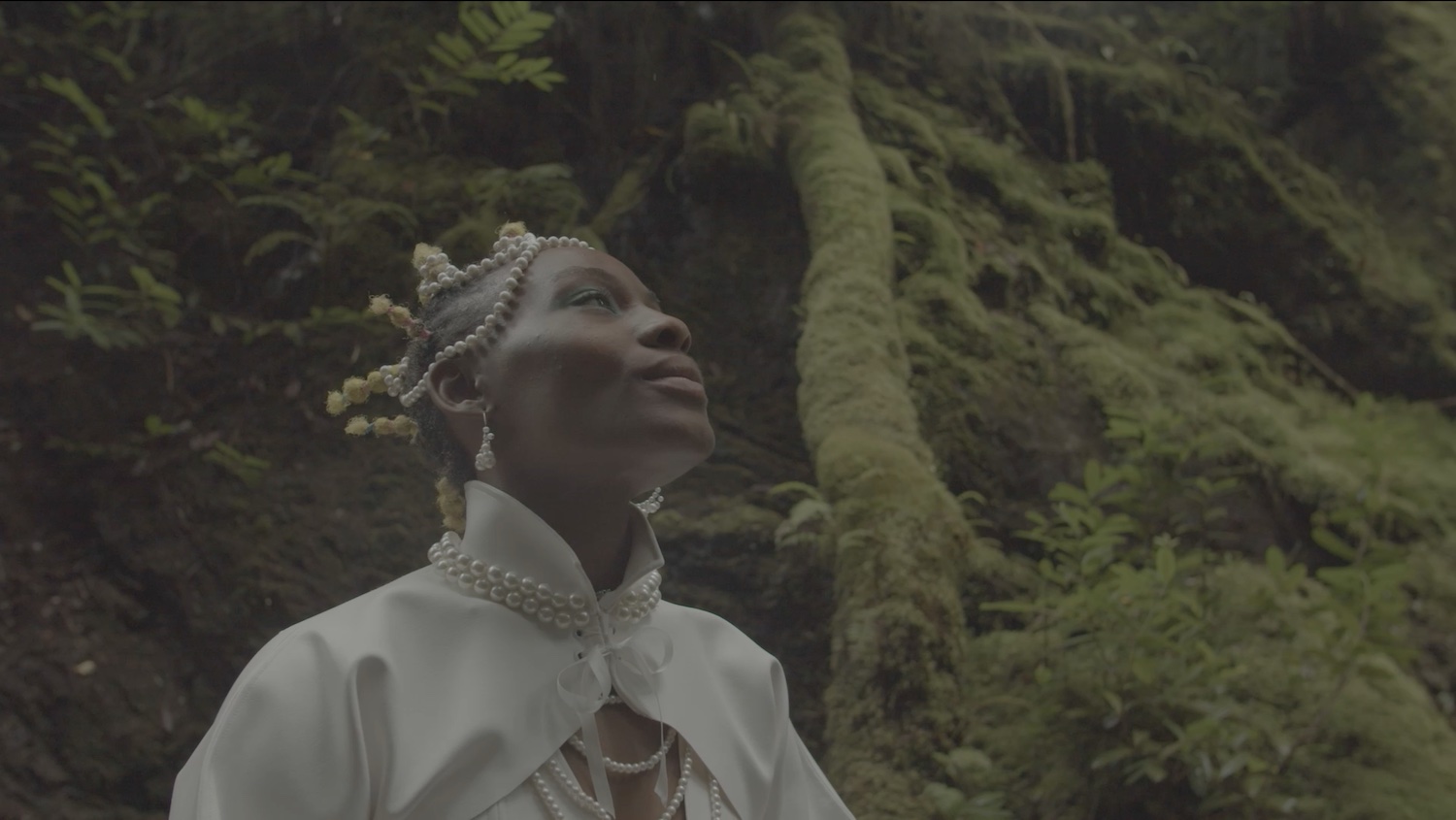
Divine Tasinda in OMOS / Picture: Washington Gwande
The theme of watching and being watched is strong throughout, and was intended, Walker says, to be a show of solidarity. ‘We’re able to not only share our art, but to experience watching our brothers and sisters.’ It seizes back the gaze from the Great Hall guests of 1594 and uses it to support, to care and above all to show appreciation for the beauty of each other. ‘We’re all from different disciplines, but we’re all able to not only share, but also witness and give support. And also to appreciate the diversity and huge abundance of talent that all of us have, especially as a Black community.’
OMOS, Royal Scottish Academy, Edinburgh, Saturday 3 September–Sunday 2 October.