A Fragile Correspondence visual art review: An evolving examination of Scottish landscape
Selected to represent Scotland at the 18th Venice Architecture Biennale, A Fragile Correspondence makes its UK debut at V&A Dundee. Examining language, community and equilibrium, Jennifer McLaren praises the fresh discoveries at this exhibition’s every turn
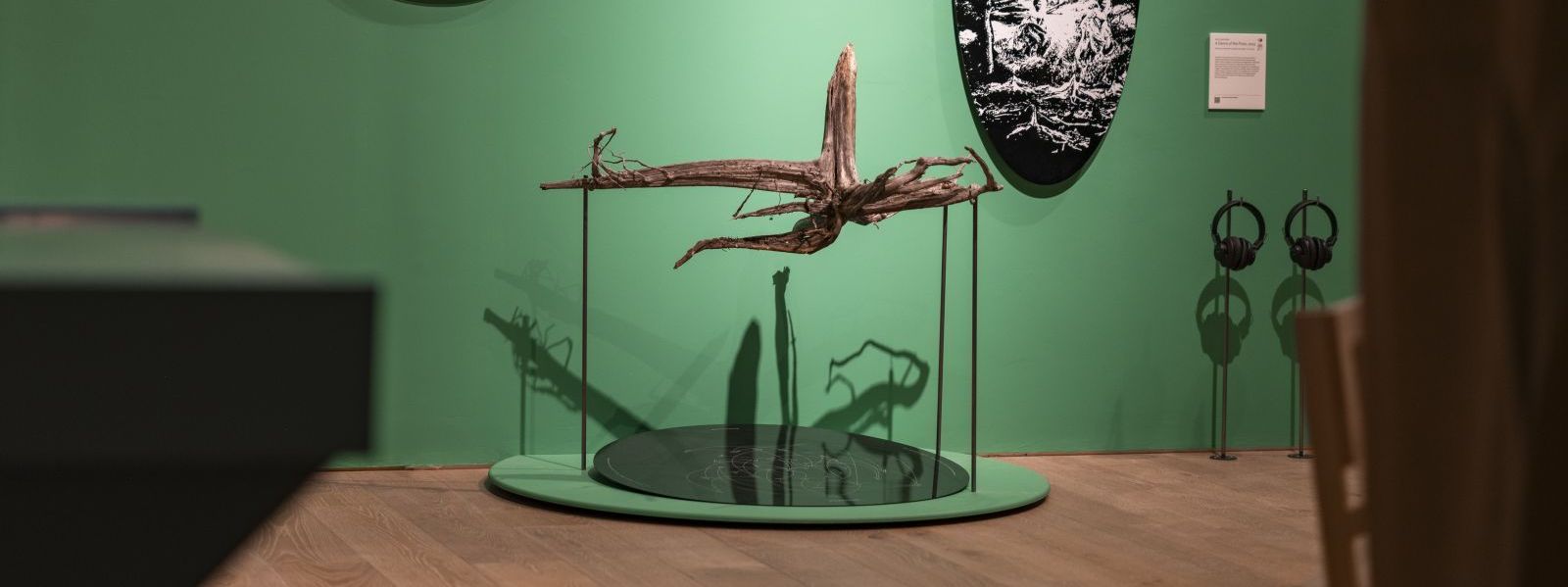
Commissioned by the Scotland + Venice partnership and curated by a team consisting of the Architecture Fringe, -ism magazine, and /other (a collective of POC architecture graduates and creatives), A Fragile Correspondence examines three differing Scottish landscapes and creative responses to them by architects, artists and writers, all seeking new ways of working in connection with the land. Their subjects range from the forests around Loch Ness to the post-industrial remains of the Ravenscraig steelworks in North Lanarkshire, and the Orkney archipelago.
The theme of language plays a significant role, with a ‘Lexicon’ section dedicated to the sharing of words and phrases by visitors. A wooden tabletop which exhibition-goers were encouraged to write on in Venice now forms part of the display. Meanwhile, new words and phrases have already been shared: the Dutch word ‘gunnen’, from Italian ‘passeggiata’, and in Scots ‘bosie’.
‘Language is powerful, and shapes how we understand the world around us,’ reads the wall in the first room. Moving into the studies of the Abriachan and Strathnairn forest communities near Inverness, the idea of ‘extraction’ is introduced, versus the Gaelic ‘cothromachadh’ which means to find equilibrium. The Highland Clearances displaced communities in the 18th and 19th centuries with deforestation following in its wake for the purposes of industry and war. Mairi McFadyen’s audio recording ‘Abriachan Forest’ explores its ongoing story, while Dele Adeyemo’s ‘A Dance Of The Pines’ considers the impact of human activity on the ancient Caledonian Forest.
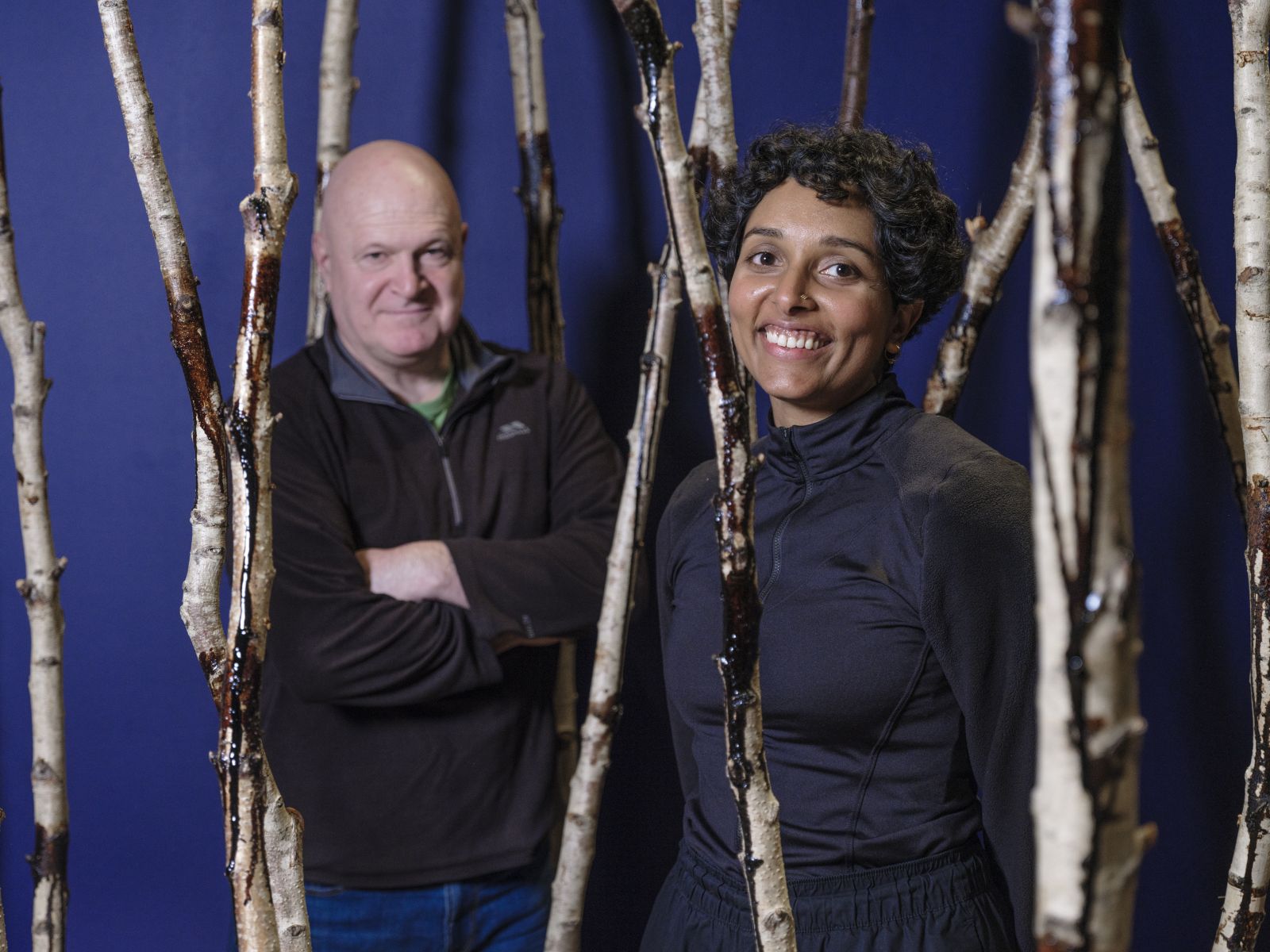
Turning to the Scottish lowlands and the site once home to the former steelworks at Ravenscraig, the term ‘erase’ is introduced along with the Scots ‘saunt’, which means to vanish, especially in a sudden or mysterious manner. Films and recordings highlight the steelwork’s once-productive past and what it meant to that community. Meanwhile, Frank McElhinney and Hamshya Rajkumar look at how 200 species of flora and funga have come to inhabit the site since its closure in 1992. Their ‘Extraction’ proves a striking intervention among the images and films. These silver birch saplings were gathered from Ravenscraig and arranged in two clusters: six, the atomic number of carbon and 26, that of iron. Steel is formed when iron and carbon are combined.
Finally, Orkney’s diversity is celebrated, from the clay earth deposited during the last Ice Age to the variegated soils discovered at different sites across the archipelago. The words ‘fragment’ and ‘adapt’ are explored along with its remote and splintered geographical character. This well-considered exhibition has complex themes running throughout and the open nature of the correspondence means it can, and will, evolve each time a new visitor enters its space.
A Fragile Correspondence, V&A Dundee, until Sunday 25 May.