Babystar film review: Influencer offspring
Joscha Bongard’s film explores the dystopian reality of growing up online
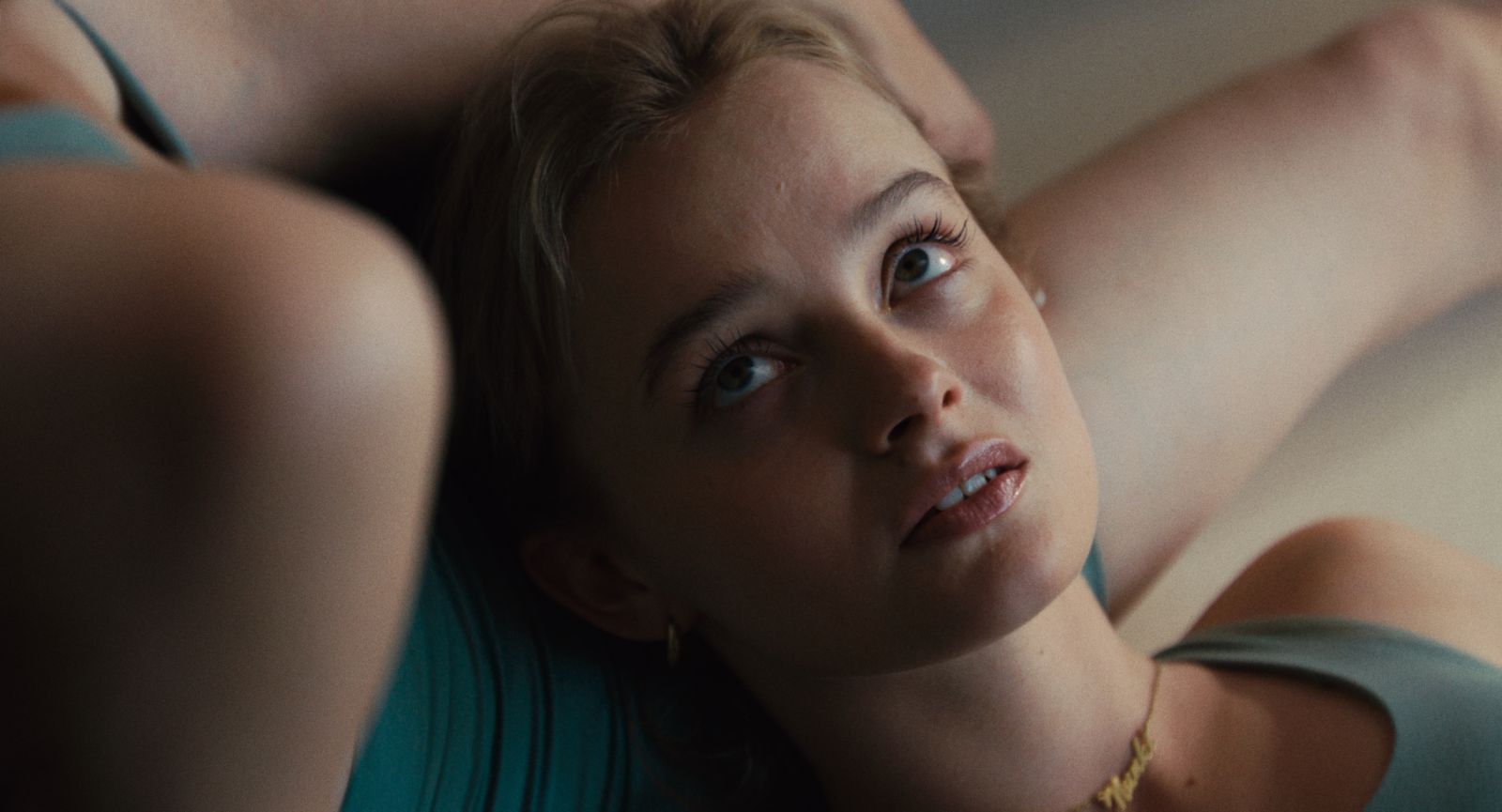
The whole life to date of German teenager Luca (Maja Bons) has been compressed into short-form content. From her mother’s ultrasound to Luca’s first words, first kiss and first period, each and every milestone in her brief existence has been recorded, edited, uploaded and shared to a family YouTube channel by a pair of overzealous, botoxed parents armed with handheld tripods. Now 16, Luca has millions of followers of her own and vlogs her way through a life of sepia-filtered opulence within the minimalist walls of the family mansion. News of the pending arrival of a younger sibling comes with tension as Luca discovers just how far her parents will go to keep the content wheel churning.
Joscha Bongard’s Babystar opens with a group of young competition winners arriving at Luca’s house, overjoyed to be meeting their favourite influencer in the flesh. When given the chance to sit down with Luca and her parents, the children fire questions at their idol, enquiring about her love life, income and weight. When asked how many friends she has, Luca hesitates, responding: ‘I have 4.3 million followers on TikTok.’
Over the next 90 minutes, it slowly dawns on Luca that a successful life on camera does not necessarily translate to a happy one off it. Through passive-aggressive conversations with her data-driven parents and downbeat Facetime calls with her own AI clone, Luca learns she must free herself from the artificially sanguine world that has been crafted for her. Though it bubbles with a tension that never quite reaches boiling point, Babystar does succeed in illuminating what may have been considered a work of dystopian sci-fi 20 years ago, but is now just an accurate portrayal of contemporary society.
Babystar is in cinemas from Friday 25 September.