Camilla George on her career in jazz: 'I found it worse being black and female'
Camilla George has carved out a unique niche in the UK’s jazz renaissance with a heady brew of politics, afrofuturism and hip hop spliced through her music. She chats to Fiona Shepherd about childhood competitiveness, finding her musical tribe and taking control
.jpg)
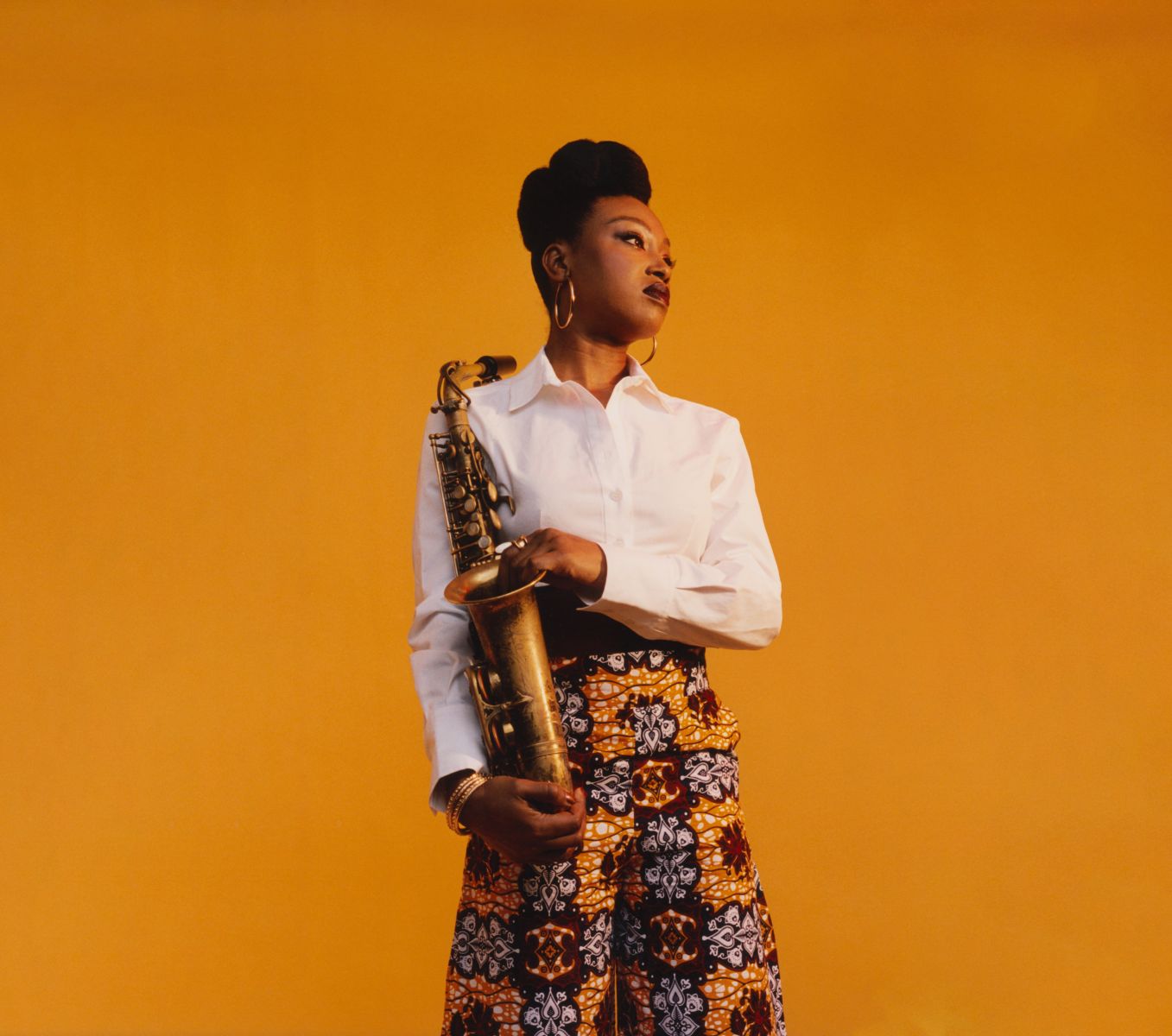
The first time Camilla George encountered a saxophone, it was bigger than she was, a seeming beast of a tenor sax discarded at her mum’s friend’s house after a break-up and just asking to be tamed. Like some Odyssean challenge, everyone else had tried and failed to get a note out it. Step up the small, plucky eight-year-old dwarfed by the instrument who nevertheless managed to make the thing sing. Her fate was sealed: she would play saxophone.
At school, she was fobbed off with piano. Nice try. A mix of pester power, good fortune, raw talent and force of will led her to alto saxophone, the instrument of her dad’s favourite jazz musicians, Charlie Parker and Jackie McLean. ‘I’d be sitting on my dad’s knee and he’d be telling me about all these players,’ she recalls. Meanwhile, her mum was singing her to sleep with Beatles tunes.
Her parents had seen Fela Kuti play in the 70s when they lived in Nigeria. George was three years old when her father was deported. ‘The idea for my parents was to live the African dream,’ she says. ‘That didn’t work out to plan so we ended up in Harlesden; quite the contrast.’ Later she discovered that her Grenadian grandfather played saxophone. ‘I suppose it’s in the genes,’ she says. At secondary school, she sharpened her skills. ‘I had lessons with another boy and we were very competitive which is another reason why I practiced. I wanted to be better than him every single lesson.’
That determination saw her through some discouraging times. ‘In London, you didn’t see black jazz musicians. All the concerts I was going to there was nobody that looked like me.’ There was a notable exception in Jazz Jamaica, the glorious jazz reggae fusion collective founded by Jazz Warriors bassist Gary Crosby. Aged 11, the bold George attended one of their shows with her mum and informed their saxophonists Denys Baptiste and Jason Yarde that she was going to grow up to be just like them.
She was duly invited to the workshops run by Crosby’s hugely influential Tomorrow’s Warriors music education programme, an organisation he founded with his partner Janine Irons whose alumni is a roll call of the UK’s brightest young jazz things, from Soweto Kinch and Shabaka Hutchings to Ezra Collective and Nubya Garcia. ‘I joined that family,’ says George with pride. ‘It was creating a community of people that maybe didn’t feel comfortable going to the Ronnie Scott’s jam session at the time but were comfortable having a jam with Denys Baptiste and Soweto and Gary on a Friday evening at the Southbank Centre.’
George’s experience of more formal music education at Trinity Laban Conservatoire in Greenwich was not so happy. ‘I didn’t have a lot of confidence,’ she says. ‘It was a hard time because my dad passed away.’ Like many of her peers, she graduated with the technical and artistic skills to take her forward but not the practical knowledge to help her catch a break. Again, the inner bolshy eight-year-old took over.
‘I was knocking on doors and doors weren’t opening, so I learned how to do a lot of stuff myself,’ she says. ‘I made up an email address and pretended I had an agent to get gigs and look more professional. I learned how to book and advance gigs. On my first tour, I drove the bus, with some very hairy moments. My band won’t get in the car with me subsequently!’
George’s regular band features a number of her fellow Warriors, including guitarist Shirley Tetteh and trombonist Rosie Turton, as well as pianist Sarah Tandy. George was initially sceptical about the Warriors Collective initiative for female musicians, fearing tokenism. ‘There weren’t many women coming through but I found it worse being black and female; now I think it’s flipped and a big part of that was Tomorrow’s Warriors.’
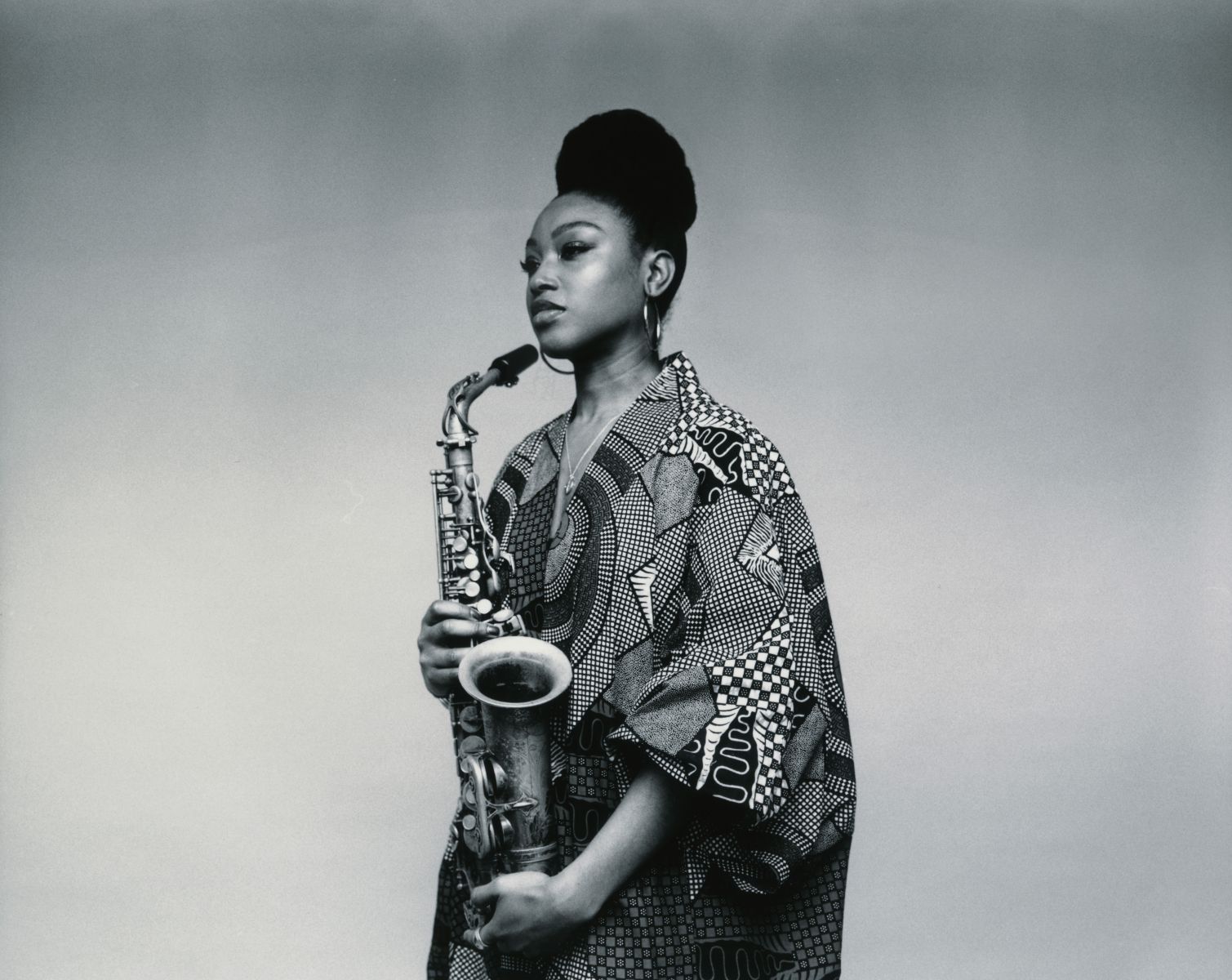
Mindful of her eight-year-old self, George now tutors the next generation of budding saxophonists at two schools and through the Warriors’ outreach programme, seeking to keep access to music tuition as open as possible. ‘It’s important we have free programmes in schools because you have kids that really live for music but they have no outlet and their parents might not have the money to buy them an instrument or pay for the lessons but they’re all in the same space getting the same opportunities.’
As for George, she is set to shine at the International Festival, taking part in Catriona Price’s celebratory Routes To Roots collaboration with Argentinian outfit El Guapo. At her own concert, she’ll play with American drummer Rod Youngs, her original bassist buddy Daniel Casimir and Brit School graduate Renato Paris on piano and vocals, who George reckons sounds like ‘a little Donny Hathaway’. She hopes to preview some new music from an album she’s working on, following up 2017’s Isang, 2018’s The People Could Fly and 2022’s Ibio-Ibio.
As with all her albums to date, George continues to immerse herself in her family’s Ibibio culture, drawing on their memories and her mother’s library of books for inspiration. While the music is still taking shape, George can say that ‘it’s more of a spiritual take on the culture, delving into the individual gods, but not in an overtly religious way. It’s a way of living life in these tricky times.’
Camilla George, 26 August, 8pm, and is part of Routes To Roots, 27 August, 8pm; both concerts at The Hub.