Comedians on the wavering allure of the US: 'I’d be scared to go back right now'
Despite recent events, the concept of Americana, perhaps an affection for the US of our younger years, continues to influence comics and performers on this side of the Atlantic. Jay Richardson gets an outsiders’ perspective about why brand America still fascinates
With streaming and scrolling fragmenting audiences across increasingly niche corners of entertainment, mainstream American culture arguably survives only in relentless superhero reboots, soulless musical adaptations and endless franchise spin-offs, a zombified, nostalgic pastiche.
For pallid British teenagers watching the likes of Friends, Frasier and The Fresh Prince Of Bel-Air in the nineties and noughties, the attractiveness of the characters and their lifestyles contrasted sharply with our own self-deprecating sitcoms. Actor and comedian Kieran Hodgson saw success in those portrayals: ‘I saw my future as American.’ Character comic Lorna Rose Treen instinctively snapped into a New York or valley girl accent when she was playing with her friends because 90% of the content she consumed came from across the Atlantic. ‘My fantasies and imagination are intrinsically linked to the American Dream,’ she says. ‘It’s so evocative and engaging, especially when you’re a kid, this idea that you can be anyone or anything.’
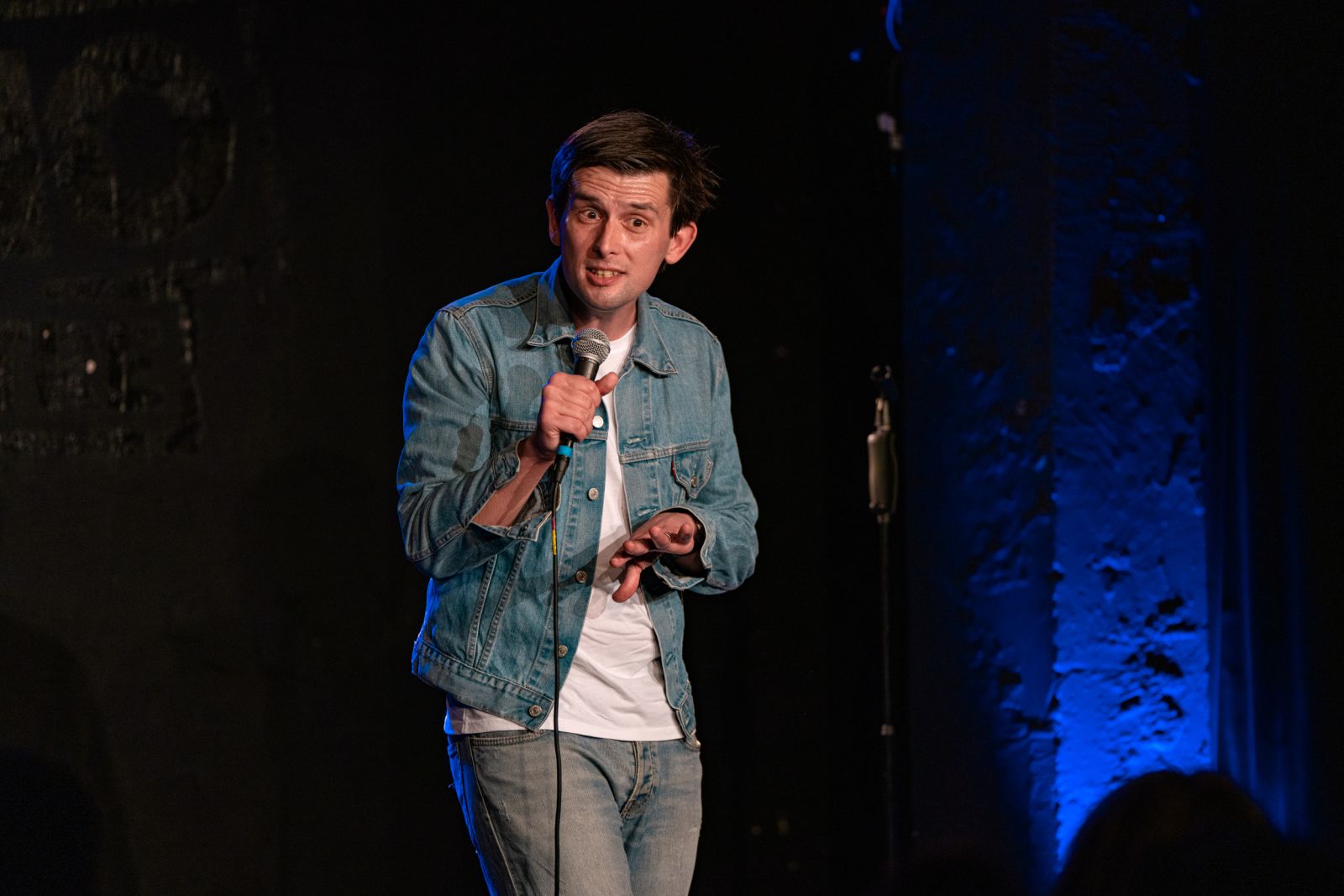
‘Growing up with the nineties as your formative decade, with a sense that opposition to America had disappeared geopolitically, it felt that the whole enterprise was joyful, aspirational and the future for humanity,’ reflects Hodgson. ‘So it’s funny, speaking to people a couple of decades younger than me: they don’t have that feeling at all.’ Despite its flagging cultural soft power, Uncle Sam’s iconography remains relatively strong. When Hodgson relates in his show Voice Of America how he failed to master a US accent for his bit-part in 2023 cinematic megaflop The Flash (sharing his best John F Kennedy, Bill Clinton, George W Bush and um, Jeff Goldblum along the way), he takes the stage in double denim to the bombast of Bruce Springsteen’s ‘Born In The USA’, the world’s No. 1 anthem to patriotic ambivalence.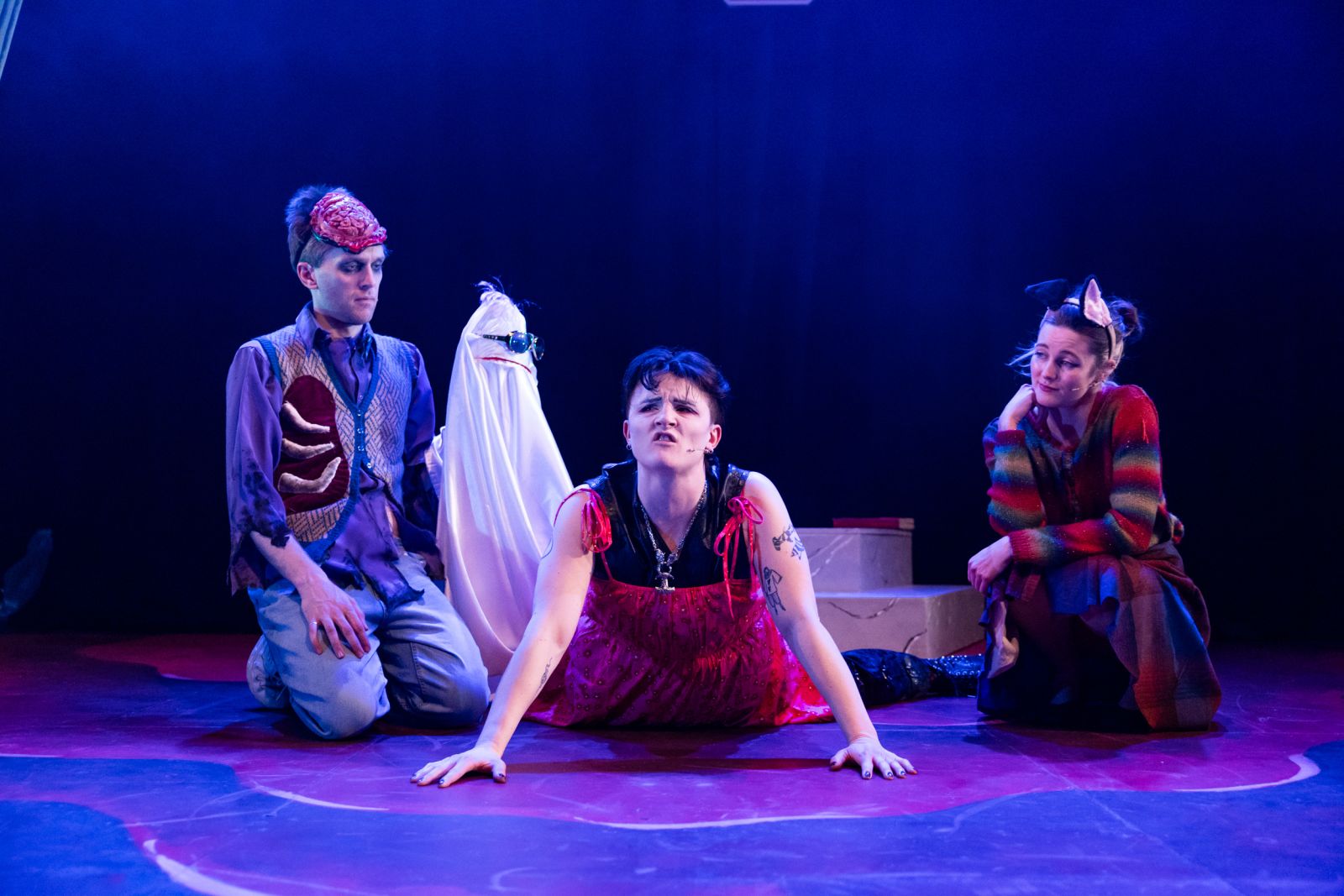
Likewise, Airlock Theatre’s Count Dykula, from the creative trio of Robbie Taylor Hunt, Eleanor Colville and Rosanna Suppa, pays homage to Disney, power ballads, WWE and fake boobs. It’s the company’s biggest, brashest stage romp yet, with the scale of their Fringe debut becoming a joke in itself because ‘gigantism, big buildings, huge sets and sweeping locations are synonymous with the States,’ observes Taylor Hunt. In the familiar US high-school setting of cheerleaders and jocks, ‘characters are established and we move through scenes quicker because the tropes are so well known,’ Colville acknowledges. Yet in Count Dykula, the cheerleaders are zombies, the jocks are werewolves and ‘America is the hegemonic mainstream’, states Suppa, who plays the titular queer British vampire, an outsider in the ‘cliquey, mega-exuberant environment’ she finds herself in.
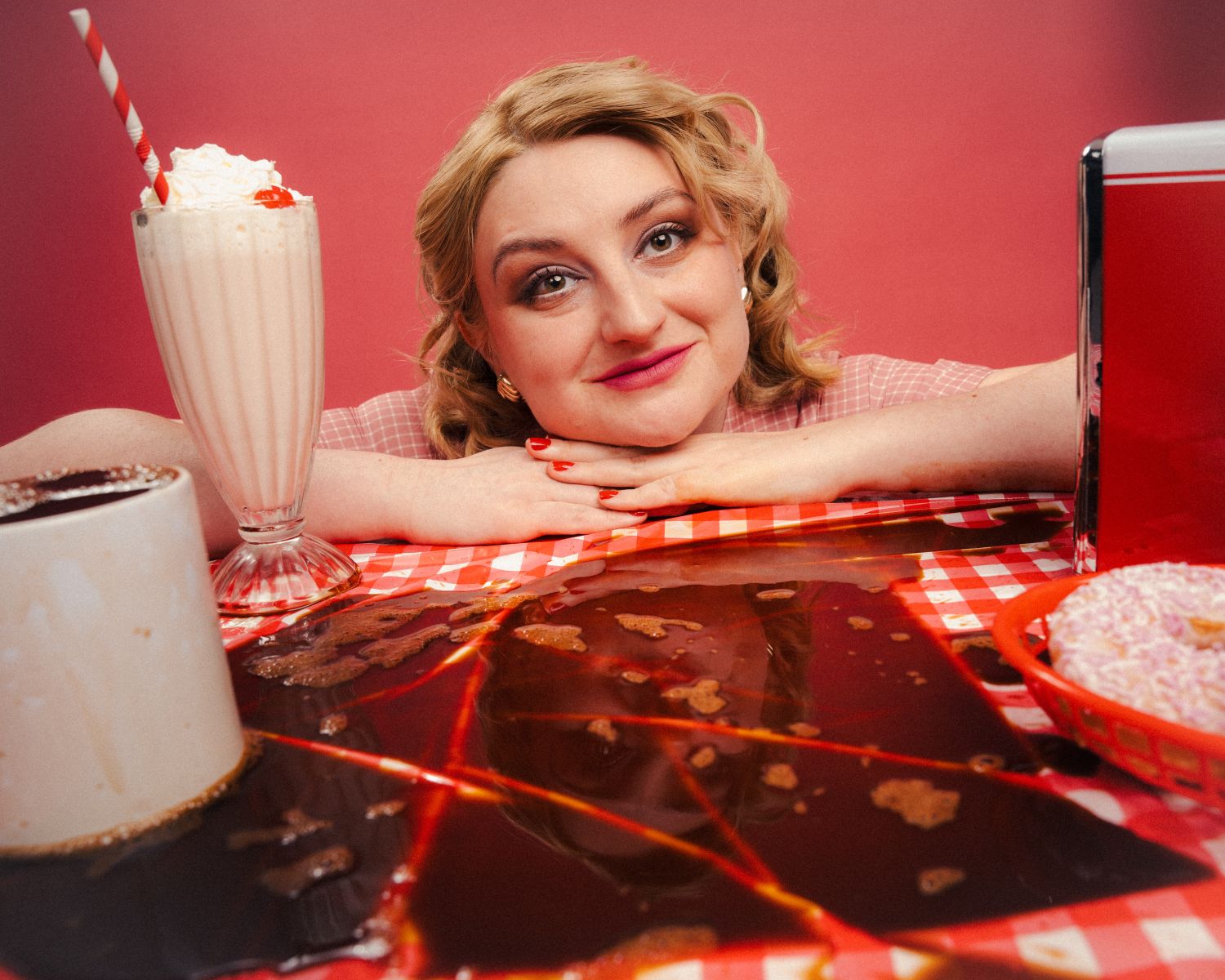
Treen serves up her highly anticipated sophomore Fringe hour in that most apple pie of settings: a diner. For her dozen disparate characters, ‘it just felt like a really good holding space… a unifying element like they had in shows like Friends, Saved By The Bell and Gilmore Girls,’ she explains. At Edinburgh University, she had played small, nervous, inhibited characters. But after later studying clowning, Treen was encouraged to be bigger, more confident, take up more space, ‘have fun rather than hide’. She questions if she would have conceived 24 Hour Diner People if she hadn’t ‘broken through’ her inhibitions. ‘It’s so stupid and stereotypical. But there’s less self-consciousness or self-deprecation. Putting on an American accent frees me, possibly because I don’t hear my own voice in my head, my inner critic.’
As with Count Dykula, which blends overt nods to the Twilight saga and Buffy The Vampire Slayer with a Mean Girls-style exploration of cliquishness, Tina Fey’s high school satire was also a massive influence on Treen, even if she and her friends ‘watched it far too young, thinking it was more of a documentary about how girls should behave.’
Like Fey, Treen leads a US-style writers’ room on her Radio 4 Woman’s Hour spoof, Time Of The Week. But she hasn’t visited the States as an adult (‘I’d be scared to go back right now’) and has ‘truly come to appreciate in the past few months that my wholesome view of America based on sitcoms isn’t real.’
‘There’s always been tension between America’s ideological and cultural fruits, alongside the reality of an enormous superpower defending its interests brutally and cynically,’ says Hodgson. ‘There’s always disillusionment when you clock what the Marines and CIA are up to. But when Americans chose Donald Trump for a second time, with full knowledge of everything he is, then you have to question if the first part of that balance is even there anymore? As a Western European country, we’re still wholly dependent on the US holding up the sky. And it feels scary that we’re bound to something no longer resembling what we want it to be.
On the topical observations in his show, Hodgson says: ‘With this president, something mad is always happening. I just hope that events don’t get so terrifying that I have to swerve back from it.’ The four-time Edinburgh Comedy Award nominee views his hour as ‘a quest to prove that Trump doesn’t define America. I use every trick in my comedic playbook to keep him and what he represents at bay. But there’s honesty in acknowledging that he overwhelms everything.’ Similarly, Count Dykula’s villainous Scarlet Fang, the vampiric, breast-enhanced university president, wasn’t imagined as a comment on the current White House incumbent. ‘No one’s expecting gritty political satire from us,’ Suppa reflects. ‘Initially, we weren’t super-explicit about her Trumpisms. But we couldn’t avoid it. Writing an authoritarian figure, we had to lean into him.’
Butch Dykula resists the ultra-femme regime she finds herself in. And in Treen’s equally daft hour, there’s an understated celebration of diversity in the oddballs gathered in her ‘liminal’ diner, alluding to the ‘unnerving’ other America of David Lynch, Stephen King and The Twilight Zone. Alongside a teenager sporting braces and oversize glasses who’s just had her first kiss, a trucker with exceptionally long arms and a trad housewife robbing the joint, there’s the cabaret singer who’s clearly ‘not right’. As Treen explains: ‘The Simpsons meets David Lynch is the sweet spot of my humour because if things are saccharine for too long, something bad needs to happen. I’m a weird performer. And relatively speaking, there’s still very few women doing stupid stuff, so it feels political to do this rather than talk directly about my identity.’
As for her main character, the diner’s dour, frustrated waitress, she insists there’s beauty in the ‘relentlessness and boredom of waitresses, who are featured in so many American TV shows and films only as side characters. ‘One of the great things about doing a show where everyone is a woman, is taking someone who shouldn’t be the star and putting them centrally, giving them a voice.’
Kieran Hodgson: Voice Of America, Pleasance Courtyard, 30 July–24 August, 9.30pm; Lorna Rose Treen: 24 Hour Diner People, Pleasance Courtyard, 30 July–24 August, 6.20pm; Count Dykula, Pleasance Dome, 30 July–25 August, 5.30pm.