Greg Thomas on Edwin Morgan: ‘He nudged Scottish literature into the modern world’
Sonnets and poems were the literary bread and butter of Scotland’s late Makar, Edwin Morgan. But as Allan Radcliffe discovers, a new publication shows that his flair for experimentation was just as vital
More than 15 years since his death, the legacy of Edwin Morgan, the first Makar, or national poet for Scotland, continues to grow. His work is continually anthologised and studied in schools. Since 2012, the Edwin Morgan Trust, established through a behest in his will, has nurtured poets under the age of 30. In 2021, on what would have been his 101st birthday (the pandemic having put paid to centenary celebrations), 101 poets were invited to contribute a single word to the creation of a concrete poetry poster, a kind of linguistic collage in the shape of a pyramid.
That project, which straddled literature and visual art, may seem worlds away from the sonnets and poems of social commentary for which Morgan is known. Yet, judging by a new collection of his more experimental work (which includes visual and sound poetry, collage and hand-drawn poems), such innovation was part of his oeuvre from an early age.
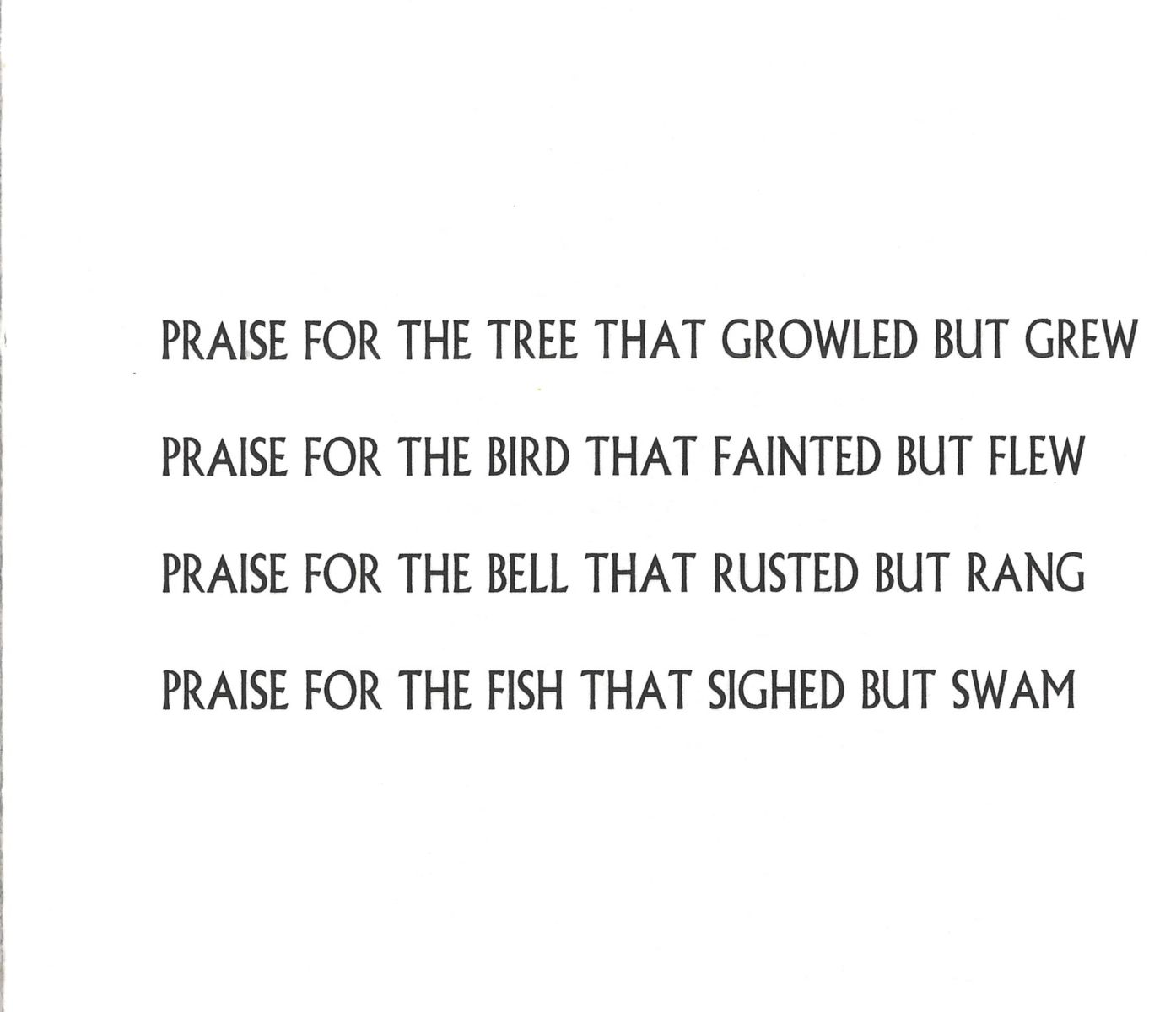
‘He always felt this side of his work was central to what he was trying to do as a poet,’ says Greg Thomas who, alongside Julie Johnstone, edits A Home In Space: Selected Concrete, Visual And Sound Poetry. ‘It’s fair to say that he has become best-known for his work in what you might call more traditional styles, so I think there was a need to redress that balance.’ Thomas, who describes himself as a ‘lapsed academic’ with a PhD in concrete poetry in Scotland, now works as a poet and arts journalist. He and Johnstone, a poet and one-time head librarian at the Scottish Poetry Library, were initially approached by Robyn Marsack from the trust, who felt it was important for this side of Morgan’s legacy to be better understood.
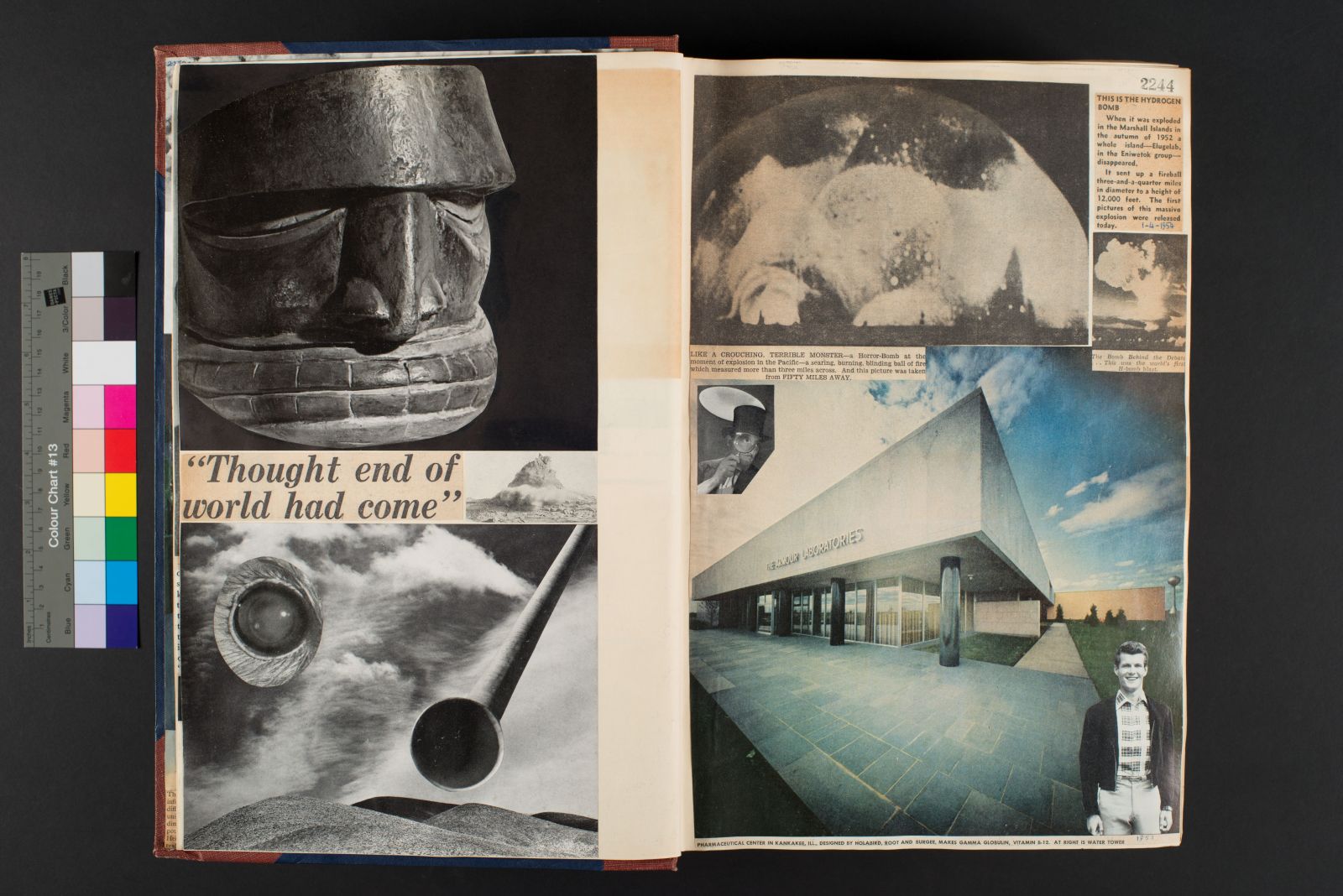
The pair spent time immersed in archives at Glasgow University and Mitchell Library, poring over scrapbooks that Morgan compiled from the age of 11 or 12 through to the mid-1960s. These ledger-style books, featuring images from magazines, pasted-in poems, paintings and newspaper headlines, form an entire chapter of their book. Thomas and Johnstone also unearthed hidden gems, including surrealist-style pencil sketches he made in his teens and early 20s.
As Thomas points out, the tension in Morgan’s work between the avant-garde and traditional forms, reflects the contradictions inherent in his life. ‘One of the things that gets buried in the cuddly idea we have of Morgan as a beloved Scottish poet is that his politics were those of a radical socialist,’ he says. ‘He was an advocate of the new, and that made him stand out in a Scottish modernist literary milieu where there was a kind of gruff, backwards-looking impulse. I think his willingness to engage with new poetic forms was part of a conscious strategy to nudge Scottish literature out into the light of the modern world.’
Thomas also argues that Morgan’s personal identity as a gay man who only came out in 1990 at the age of 70 is key to his experimentalism. ‘His breakthrough collection was called The Second Life, and one of the connotations of that might well be his second life as a gay man, which ran alongside his life as a university lecturer and a member of Glasgow’s liberal middle class. But another side was his second life as someone with a much more experimental sensibility than you would think if you’d studied him for school exams.’
As the work featured in A Home In Space is as much visual as literary, there is a case to be made for an exhibition that complements the publication. Thomas agrees that it would be a wonderful thing to do. ‘In a way, the book is us claiming it as literature, but it could be art. As far as I know there has never been an exhibition that has brought the full range of Eddie’s work in this area together. It would be brilliant to have both, wouldn’t it?’
A Home In Space, edited by Greg Thomas and Julie Johnstone, is published by Reaktion Books on Saturday 1 August; main picture: Marshall Walker.