May Rosenthal Sloan on the importance of disabled art: ‘Disabled design is in our everyday lives all the time’
The impact people with disabilities have had on design since the mid-20th century is explored in a new exhibition at V&A Dundee. Jennifer McLaren finds out how the show is championing representation and giving disabled creativity the platform it deserves
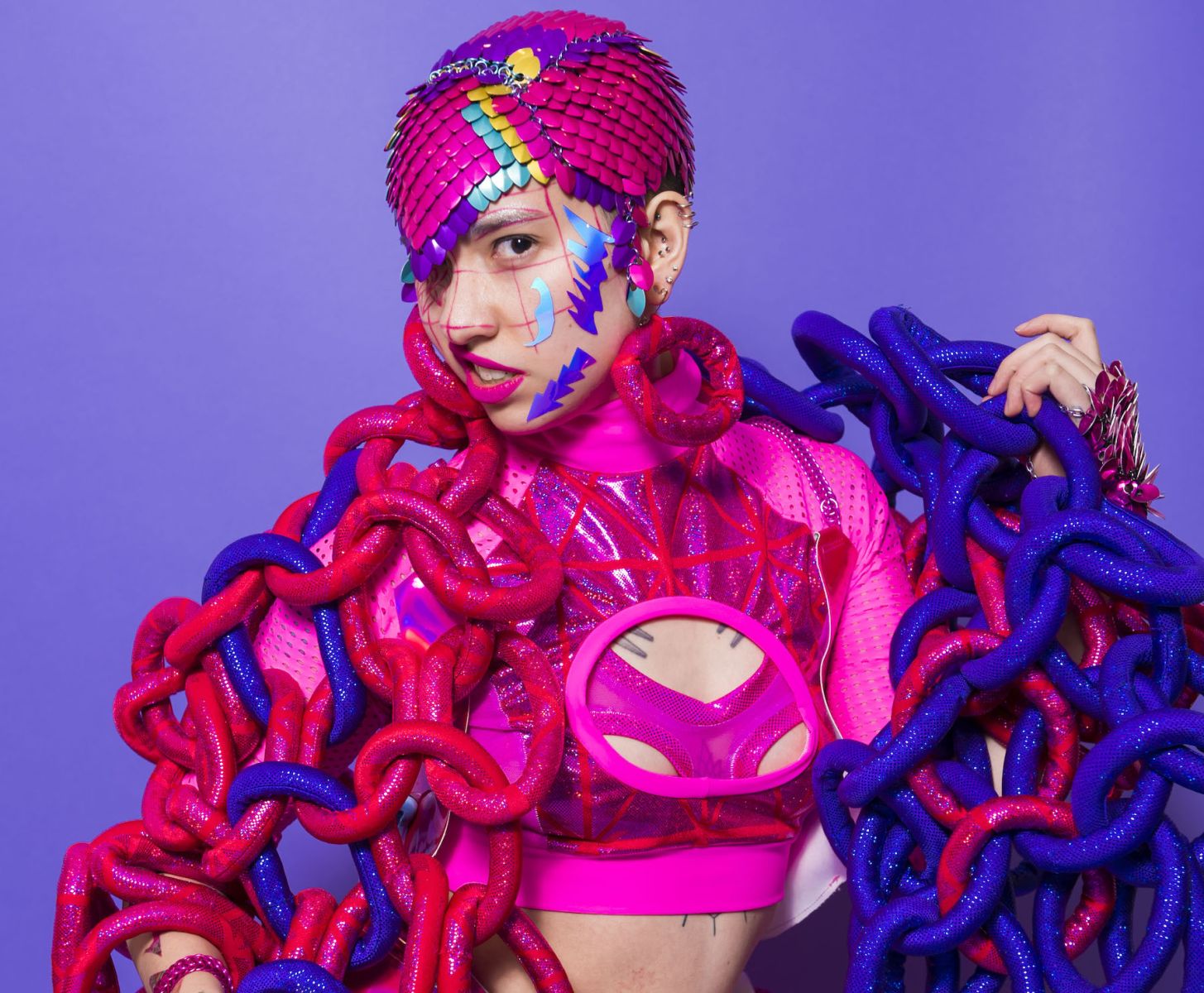
V&A Dundee’s Design And Disability exhibition celebrates and traces the radical ways in which disabled, deaf and neurodivergent people have influenced contemporary design and culture over the past 80 years.
Organised into three sections (visibility, creativity and living), the show spans design, art, architecture, fashion and photography. First shown at V&A South Kensington, curated by Natalie Kane, additional Scottish design stories have been added for its run in Dundee by curators May Rosenthal Sloan and Lily Barnes.
Among those additions are Jamie O’Donnell’s work to create airline seating that reduces anxiety for neurodivergent people, artist Kirsty Stevens who uses MRI scans of her brain to create images and patterns, and Flannery O’kafka’s work Wake Wake Island (2004), a book created for disabled people who are adopted.
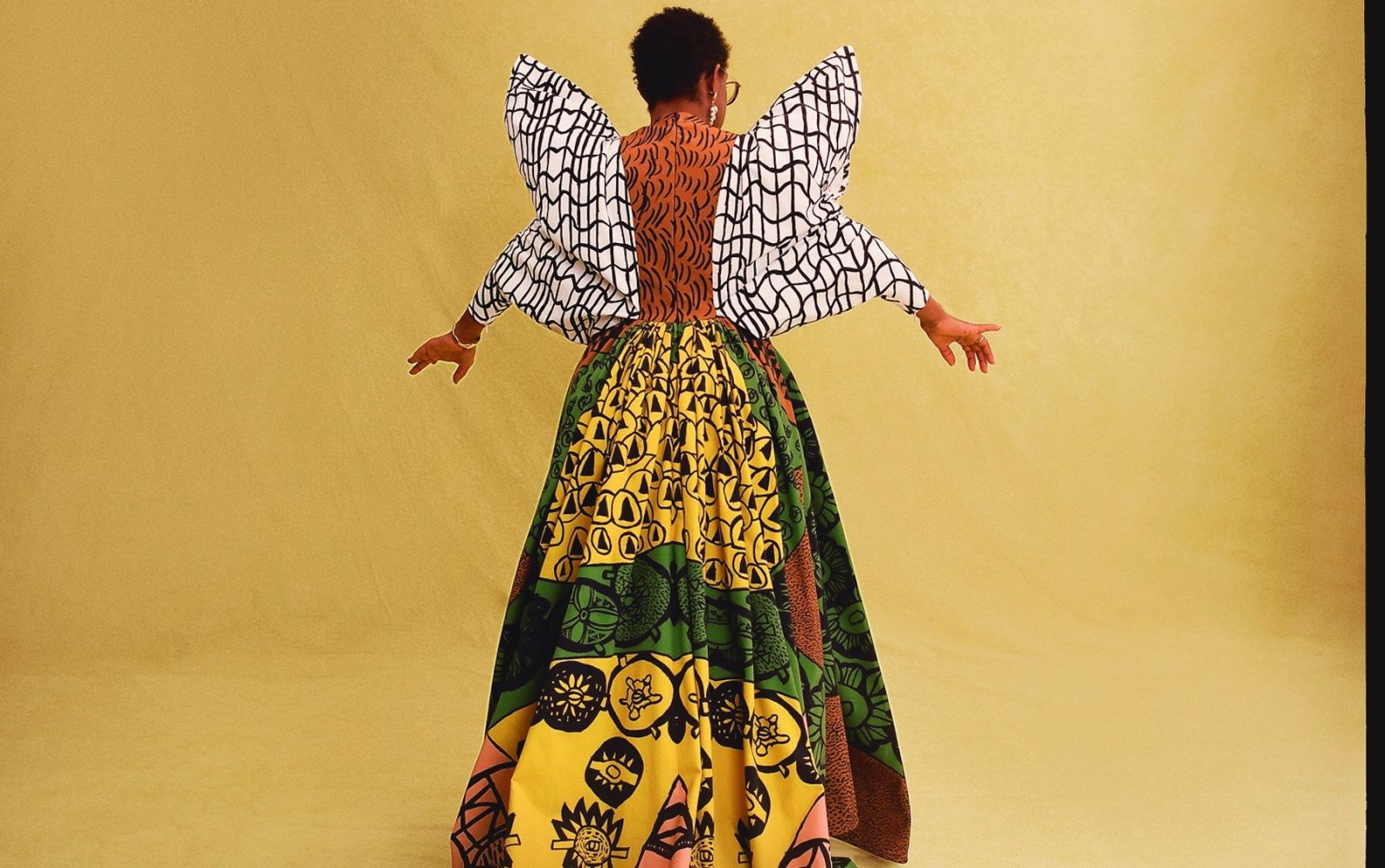
‘It feels important for a design museum to be engaging with what disabled creativity looks like across a broad spectrum of activity, from more formal design to people making, breaking, hacking and subverting existing designs,’ explains Sloan.
‘Disabled design is in our everyday lives all the time, often in ways that don’t get recognised or acknowledged, and it felt very important to be bringing together a real diversity of disabled creative practice in a design museum and giving it the weight that other kinds of design are given in these kinds of spaces.’
Sloan adds that disabled people and their communities are not a monolith; like the rest of the population, they’re characterised by massive diversity. ‘I think it’s been wonderful for people, disabled and non-disabled, to see the extent of that and the richness of that.’ She also says learnings from the exhibition are already having an impact ‘in terms of the way we do things in the museum and trying to embed the lessons that we have learned from this process into our business as usual. There’s a real appetite here for making sure that we approach accessibility at the outset of all exhibition activity and beyond.’
Sloan describes being able to curate for the Scottish run as ‘joyous’, explaining: ‘It’s the bit that I love, working directly with artists and designers and finding works that you’re excited by and that you can feel other people will be excited by. It’s been a complete joy working with all these contributors, some of whom I knew before, some of whom I didn’t.’
.jpg)
Not all of the Scottish pieces were new additions. For instance, the University Of Dundee-led Hands Of X project that explores the design of prosthetic hands was previously in London, although the Scottish display has been changed slightly and a film about the project added.
‘First and foremost for our disabled visitors, I hope they will feel a sense of pride and excitement at the representation, the very different forms of representation here. And a sense of having the permission, almost, to take up space and be who they are in society,’ continues Sloan. ‘For our non-disabled audiences, I hope there is a sort of dawning realisation of the contribution that disabled creative people have made and continue to make every day in our society, which so often is unsung and unrecognised.’
Fife-based artist Kirsty Stevens was diagnosed with multiple sclerosis in 2007 while studying jewellery and metal design at Duncan Of Jordanstone College Of Art & Design in Dundee. MS is a lifelong condition that affects the brain and central nervous system, resulting in a range of symptoms: fatigue; tingling or numbness in the face, body, arms, or legs; vision problems; and coordination and balance difficulties.
Following her diagnosis, Stevens began turning MRI scans of her brain into beautiful patterns that could be printed on fabrics or etched on different materials. Her work in the exhibition is ‘Findings Triptych: Scattered, Inflammatory, Confluent’ (2023), layered drawings that act as visual interpretations of her brain scans, allowing her to make sense of a process that is otherwise unseen. ‘At first, I started to use it for myself to come to terms with MS. But then the response it got, I realised it was opening the dialogue with people, just talking about “the invisible”. It was really helpful and I found it easier to talk about my MS.’
She says it feels incredible to have her work included in the Scottish leg of the exhibition, which she’d already been aware of during its London run. ‘I’d planned to go see it, but time got away from me… I never thought I’d be approached to have my work in it.’
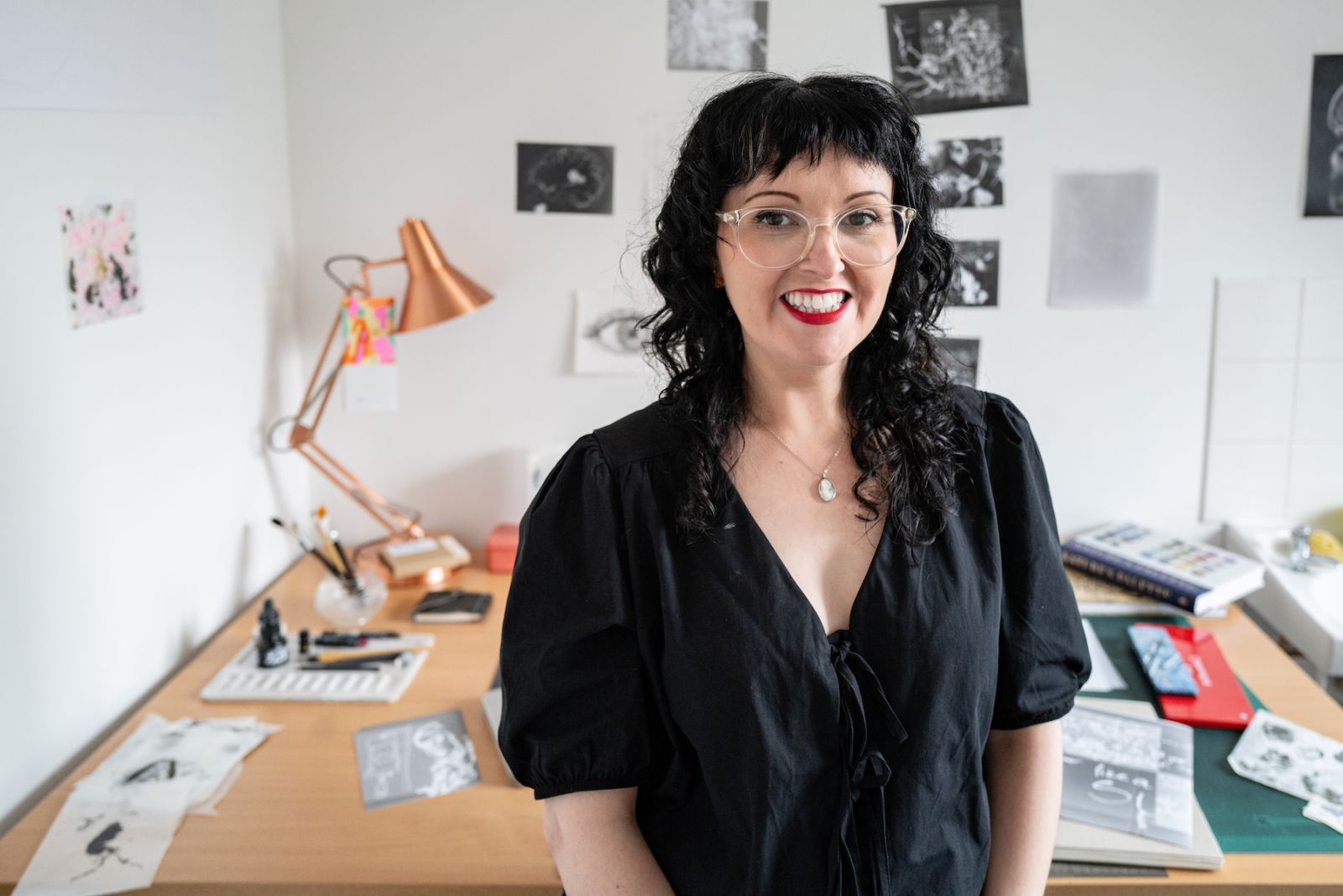
It was during lockdown that Stevens began to home in on ‘drawing’ her MS. Her medication made her immunocompromised which meant she had to shield for longer, so she took this time to focus on her practice. The global pandemic placed additional pressure on health inequalities already in existence and Stevens describes the time as a ‘turning point’ when people began to see how society really works. ‘Lockdown was the time I realised the big guys don’t care about the unwell or the vulnerable,’ she says. And she believes the pandemic encouraged artists to be more overt about using their health to inspire their practice and to inspire change.
Stevens’ medication has thankfully slowed the progress of her MS, so she’s focusing firmly on the future for inspiration. ‘I’ve been looking at the words “stable” and “unchanged”, so I’m developing this at the moment. Having work in V&A Dundee feels like the perfect full stop.’
Design And Disability, V&A Dundee, until Sunday 4 October; main picture: Colectivo Multipolar.