Missy Mazzoli on the opioid epidemic: ‘The crisis itself is an operatic tragedy’
America’s devastating opioid crisis is the grim inspiration for a bold and very personal new opera from composer Missy Mazzoli. She talks to Carol Main about her mission to avoid being moralistic and why she chose a magical carousel as the vehicle to tell her story

With her much-praised Breaking The Waves being a major highlight of the 2019 International Festival, composer Missy Mazzoli returns to Edinburgh with another ambitious new opera. This time it’s not the island landscapes of Scotland that provide the story’s setting, but a small town in Mazzoli’s American homeland, where a carousel arrives to entertain the locals, magically promising to cure them of all their ills. The reality is somewhat different.
As an allegory for a societal crisis that claims multiple lives on a daily basis, it’s an opera that’s dark and troubling while still having lighter touches. ‘My librettist Royce Vavrek and I have always been interested in writing about the opioid crisis,’ says Mazzoli, ‘but not with a heavy hand or being preachy. It’s about approaching it in a way that’s theatrically thrilling.’ The subject matter is not in the abstract for Mazzoli: two of her cousins, both under the age of 25, have overdosed and died. ‘It’s a very common experience in the USA with the struggle of opioid addiction affecting everyone through friends and family connections. Our aim with this work is to bring a sense of compassion and love.’
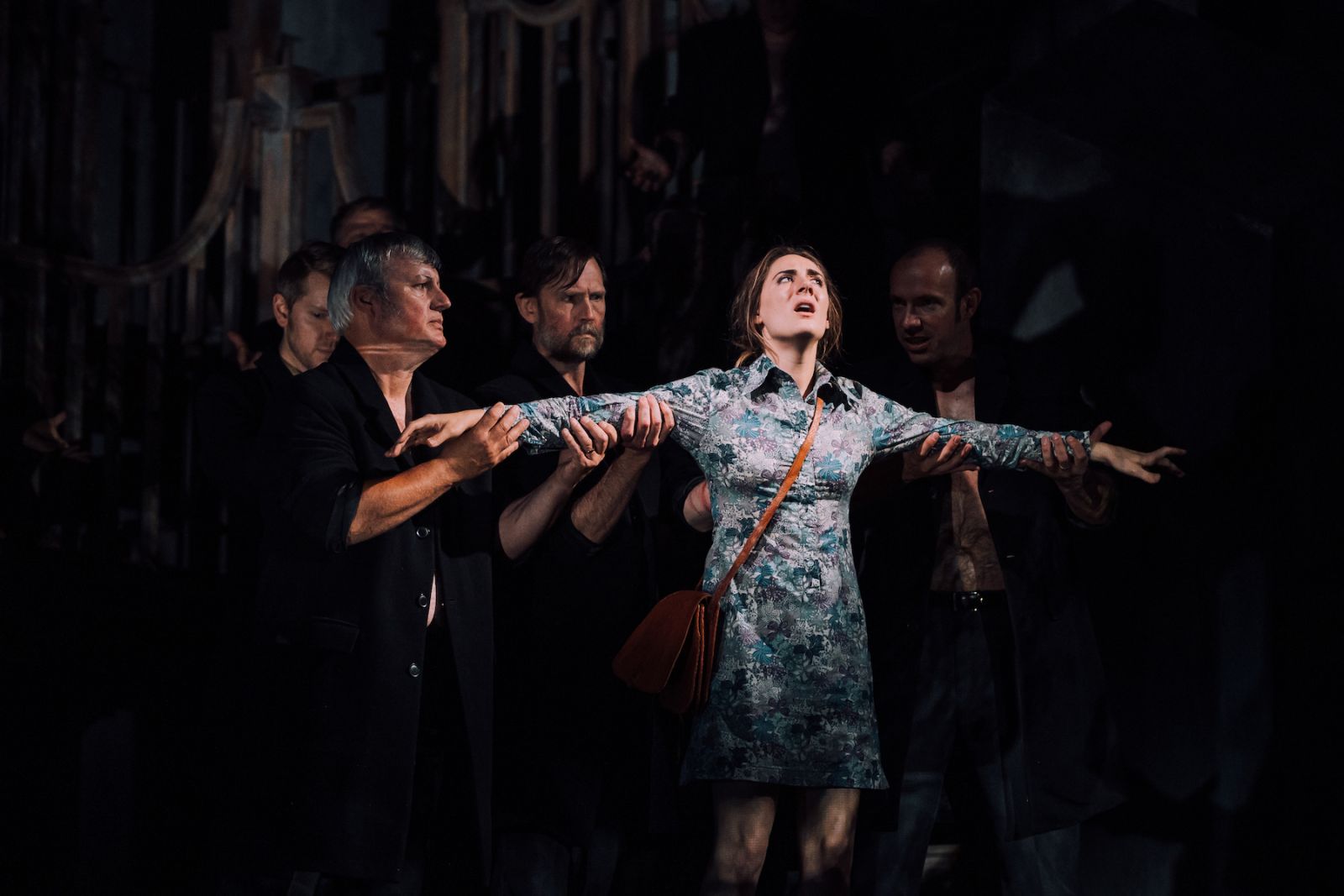
As an art form, Mazzoli feels that opera is a good fit for telling this narrative of addiction and what comes with it, especially through the shared commonality of complexities and complications. ‘The crisis itself is an operatic tragedy,’ she says, ‘full of villains and heroes and other people just trying to live their lives. There are so many different layers going on. There’s a lot happening with the triangulation of staging, costumes and the richness of the music. It’s the stuff of good opera and we’re approaching it from the human angle.’
The music itself is scored for orchestra with what Mazzoli describes as fun additions. ‘There’s a moment when the teens of the town turn an abandoned movie theatre into their club. At this point, an electronic landscape pops up, with crazy, awesome technology representing the sound of the carousel, which is so vivid and evocative. It’s a very unconventional and electronic score.’ Taking as its starting point a short story by American writer Karen Russell (which in turn was inspired by Franz Kafka’s A Country Doctor), the opera is set in an unspecified small town. ‘A man comes to the town with his carousel, and the local doctor is at first sceptical but sees the effect of taking a ride. Her daughter is petulant and tetchy but becomes addicted to it. This isn’t an adaptation of the Kafka story but inspired by some of the crazy things encountered in it.’ Like singing sheep and dogs barking in English as people become high: ‘It’s very surreal and opera is perfect for that.’

Mazzoli is keen that audiences don’t see the piece as moralistic, aiming instead for people to leave the opera talking about it and asking questions. ‘I’m not interested in “drugs are bad”. It’s more about having the discussion. My job is to provide a new language to talk about these things and keep them in public conversation.’ Although Vavrek and Mazzoli are the respective creators of the words and music, the team behind The Galloping Cure very much includes Russell and director/dramaturg Tom Morris. ‘The four of us really created this,’ says Mazzoli. ‘It’s my sixth opera and feels completely different from the others. And Scottish Opera is my favourite company in the world to work with.’
The Galloping Cure, Festival Theatre, 9, 11 & 12 August, 7pm; Picture: Shervin Lainez.