Not For Glory dance review: Empowering reclamation
A playful, queer and visually striking journey through Scotland’s cultural traditions
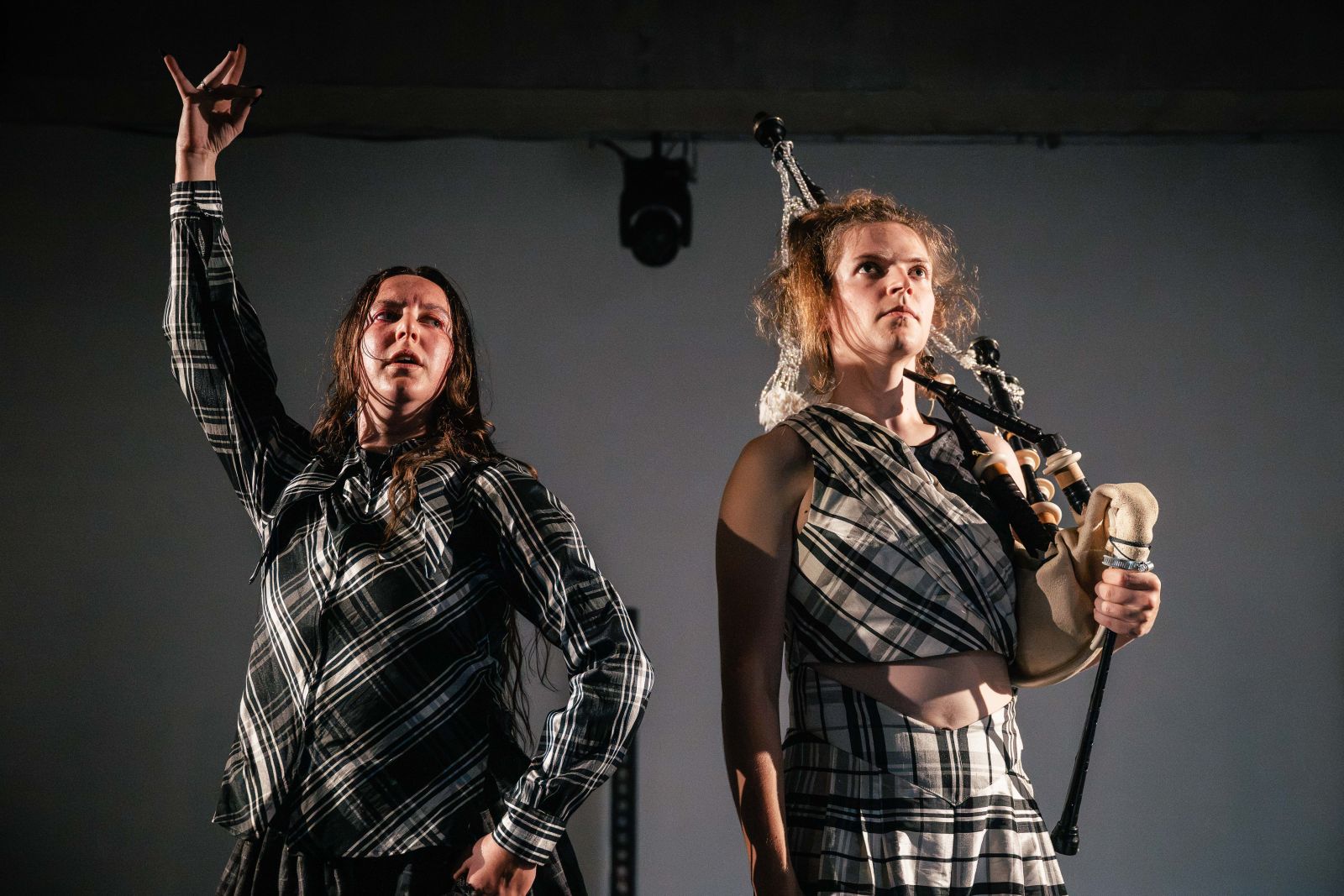
Shortbread has never seemed so sinister. ‘You can eat it,’ Charlotte Mclean growls at an audience member in the second row, as they gingerly fumble with the packet. We’re at a menacing approximation of a Burns Supper and Mclean is brandishing a Highland dancing sword, waving it at an imaginary haggis. ‘Isn’t she a beauty?’ she bellows, before lancing its imaginary sonsie face in a bloodbath of Macbeth-red lighting.
We are a strange people, the Scots, with our strange culture and strange traditions. Mclean has been more exposed to some of these traditions than most, having grown up a competitive Highland dancer, before training at London Contemporary Dance School. She is joined for this madcap rummage through the proverbial shortbread tin by Irish and contemporary dancer Jack Anderson and award-winning composer, piper and fiddler Malin Lewis. Together they pick their way through a tartan chaos of surreal vignettes, a punk-flavoured queer love letter to the Celtic arts.
The opening sequence sees a Highland Fling segue into a rave, stag fingers morphing into raised peace signs, accompanied by flashing neon-pink lighting, pipes and techno beats. After the Burns Supper, there’s an increasingly bizarre series of announcements during a Highland dancing contest. Anderson flicks, kicks and stamps around the stage in a traditional Irish dance, then much later repeats a similar pattern of movement but slowed down, divested of his plaid and frills (all the costumes, by Cleo Rose McCabe, are gorgeous). This time he looks almost ethereal; he’s vulnerable and uncanny, as he’s followed around by Lewis playing gentle fiddle. In one hauntingly beautiful section, Lewis drags their pipes across the stage towards them on a silver rope, like a fisher reeling in a strange selkie.
The tone is always shifting from playfulness to send-up to reverence, and the team have a canny sense of when to make the change. It’s not a damning or a deconstruction of Scottish culture but a conversation with it. There is as much beauty in a well-timed pas de basque as there is misogyny baked into the history of Highland dance. The themes always feel tangible but the humour stops the piece from ever feeling like an academic exercise.
Later all three performers tell us how, when and why they became enmeshed with their chosen disciplines; what confused them, what they felt oppressed by and what they love about them now. It’s a sensitive, empowering reclamation. You could even say glorious.
Not For Glory, Assembly Dance Base, until 23 August, 7.45pm; picture: Brian Hartley.