Rae-Yen Song: •~TUA~• 大眼 •~MAK~• art review – Inventive, immersive worldbuilding
Evie Glen immerses herself in artist Rae-Yen Song’s multi-disciplinary solo exhibition and discovers an ingenious multiverse from the mind of a unique artist
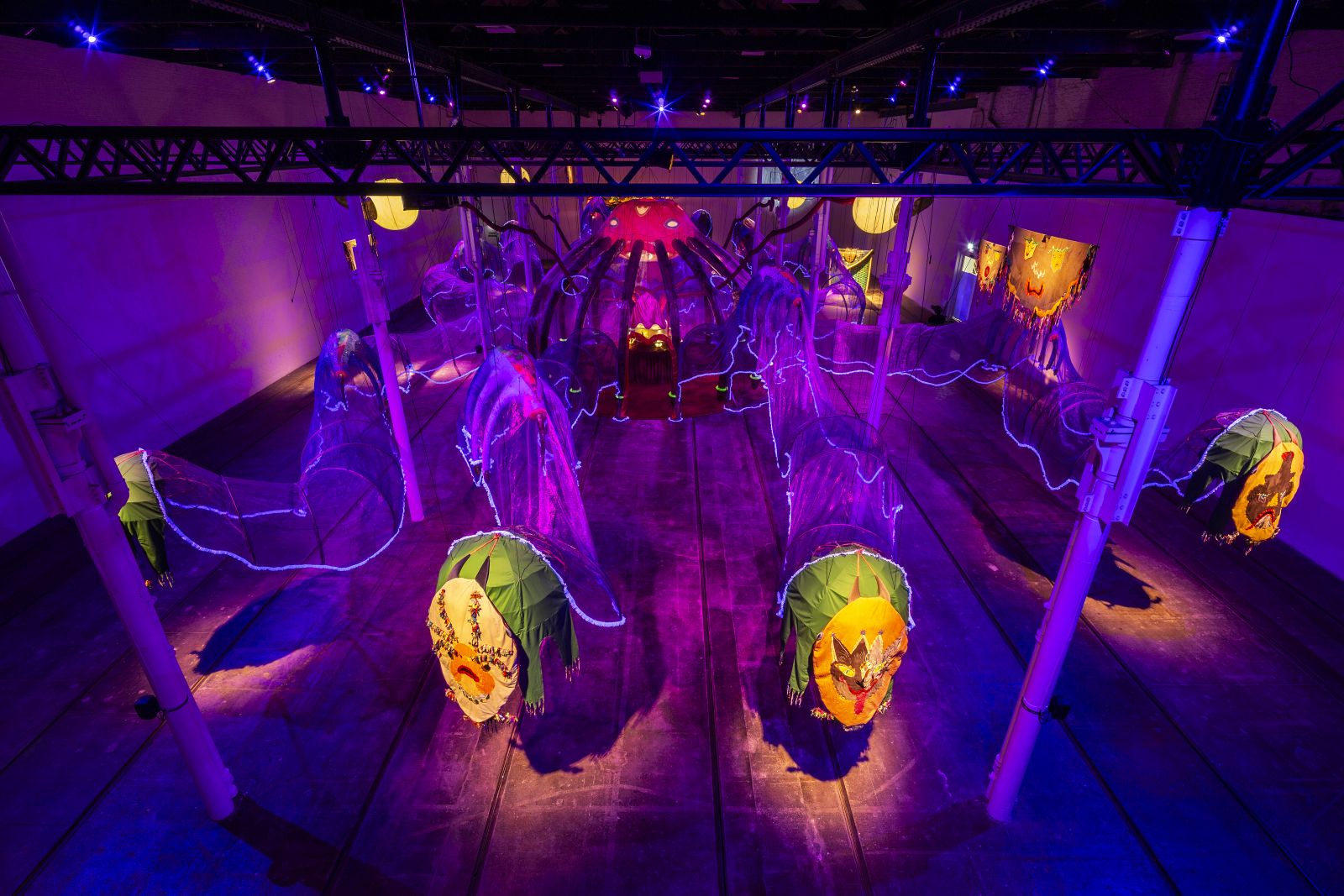
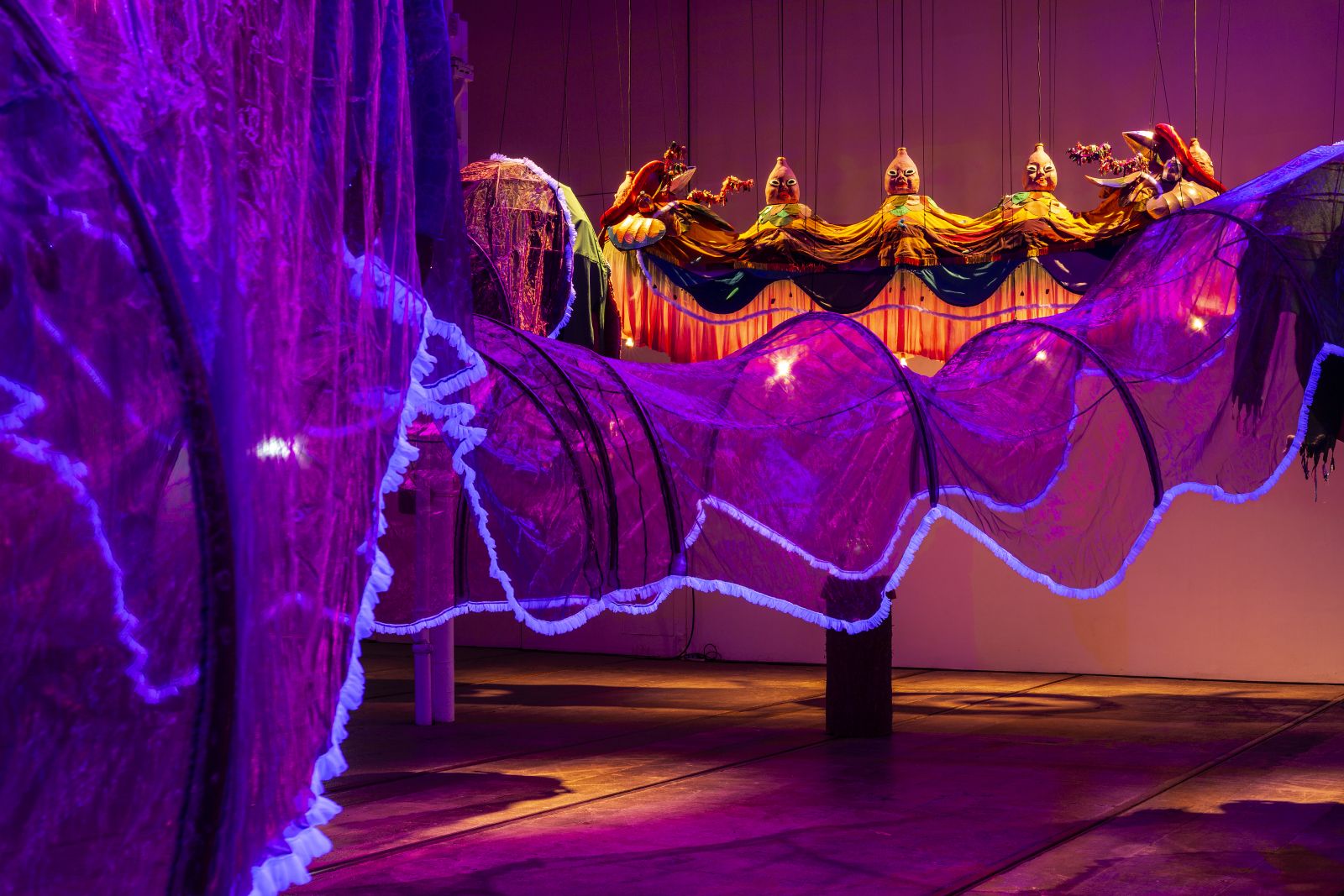
Rae-Yen Song’s •~TUA~• 大眼 •~MAK~• sinks viewers to the subaquatic core of the artist’s multiverse. The titular ‘Tua Mak’ (meaning ‘Big Eyes’ in Teochew dialect) floats in the centre of the room like a magnified amoeba with 16 legs, eight tentacles and four antennae stretching out into every corner of Tramway’s imposing warehouse-like gallery. A thin, iridescent fabric shrouds the entire sculpture like a layer of bioluminescent algae on the water’s surface. Under this canopy, visitors can follow the various currents of Song’s universe until they coalesce in a yellowing pond at the centre.
The water is transplanted from Song’s childhood pond, its leeches and worms making a new habitat in the fissures of this artist’s underwater ceramic snail sculptures. Ancestral memory and mythology are the guiding tenets of Song’s practice. According to family legend, Tua Mak is an ancestor that drowned at sea in the 1950s. Their amoebic reincarnation in this exhibition reflects both tangible and conceptual processes of transformation: of the body through bacterial decomposition and of memory through family folklore. Song roots these processes of physical and metaphysical renewal in the Daoist belief that reality is continually changing.
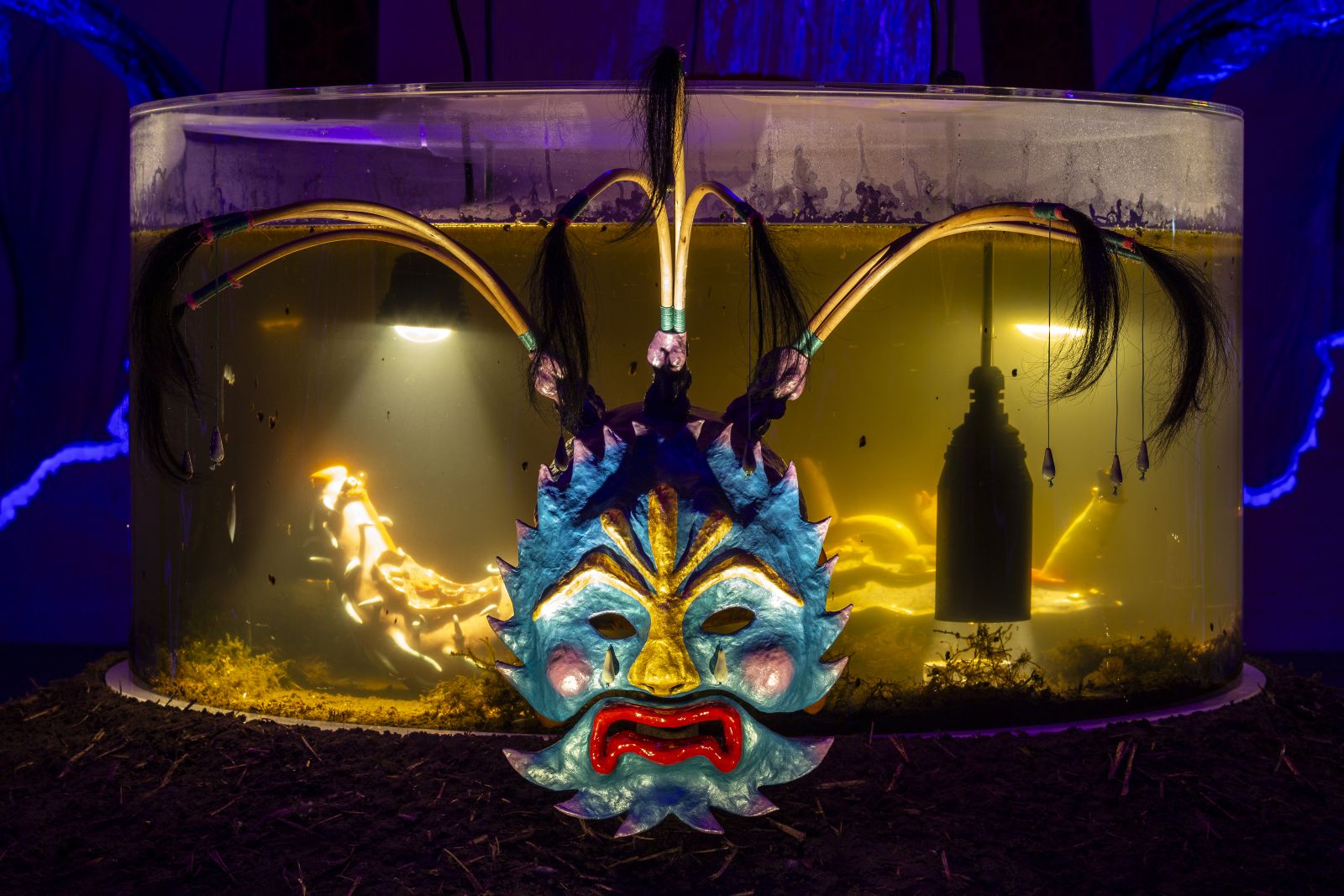
If the conceptual dimensions (Daoism, diasporic-futurism, posthumanism and science fact-fiction) seem overwrought, it doesn’t result in a creative deficiency in the works themselves, with •~TUA~• 大眼 •~MAK~• expertly incorporating ceramics, costume, animation, sculpture, performance, sound and lighting design. Commissioned in 2021, it traces Song’s technical development from learning how to mould a ceramic breast plate to incorporating the microbial sounds of the pond into a live soundscape. The result is the culmination of Song’s unique imagining: a wholly immersive, ultraviolet world complete with weird and wormy creatures reminiscent of a Studio Ghibli film, if of anything at all.
The novelty of Song’s multiverse is aided by familial collaboration, which manifests here in clippings of their sister’s hair, cat’s fur and grandmother’s silk, ‘all swirling together to make new kin’. Song believes ‘we are all chimerical beings ourselves’, a patchwork of ancestral artefacts and legends swirling together with the intangible forces of memory and imagination. Through this multimedia installation, Song magnifies these intangible forces into something palpable yet continually transforming. Its soundscape, for example, changes with the audience and the living ecosystem in the pond.
Any artistic practice benefits from such an openness to transformation, yet Song is able to balance that development with a consistent aesthetic recognisable even in earlier works such as the dragon mask in ‘It’s A Small World’ (2017). This clarity of creative direction is the triumph of Song’s worldbuilding. The exhibition is a blistering display of ingenuity and courageous experimentation, stabilised by an assured artistic vision.
Rae-Yen Song: •~TUA~• 大眼 •~MAK~•, Tramway, Glasgow, until Sunday 16 August.