Steph Land on the appeal of running clubs: 'This can literally be a lifesaver for our community'
Firing the starting pistol on our outdoors special, Ellie Carr tracks the phenomenal rise of running clubs. There are collectives which bond over croissants and groups that make members feel safe within a community. Whatever the rationale, people’s motivations for taking up running are varied and unexpected
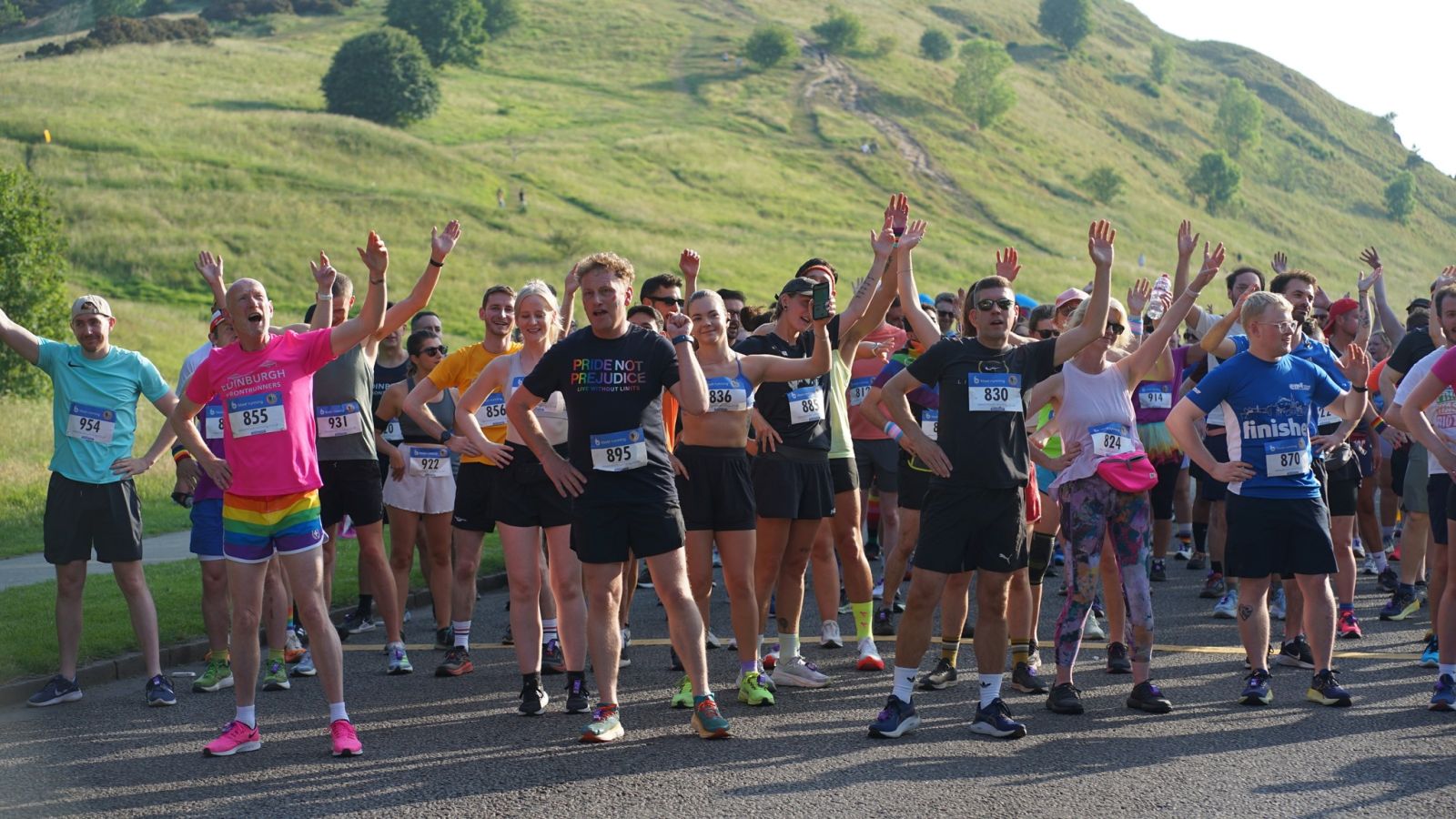
They move in packs, running ten-deep on paths and pavements, both day and night, but especially weekends. Go out early Sunday morning, in Glasgow or Edinburgh, and you may encounter these swarms of runners; often (but not always) skewing Gen Z (the moustache and mullet count is high), some all-female, some mixed, refreshingly diverse, and always fresh-faced.
If you are hungover, or curmudgeonly, you do not want to see this, but you will. We are in the midst of the biggest running boom since the 1970s (when shorts were short, and you knew someone whose dad ran a marathon). This time the spike centres not around traditional Athletic Clubs (ACs) but social run groups, where coffee and chat afterwards is more important than paces and PBs. These are the new run clubs, third spaces where people make pals (and yes, maybe snag a date). Blame covid (every runner I spoke to started during lockdown) or the decrease in pubbing and clubbing (again, looking at you Gen Z) or the pull of screen-free activities. Between that and the rise of Parkrun (free weekly 5K run or walk) plus the popularity of NHS Couch To 5K, more and more people are lacing up.
Strava’s 2025 Year In Sport report declared: ‘Running clubs increased more than threefold, with 37% of survey respondents viewing run clubs as good places to meet people.’ These are global stats, but look around you. Every second coffee shop, bakery, pizzeria and pub has a social run group attached. To name a few, Glasgow has Glasgow Croissant Club (clue in the name), Outlier Run Club (of the Outlier café), Glasgow Girls Collective (plus yoga and crafts); Edinburgh has Blank Training Club (barber shop), Newhaven Running Group (meet outside the Old Chain Pier pub), Good Time Running Club (clue in the name).
It wasn’t always like this. When I joined an AC 15 years ago, it was singlets, weekly subs and club names like ‘Harriers’ or ‘Hare & Hounds’. I remember trembling as I arrived for the first night’s training and the embarrassment when I joined the fast group by mistake in week two, having to fake injury to hide my hyperventilating. 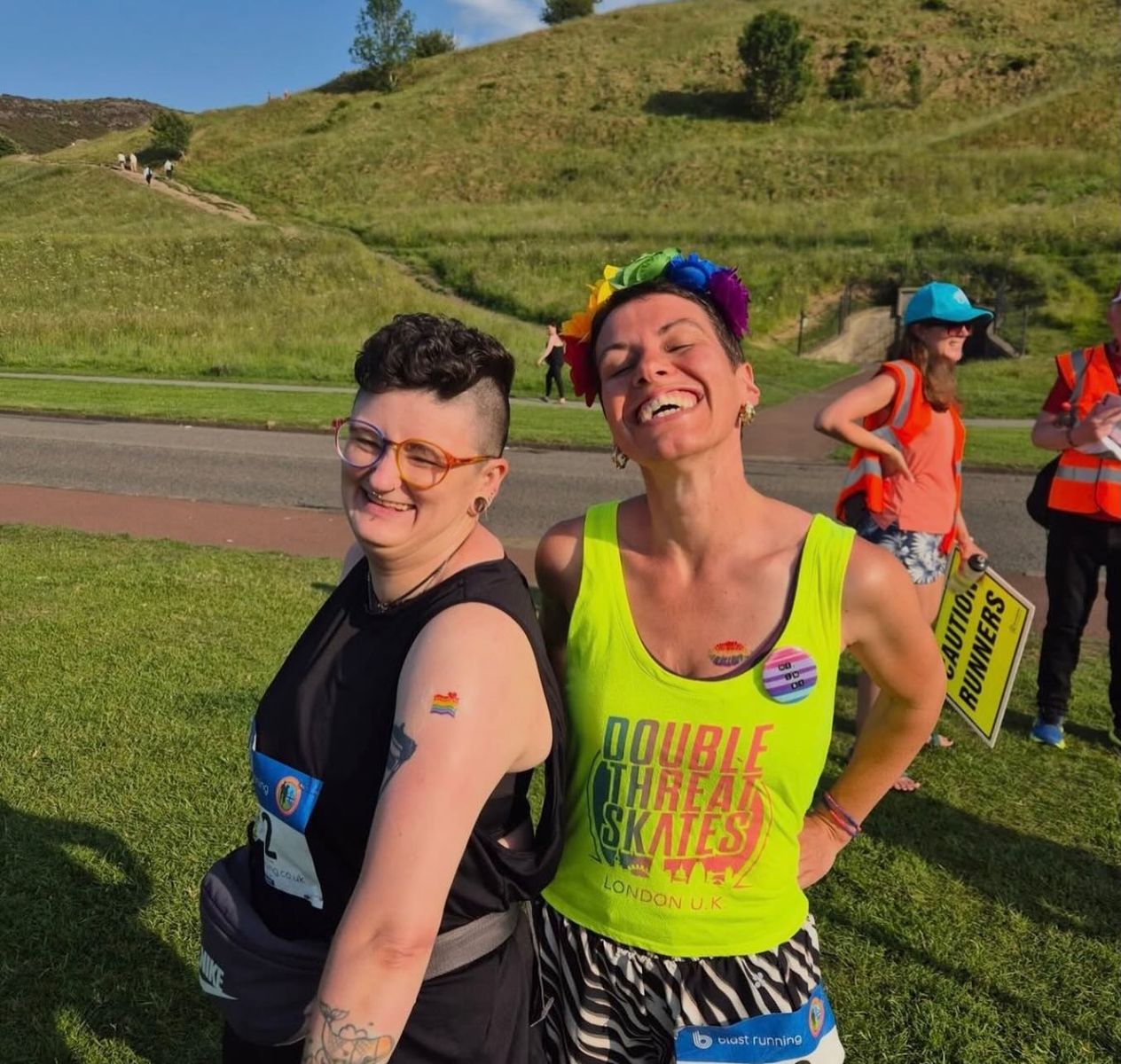
I loved my time in an AC, and I’m a decidedly average runner. It was friendlier, more welcoming, and more diverse than you might think. There was one goal, though: to get faster. Fine if you seek medals and PBs. Not everyone does. The proliferation of social clubs means barriers to running are being dismantled. Still, the curated image of certain groups on social media can make them appear intimidating.
Steph Land was after a pace-inclusive club and landed at Edinburgh Frontrunners, which is proudly LGBTQIA+: ‘Being part of that community was a driver to joining; I wanted to be part of a safe and encouraging group.’ Frontrunners is a UK-wide network (with Edinburgh and Glasgow branches) that combines social club vibes with the structure and support of an AC. You can run or walk at sessions and they offer a Learn To Run programme. They’re also organising a 5K Pride run at Holyrood Park on 19 June.
As a self-described mid-sized runner who prefers lifting weights, Land was delighted to go from struggling to complete 5K to half-marathon distance with Frontrunners. ‘Many LGBTQIA+ people have negative experiences in sport, often from a young age, so physical activity participation levels are low. This has a knock-on effect on health and wellbeing outcomes. Having this club can literally be a lifesaver for our community.’
Running with others proved lifesaving for Leon Cerrone, organiser of Glasgow’s 250-strong Outlier Run Club. He started training to help mitigate severe depression and now coordinates packed-out meets: from easy 5Ks to long runs, track nights and a women-led run. Cerrone trained with London’s Highgate Harriers. His wife, Jess, ran with Charlie Dark’s legendary Run Dem Crew, which challenged the status quo with its manifesto (‘we are not a running club’; ‘leave your ego at home’; and ‘Run Dem Crew is open to all regardless of speed, class, colour, religion or creed’).
In this spirit, Outlier ‘strives to be open, inclusive, welcoming and supportive’, and raises significant sums for social charities. ‘Our ethos is to build community and give back to the communities we run through,’ says Cerrone. ‘Running is at the forefront, but it was never about running fast.’
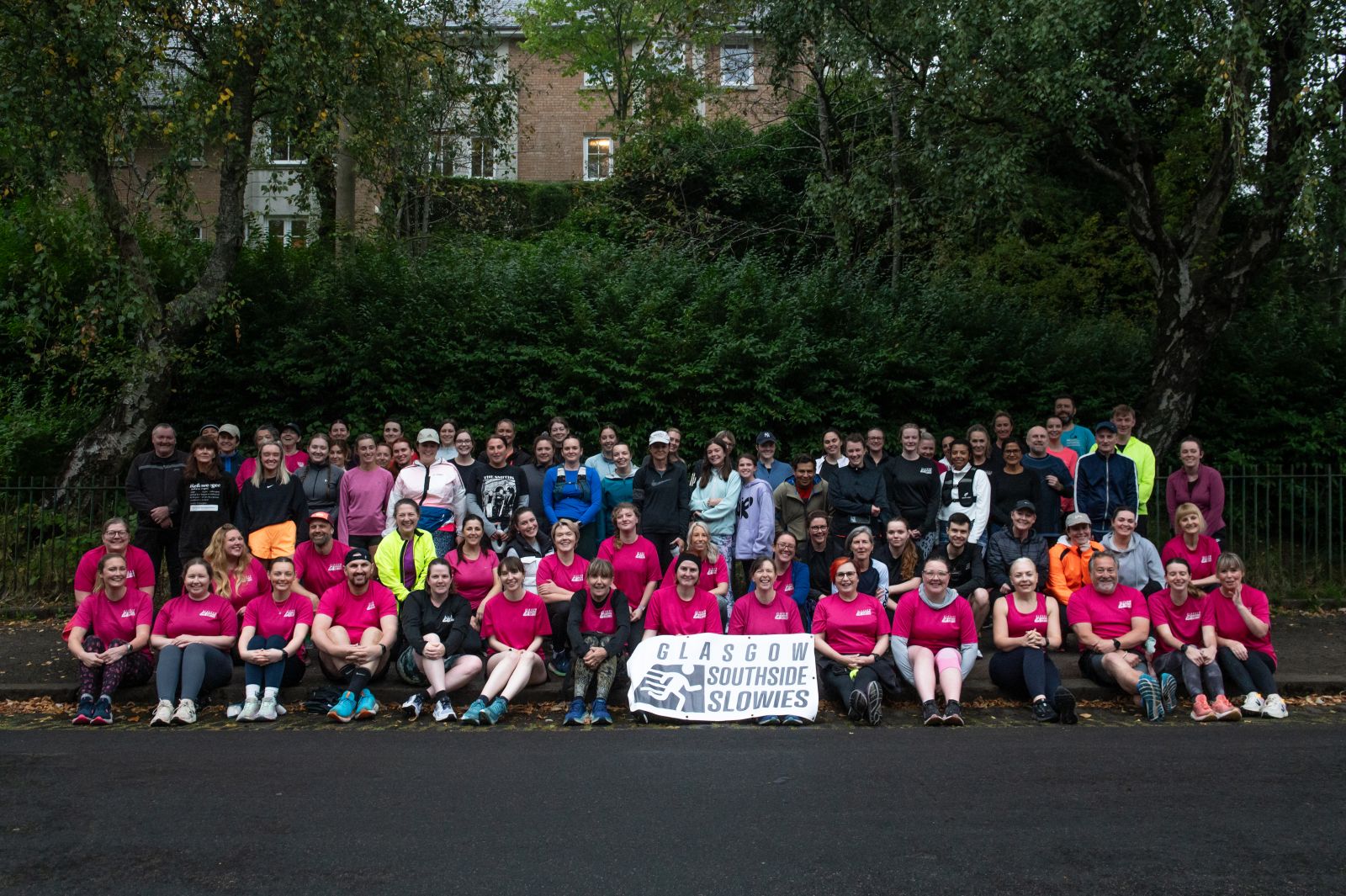
But something happens when you train multiple times weekly: you do get faster. With members now chasing times and race bibs, Outlier have required speedier pace groups. The upshot is that their slowest pace group is too quick for some. It’s tricky with limited resources, says Cerrone. If their ‘chill’ pace is too fast, he steers people towards Couch To 5K or clubs like Southside Slowies (again, clue in the name).
Aidan Thomson, of Edinburgh’s indie running store Interval, recognises the need for something between chatty meets and trad clubs with accredited coaches. There is no Interval club as such, but they have built a community hub with regular events and training. You might spot the orange Interval coffee van at their marathon training Sundays (The Road To Edi ‘26), at twice-yearly Solstice On The Segment on Arthur’s Seat (laps from sunrise to sunset) and in wildly popular track nights (including a women-only event).
‘The jump from social club to AC is humongous,’ says Thomson. ‘ACs still have an important role within running as a sport. Then there’s running as a hobby. We’ve tried to bridge that gap.’ Surprisingly, track nights have become their most accessible session. ‘With 60 people running, you have no idea what position you’re in. Everyone has the same feeling afterwards, no matter how quickly you get round.’
Steph Land believes grassroots clubs have a role in fighting elitism in running. She refers to Nike’s recent Boston Marathon billboard: ‘Runners welcome. Walkers tolerated’. It famously backfired because, as Land states, ‘it goes against what running is about, which should be for anyone to turn up to run (walk if needed), doing their best to improve; that could be for a medal, a better pace, to improve fitness or mental health, and making important connections with your community.’