When Prophecy Fails dance review: Collective mania
The choreographed tale of a cult organisation that claimed to receive messages from a great beyond
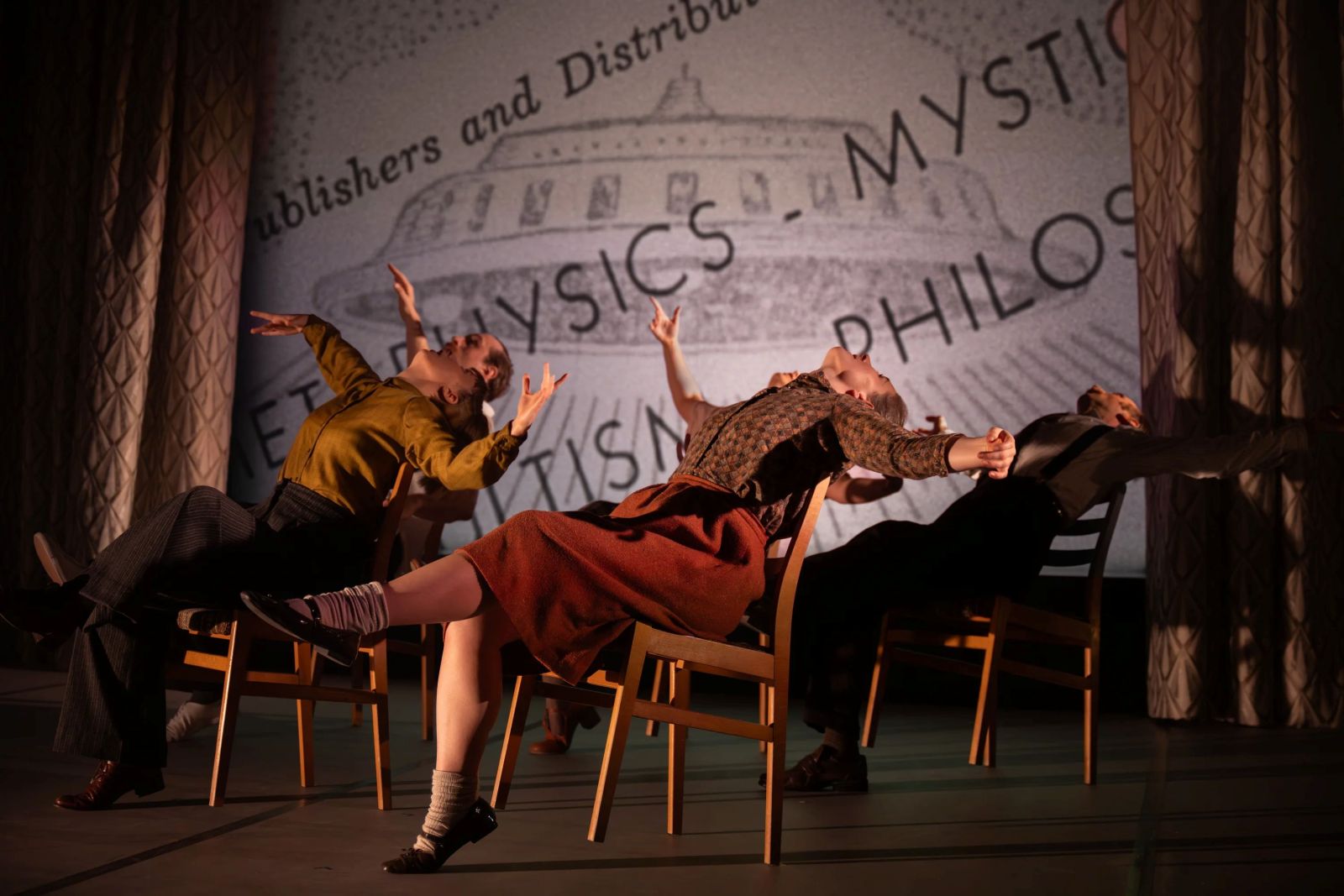
In 1953, a cult formed around the prophesies of a suburban American housewife, who claimed to have predicted the end of the world on exactly 21 December 1954. This sect were later chronicled in an academic psychology book, When Prophecy Fails, which is where this dance-theatre piece from Scotland’s Groupwork takes its name. Marian (the book’s given pseudonym for cult leader Dorothy Martin) begins receiving signals from beyond, transmitted to her in automatic writing. Soon she accumulates a troupe of devotees in thrall to her extraordinary powers. All this takes place in a culture of postwar UFO fever, where wild, outlandish visions of flying saucers contrast with the muted lives of the people. God-fearing, hard-working, neat and staid, they could not seem a less likely bunch to be swept away in rapture.
Milla Clarke’s design and Lewis den Hertog’s frenetic, fast-flowing video projections capture this strange imbalance well. Newspaper headlines, close-ups of uncanny, distorted writing, and ancient drawings of alien visions crackle across the backscreen, while the dancers are foregrounded in a domestic realm of mid-century, middle-class smartness. Vicki Manderson’s choreography produces strange twitching angles, slo-mo sequences and ecstatic swirling.
It’s an odd piece, which partly narrates its events, via descriptive movement and voice-overs, and partly riffs around them in dreamy abstractions. We don’t really get under the skin of the characters, or grasp fully a sense of their embedded collective mania, save for one unnerving sequence towards the end where, in turn, the cult members try to run away from the impending light, and are each dragged back by the group. For the most part When Prophecy Fails remains academically intriguing but, like the upstanding outer façade of the suburbanites it depicts, plays its drama too close to its chest to fully connect.
Reviewed at Studio Theatre; picture: Tommy Ga-Ken Wan.