The List

Holywell Music Room

What's On @ Holywell Music Room

Vivaldi Four Seasons by Candlelight

Vivaldi Four Seasons by Candlelight

28 May 2026 - 19 Dec 2026

Experience Vivaldi’s iconic masterpiece The Four Seasons as you’ve never heard it before. A cornerstone of classical music, this vivid and revolutionary work captures the essence of nature with breathtaking virtuosity and emotional power. Its influence continues to echo through centuries of music-making, and remains one of the most beloved compositions in the classical canon.
Candlelight: Coldplay vs Ed Sheeran

Candlelight: Coldplay vs Ed Sheeran

28 May 2026 - 27 Feb 2027

Candlelight concerts bring the magic of a live, multi-sensory musical experience. Seating is assigned on a first come first served basis in each zone. Performers String Quartet - Chaos Collective
Kristin Hersh

Kristin Hersh

27 Sept 2026 - 25 Oct 2026

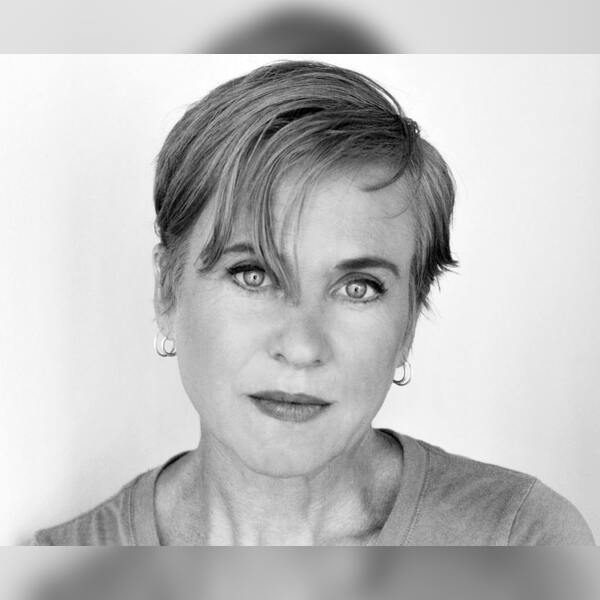
Throwing Muses’ lynchpin, Kristin Hersh’s prolific career has seen her heralded queen of the alternative release. Her tenth studio album, Possible Dust Clouds is a highly personalised sociopathic gem delivered as a futuristic rewriting of how music works, a melodious breeze with a tail wind of venomous din.
The Martin Quartet: Ravel and Martin Quartets, Schubert String Quintet
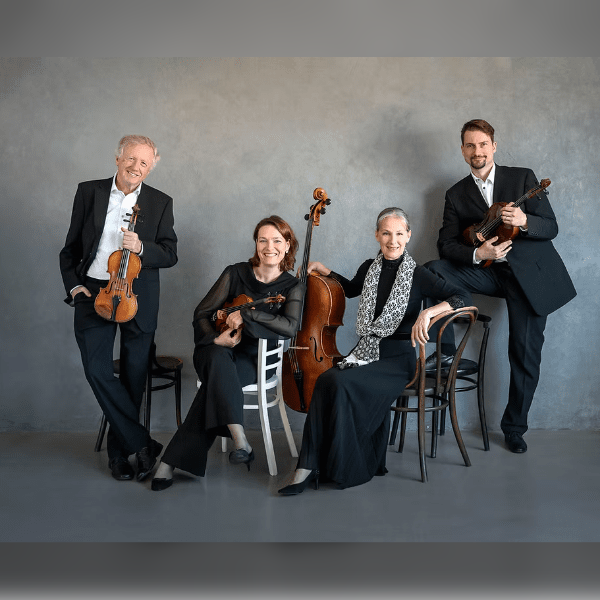
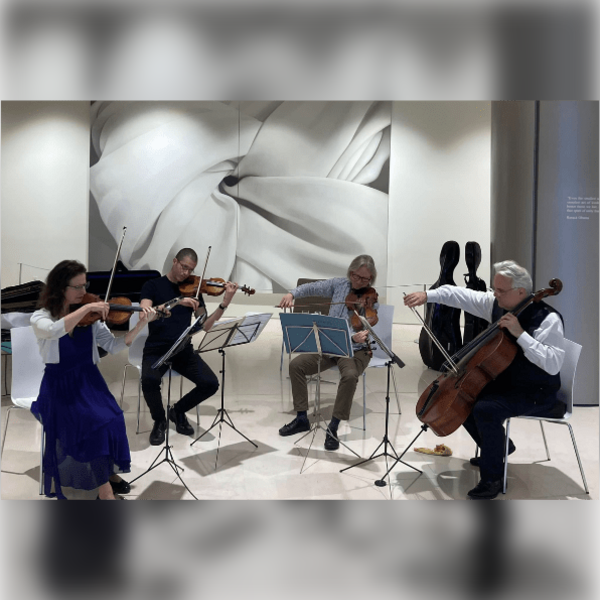
The opening concert of the Oxford Chamber Music Society [https://oxfordchambermusic.org] season is a welcome return to Oxford of the Martin Quartet on the 50th anniversary of their founding in 1976. The quartet has built a distinguished reputation, combining the central European quartet repertoire with a particular commitment to Czech music. From the outset, the ensemble developed a disciplined approach to performance, emphasising balance, precision, and structural awareness. Critics have highlighted their lovely sound and clear interpretive opinion (KlasikaPlus) as well as their beautifully and intensely conveyed performances with a bright, honest sound (BBC Music Magazine). Over the decades, they have performed in many of Europes major chamber-music venues and festivals. Their discography has contributed significantly to the renewed attention given to Martins chamber music. A multi-volume recording project of the composers string quartets established the ensemble as one of the foremost interpreters of this repertoire. Our concert today opens with Ravels quartet which displays Our concert today opens with Ravels quartet which displays a ' brilliant juxtaposition of formality and sensuality, and his incredible use of tone color ' (LA Phil).. The centrepiece of the programme, Martins quartet, written during the composers early years in Paris, blends Czech rhythmic energy with a cosmopolitan musical language. The concert concludes with the String Quintet by Schubert, an expansive late work whose additional cello creates a rich, resonant sound world. Its serene Adagio stands among the most profound slow movements in the chamber repertoire. The quartet are joined today by Gemma Rosefield, described by The Strad as a mesmerising musical treasure. She has given solo recitals at the Wigmore Hall, the Concertgebouw, Amsterdam, and in The Diligentia, The Hague. Gemma plays throughout the Europe, the USA, Russia, Japan, Mexico, Kenya and New Zealand. She is cellist with Ensemble 360 and the Leonore Piano Trio with whom she has made several recordings for Hyperion Records. Click here [https://www.ticketsource.co.uk/oxford-chamber-music-society] for details of the full season of concerts from the OCMS. Lubomr Havlk (violin), Adla tajnochrov (violin), Martin Stupka (viola), Jitka Vlankov (cello), with Gemma Rosefield (cello) Programme Ravel - String quartet in F major Martin - String Quartet no. 2, H. 150 ---- Interval ---- Schubert - String Quintet in C major (D. 956) Photos: Petra Hajsk
The Leonkoro Quartet: Haydn Op.76 No.5, Britten No.2, Mendelssohn No.6
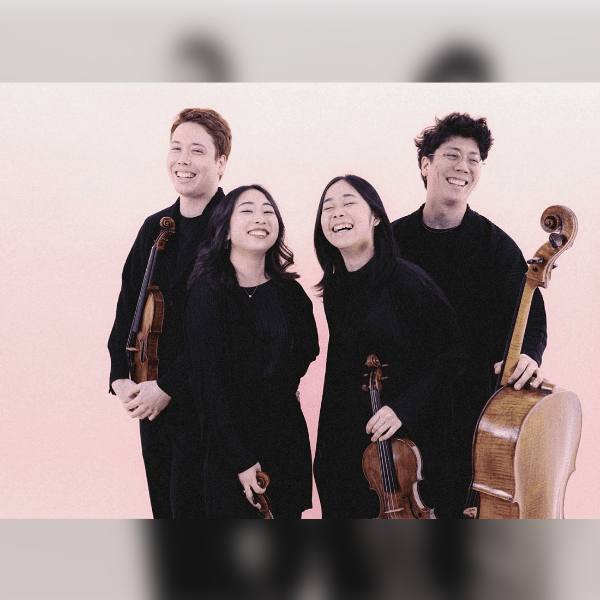
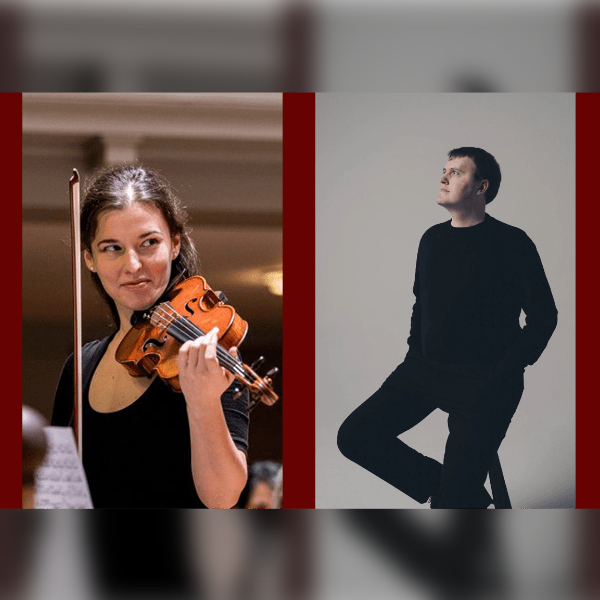
This is the 2nd concert of the Oxford Chamber Music Society [https://oxfordchambermusic.org]'s 2025-2026 season. Click here [https://www.ticketsource.co.uk/oxford-chamber-music-society] for details of the full season. Formed in Berlin in 2019, the Leonkoro Quartet has quickly established itself as one of the most compelling young ensembles on the international chamber music circuit. The quartets name drawn from Esperanto words meaning lionheart captures something of its character: fearless in approach, yet grounded in a serious engagement with the tradition it inhabits. The ensemble brings together violinists Jonathan Schwarz and Emiri Kakiuchi, violist Mayu Konoe and cellist Lukas Schwarz, musicians whose shared training and close musical rapport have shaped a distinctive and highly unified sound. The quartets rise has been remarkably swift. In 2022 they won First Prize and nine special prizes at the Wigmore Hall International String Quartet Competition, followed soon after by First Prize and the Audience Prize at the Concours International de Quatuor Bordeaux. They were subsequently selected for the BBC Radio 3 New Generation Artists programme, a platform that has helped introduce them to audiences across Europe. Recent seasons have included debuts in major halls such as the Berlin Philharmonie, the Concertgebouw and the Konzerthaus Wien, alongside festival appearances and tours in North America. Writing about a recent recital at Wigmore Hall, The Guardian noted their vivid detail, precision and ensemble clarity. Other reviewers noted the quartets vivid ensemble playing and finely calibrated sense of colour. Commentators frequently remark on the unity of their sound and the careful shaping of musical structure, qualities that allow the group to bring both clarity and urgency to the repertoire they perform. Judith Weir praised their elegant and refreshing stage presence in a recent performance at the Aldborough Festival. In Autumn 2023, the quartet released its debut album, featuring Ravels String Quartet and Schumanns 3rd quartet. On 30 January 2026, they released Out of Vienna, which examines early-20th-century Viennese modernism and was named editor's choice byGramophone Magazine. This evenings programme brings together three quartets that test the expressive possibilities of the genre in different ways. The D major Quartet, Op. 76 No. 5 by Joseph Haydn comes from the composers final set of quartets, written when he was already celebrated across Europe; its expansive slow movement stretches the emotional scale of the classical quartet while the finale restores Haydns characteristic wit. The Second String Quartet of Benjamin Britten, written for the 250th anniversary of Henry Purcells death, concludes with a chaconne which transforms the work into a magnificent tribute to his revered forebear. Finally, the F minor Quartet, Op. 80 by Felix Mendelssohn stands among the most intense works in the repertoire: written shortly after the death of his sister Fanny Mendelssohn, it pushes the classical quartet language towards a restless and deeply personal emotional world. Jonathan Schwarz (violin), Emiri Kakiuchi (violin), Mayu Konoe (viola), Lukas Schwarz (cello) Programme Haydn - String Quartet op. 76 No.5 Britten - String Quartet No.2 ---- Interval ---- Mendelssohn - String Quartet No.6 Photos: Leonkoro Quartet
Fretwork Viol Consort: Six Centuries, Six Viols
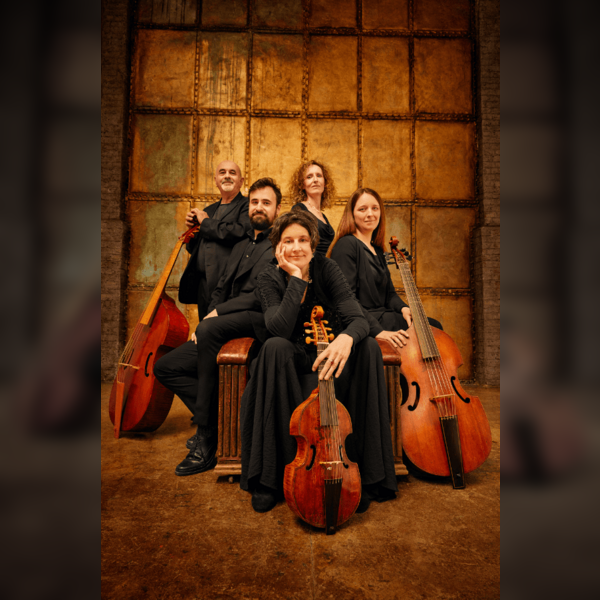
This is the 3rd concert of the Oxford Chamber Music Society [https://oxfordchambermusic.org]'s 2025-2026 season. Click here [https://www.ticketsource.co.uk/oxford-chamber-music-society] for details of the full season. For over four decades, Fretwork has stood at the forefront of the viol consort revival, acclaimed worldwide for performances of extraordinary finesse, depth and expressive power. Renowned for redefining what a viol consort can be, Fretwork combines scholarship with fearless musical imagination, bringing both early masterpieces and new music vividly to life. Their programme Six Centuries, Six Viols is a striking celebration of the viols uniquely enduring voice. Spanning six hundred years of music, the programme traces an unbroken lineage from the golden age of Renaissance polyphony, through the richly expressive works of the Baroque, to powerful contemporary compositions written especially for the ensemble. Each piece reflects a different moment in the viols long history, revealing how its sound has continually inspired composers across radically changing musical worlds. Performed by six of the worlds finest viol players, Six Centuries, Six Viols is both an exploration of musical time and a testament to the viol consorts timeless expressive range. By placing early music alongside living composers responses to the instrument, Fretwork creates a programme that feels at once historically illuminating and urgently contemporary an experience that is as intellectually engaging as it is sonically compelling. Elegant, searching and deeply communicative, Six Centuries, Six Viols offers audiences a rare opportunity to hear the viol consort not as a historical curiosity, but as a living, evolving ensemble with a voice that continues to resonate across centuries. Emilia Benjamin, Emily Ashton, Jonathan Rees, Jo Levine, Sam Stadlen, Richard Boothby Programme John Tavener- Sanctus from the Missa Gloria tibi trinitas Henry Purcell - In Nomine (1680) William Byrd - Fantasia (1611) Gavin Bryars - In Nomine (1995) Claude Debussy- La fille aux cheveux de lin (1910) William Lawes - Consort set in C major in 6 parts ---- Interval ---- Alfonso Ferrabosco - Hexachord Fantasy Edward Grieg- Heimweh Op.57 No. 6 (1893) John Jenkins - Fantazy in 6 parts Photos: Fretwork
Kebyart Saxophone Quartet: Bach Passacaglia and Fugue, Mozart Adagio and Fugue, Haas Quartet
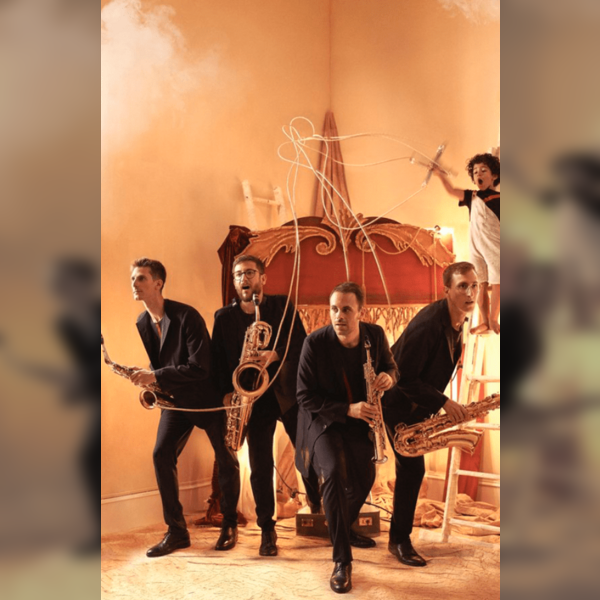
This is the 4th concert of the Oxford Chamber Music Society [https://oxfordchambermusic.org]'s 2025-2026 season. Click here [https://www.ticketsource.co.uk/oxford-chamber-music-society] for details of the full season. Founded in Barcelona in 2014, the Kebyart Saxophone Quartet has rapidly become one of the most distinctive ensembles in contemporary chamber music. While the saxophone has a comparatively short chamber-music history, the ensemble has embraced it for both the creation of new works and the imaginative re-thinking of music from earlier centuries. Their programmes frequently combine contemporary works written specifically for them with arrangements that reveal unexpected colours in familiar repertoire. The quartet has been praised for their synchronization, interpretative strength, and musical communication (Catalan Music Magazine), while a recent concert at the Barbican was noted for offering a fresh perspective on traditional classical performance. Today they present their programme punto di fuga which they describe as follows: The punto di fuga is where lines converge in pictorial art, the point on the horizon where all perspectives meet. In the same way, the program presents pieces that include fugues and, despite being from different periods, ultimately find common ground on the horizon. Two fugues in C minor open each of the two halves: Bach and Mozart. Bachs Passacaglia und Fuge connects directly with Csar Franck, who, in his original organ work, draws on Bachian models. Widmann engages with historical forms such as chorales, like Bach, and waltzes, while simultaneously expanding the sound world through noise effects, unconventional key techniques, and the humorous Zirkusparade. For the second half, Mozarts C minor Adagio und Fuge links directly to Haass quartet, which in a way functions as a total vanishing point, where continuous lines intertwine until they meet in an apotheotic ending. Finally, Ligetis Bagatellen, besides including many small fugues in their movements (motifs that respond to and pass from one voice to another), also act as a punto di fuga, as each piece adds new notes in a journey toward the tonal horizon. Pere Mndez - (Soprano Saxophone), Vctor Serra (Alto Saxophone), Robert Seara (Tenor Saxophone), Daniel Miguel (Baritone Saxophone) Programme JS Bach - Passacaglia und Fuge c-Moll BWV 582 (Arr. Kebyart) Csar Franck - Prlude, Fugue et Variation, Op. 18 (Arr. Kebyart) Jrg Widmann - 7 Capricci (2021) (written for Kebyart) ---- Interval ---- Mozart - Adagio und Fuge c-Moll KV 546 / KV 426 (Arr. Kebyart) Georg Friedrich Haas - Saxophonquartett (2014) Gyrgy Ligeti - Sechs Bagatellen (Arr. Kebyart) Photos: Kebyart
Trio Meister Raro: Fantasie and Fairytales: Debussy, Mozart, Schumann
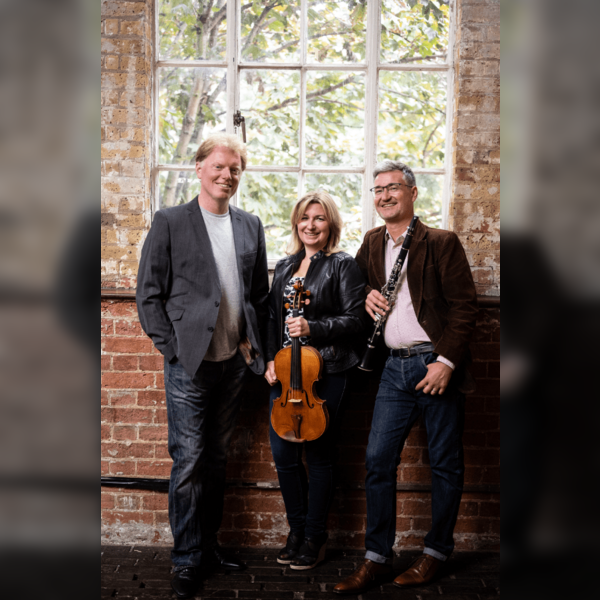
This is the 5th concert of the Oxford Chamber Music Society [https://oxfordchambermusic.org]'s 2025-2026 season. Click here [https://www.ticketsource.co.uk/oxford-chamber-music-society] for details of the full season. Trio Meister Raro was formed in 2022 by Robert Plane, Rachel Roberts, and Tim Horton. The trio grew out of their long-standing musical collaboration through Ensemble 360. The name Meister Raro is drawn from one of Robert Schumanns alter egos, reflecting the trios thoughtful and attentive approach to collaborative music-making. Clarinettist Robert Plane has an extensive career as a soloist and chamber musician. Since winning the Royal Over-Seas League Gold Medal, he has performed widely in the UK and internationally. In a distinguished orchestral career, he has performed as guest principal clarinet with the Chamber Orchestra of Europe, the Concertgebouw Orchestra Amsterdam, and the London Symphony Orchestra. Rachel Roberts is an internationally recognised violist, appearing regularly at major venues including Wigmore Hall, the Concertgebouw and the Musikverein. She is Professor of Viola at the Guildhall School of Music and Drama, and has received multiple Diapason dOr awards for her recordings. Tim Horton is a pianist known for his wide-ranging chamber music work. A founder member of the Leonore Piano Trio, he performs regularly across the UK and abroad and collaborates with many leading chamber musicians including Paul Lewis, Imogen Cooper, Alasdair Beatson, and Adrian Brendel. Their work as a trio focuses on the distinctive repertoire for clarinet, viola and piano, combining well-known works with less frequently performed music written for this instrumentation. The ensemble is dedicated to thoughtful, finely balanced interpretations, with particular attention to clarity of structure, close ensemble communication, and the dialogue between instruments that lies at the heart of chamber music. Their performances aim to illuminate both the architectural strength and expressive detail of each work, presenting chamber music as an active and collaborative exchange. Much of the ensembles repertoire focuses on storytelling and fantasy, and this narrative element is reflected in todays programme Fantasie and Fairytales. The opening work, Debussys enchanted reverie or dream Rhapsodie, leads us into a romantic Phantasy by York Bowen before the picturesque Mrchenerzhlungen (Fairy tales) of Robert Schumann. The second half of the concert begins with a piece by Huw Watkins inspired by a poem of Dylan Thomas that evokes the changing nature of water as it ebbs and flows, crashes and sighs. This is followed by another poetic inspiration this time, Poes Fairyland a magical phantasy composed by Jospeh Holbrooke. Mozarts Trio K.498, described by Einstein as a work of intimate friendship and love and that concludes with a rondo that sings from beginning to end is a fitting finale to this afternoons concert of dreams, rhapsodies, and fairytales. Robert Plane (clarinet), Rachel Roberts (viola), Tim Horton (piano) Programme Claude Debussy: Premire Rhapsodie Edwin York Bowen: Phantasie, op. 54 Robert Schumann: Mrchenerzhlungen, op. 132 ---- Interval ---- Huw Watkins: Speak Seven Seas Joseph Holbrooke: Nocturne, op. 57, no. 1, Fairyland Wolfgang Amadeus Mozart: Trio for Clarinet, Viola and Piano in E flat major, K. 498, Kegelstatt Photos: Andrei Luca
Candlelight: Hans Zimmer's Best Works

Candlelight: Hans Zimmer's Best Works

29 May 2026 - 20 Feb 2027

Candlelight concerts bring the magic of a live, multi-sensory musical experience to awe-inspiring locations never before used for this purpose. Buy your tickets now to discover the music of Hans Zimmer under the gentle glow of candlelight.

↖ Back to all venues