Mary Said What She Said theatre review: Queen of shadows
Isabelle Huppert delivers a hypnotic, otherworldly portrait of Mary, Queen of Scots in a visually sumptuous avant-garde meditation
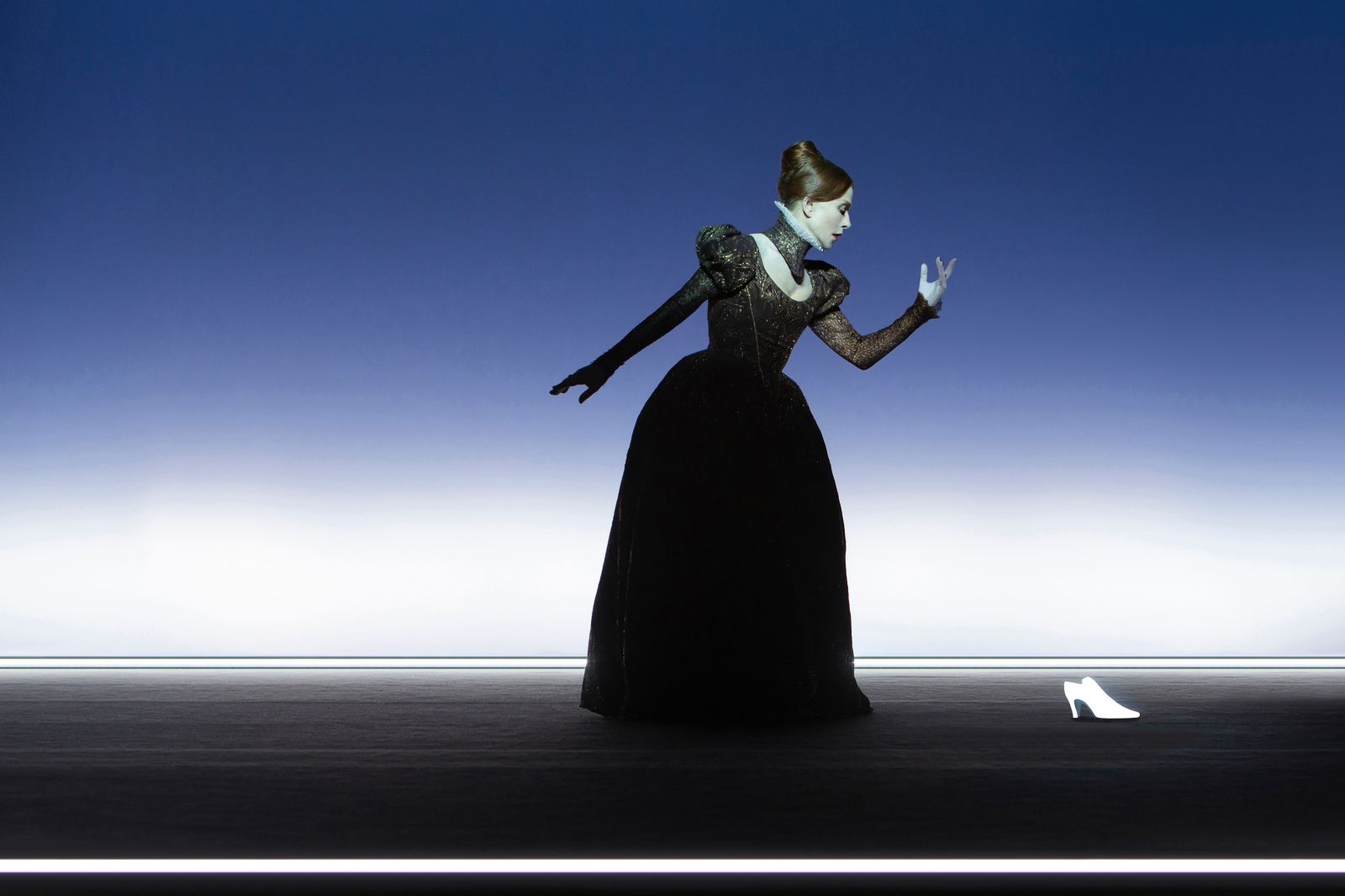
One of the celebrated avant-garde director Robert Wilson’s final projects, performed by stage and screen icon Isabelle Huppert, scored by the renowned Ludovico Einaudi: there are a lot of legends at play on the Festival Theatre’s enormous stage, and that’s before you even consider its subject, Mary, Queen Of Scots. Held captive by her cousin and English queen, Elizabeth I, for almost 20 years, we know a lot about Mary’s final hours before she was beheaded for treason, thanks to a letter she wrote to her brother-in-law, Henry III of France. Fragments of this writing are brought into the 86 paragraphs of Darryl Pinckney’s script, which twists and turns, collides and repeats, builds and retreats, interweaving with the score which becomes counterpoint and commander, a second character. It feels like unsung opera: quite extraordinary and utterly compelling, you won’t want to tear your eyes from Huppert’s astonishingly mobile, alabaster-white face.
Mary was shaped by forces beyond her, seeming only to exist in opposition to her implacable cousin across the border and against the stories of her three dead husbands. Huppert plays her as a puppet, a disjointed marionette, held up only by her corset. Tiny on the Festival Theatre’s vast stage, her silhouette becomes a point of inky blackness against the blues of the video backdrop, her arms elongated as she dances on strings pulled by fate and man. This is not Mary as a human, but Mary as a force: of love for her ladies-in-waiting, the famous Four Marys; of yearning for the son she never saw grow up; of hatred for nasty old John Knox; of her enduring her Catholic faith. Above all, though, it is a portrait of her implacable belief in her right to reign as a queen of France, a queen of Scotland and a would-be queen of England.
This is not an easy watch: as the repetition builds into a descent to madness, it holds you in a vice-like grip that does not release. You will not walk away from the theatre with more understanding or sympathy for Mary and her plight. But you will leave with some of the most sumptuous visual images you’ve ever seen imprinted on your brain and increased respect for the grand dames of avant-garde who are still pushing this strangely compelling form forward and taking it to places where others fear to tread.
Mary Said What She Said concluded its run at Festival Centre on 8 March.