Bad Apples film review: School of hard knocks
Saoirse Ronan is in bleakly comic form as a teacher taking things to extremes to deal with a nightmare pupil in the deliciously executed Bad Apples, says James Mottram
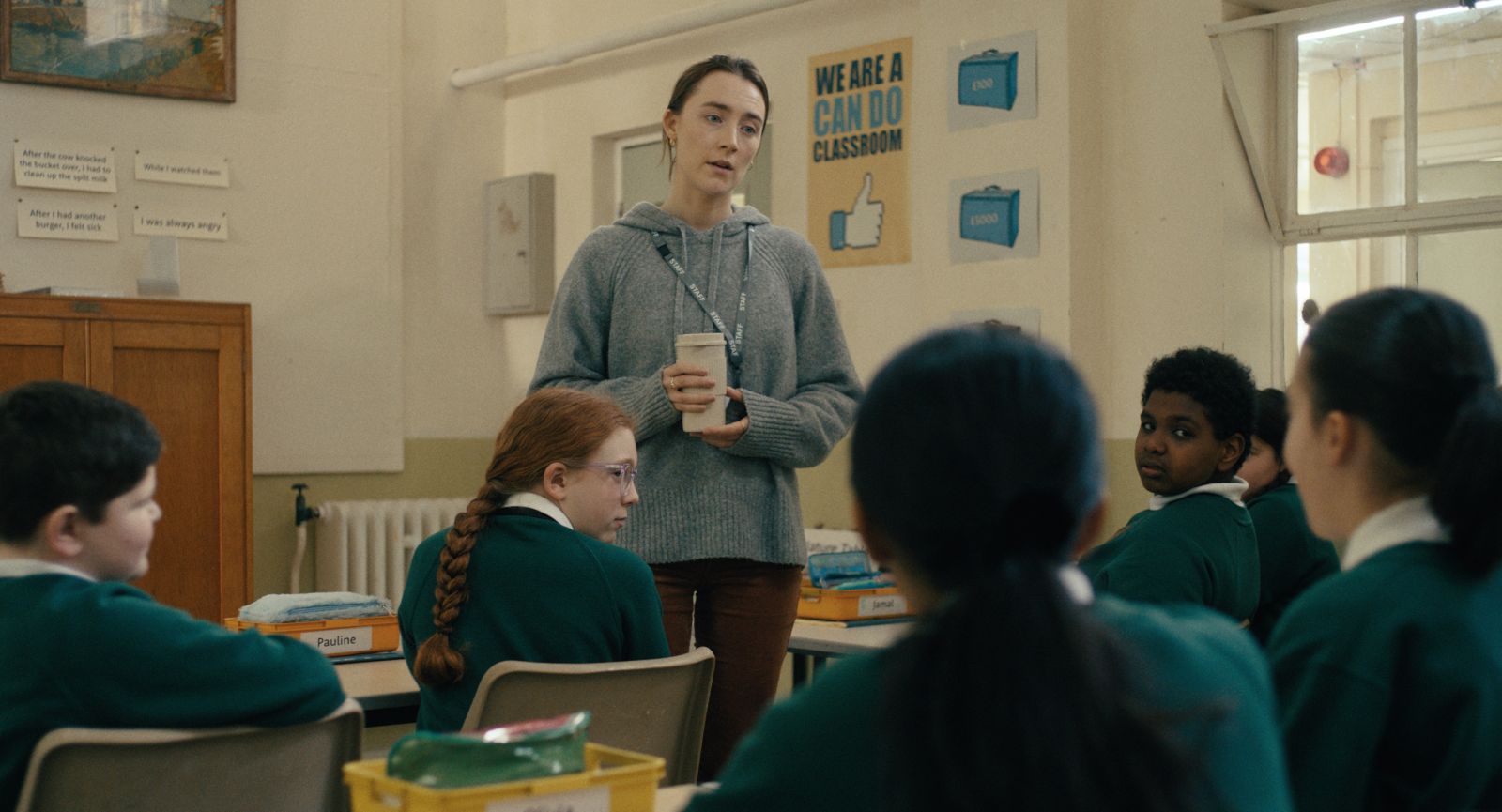
A high-wire act of a movie, Bad Apples is a black comedy so dark, it’s a wonder it ever got made. After all, there’s an understandable sensitivity around child welfare; and with good reason. But in this crafty adaptation of the novel De Oönskade (The Unwanted) by Swedish writer Rasmus Lindgren, you’ll find sympathies pushed from pillar to post, as Saoirse Ronan’s meek teacher finds her inner lion.
Educators in movies are usually cast as inspirational figures, who dedicate their days to moulding their children into impressive specimens. Think of films like the Sidney Poitier-starring To Sir, With Love or Dangerous Minds with Michelle Pfeiffer in the ghetto, and particularly Dead Poets Society, which romanticises the scholastic experience. But not Bad Apples, a film liable to turn any Oftsed inspector white with fear.
Ronan’s loner singleton Maria Spencer isn’t filled to the brim with confidence and doesn’t come armed with life-affirming speeches. Rather, she’s just trying to impart a little wisdom to her class before the bell rings. As the title hints, it only takes one bad apple and, in Maria’s class, she has the ultimate unruly pupil. Danny (Eddie Waller) is violent and disruptive, the sort who makes learning a chore for everyone else.
While the boy doesn’t come from a terrible home, his lack of emotional nourishment is plain for all to see. His single father Josh (Robert Emms), a delivery driver under pressure at work, simply seems wrapped up in his own daily trials. At school, Danny’s a brute, a bully who thinks nothing of breaking the arm of fellow pupil Pauline (Nia Brown), a smart suck-up of a child who appears to have a girl-crush on Maria.
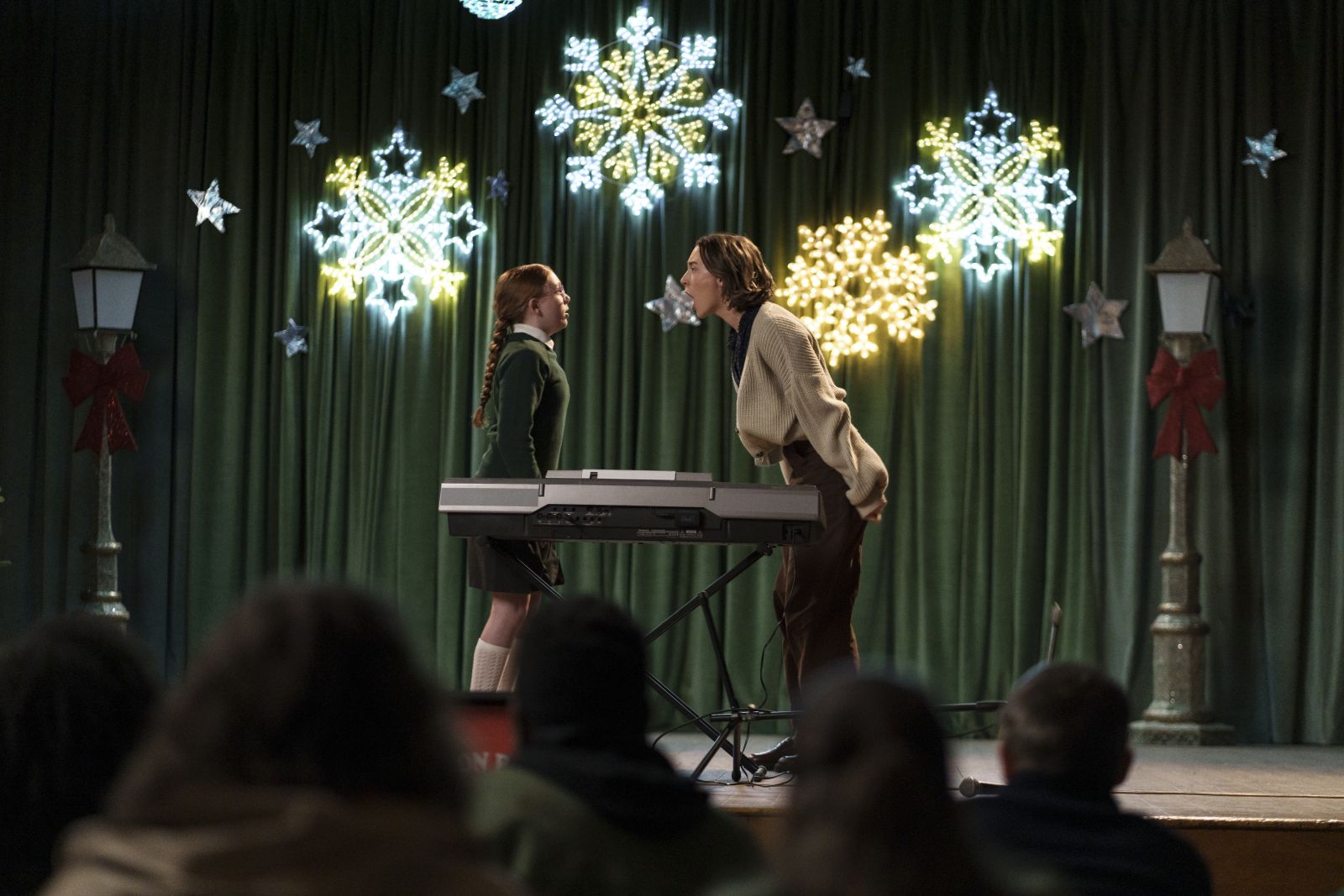
Do you sympathise with children whose own home life has shaped them into unpleasant, spiteful characters? Or do you throw them unceremoniously on the scrap heap? That seems to be one question lurking inside first-time screenwriter Jess O’Kane’s script, one that will have you laughing at the sheer outrageousness of a warped and wild story.
What follows will either have you in stitches or ever-so-slightly horrified. A series of events, and some serious misjudgement on Maria’s part, lead her to abduct Danny, tying him up in her basement. Those who saw the recent film The Good Son, with Stephen Graham and Andrea Riseborough, may feel like they’ve already consumed this narrative, although the tone here is very different.
While that admittedly disturbing film is both morality tale and twisted family drama, Bad Apples takes a different path. As the weeks turn to months, Danny remains in captivity, as Maria tries to educate this feral child. In the outside world, searches continue for Danny, led by his heartbroken father who, despite the difficulties of raising him, is torn apart by the loss.
Directed with authority by Jonatan Etzler (making his sophomore feature here, following his 2023 Swedish-language debut One More Time), the set-up broods, allowing audiences to wonder how on earth this story is going to resolve itself. But the final act turns up the heat in unexpected and frequently hilarious ways, as Maria isn’t the only adult whose behaviour bears scrutiny.
Leading the charge here, Ronan never falters in her portrayal of Maria, walking that fine tightrope of sincerity and insanity. For an actress who tends to veer away from comedy, towards more earnest productions like Little Women, Lady Bird and last year’s Blitz, this is both a step forward and a blessed relief. There’s something quite marvellous about watching Ronan fine-tune her largely untapped comic instincts.
Likewise, Ronan’s youthful co-stars Waller and Brown are well cast, their inexperience set aside as they greatly add to the believability of a script that otherwise might stretch credulity. Increasingly tense, their relations with Maria leave the story on ever-changing sands as power dynamics between all three shift.
While Etzler arguably over-eggs the symbolism (shots of rotting fruit arrive by the dozen), it’s a small misstep in an otherwise deliciously executed work, one that explores notions of parental hypocrisy, cruelty and the divide between haves and have nots. Ultimately, it’s less a film about poorly behaved children than it is about adults, and the way they bend the truth to fit their own agenda. Top of the class.
Bad Apples is in cinemas from Friday 18 September.