Deirdre O’Kane on how social media helps comedians: ‘The gatekeepers are gone; and that is wonderful’
Irish actor and comedy queen Deirdre O’Kane celebrates three decades at the Fringe this year. She looks back on how the comedy industry has changed since the 90s and chats to Marissa Burgess about Christmas catastrophes, acting ambitions and why stand-up blew her mind
.jpg)
You’re doing a work-in-progress week at the Fringe this year. What sort of topics are interesting you so far? When you sit down to write a show, you never know where you’re going to end up. Essentially you do just mine your own life. I have quite a large chunk about two separate stories that are about Christmas, because I think every time Christmas passes, I am just astounded by what a car crash it is. Every time, I just go, ‘Jesus Christ, are we never going to do this differently?’ And every year, I think it’s like childbirth; you forget. You go at it again with renewed enthusiasm.
It’s been 30 years since you first set foot on stage at the Fringe in the final of the BBC New Comedy Awards, the same year you started stand-up. What was that like? I was very rookie. I really wasn’t experienced enough to go. I don’t know how I ended up there as a little finalist. I mean, Peter Kay was in the finals with me. I had had virtually no stage time. I was too rookie. I should have left it until a year later. I don’t know what I was doing. I must have been naturally quite good to have gotten that far, because I really had very little stage time. Well, I’ll tell you what I did have was I had been an actor for ten years at that point. So I had stage time, but not stand-up time: they’re wildly different.
What were those early years at the Fringe like for you? The first couple of times I went, I was actually paid! I was part of a line-up because Karen Koren always produced line-up shows at the Gilded Balloon. I got a salary, a small salary, but I was paid and I was given accommodation. When I think of it now, well, how lucky was that? What an extraordinary thing.
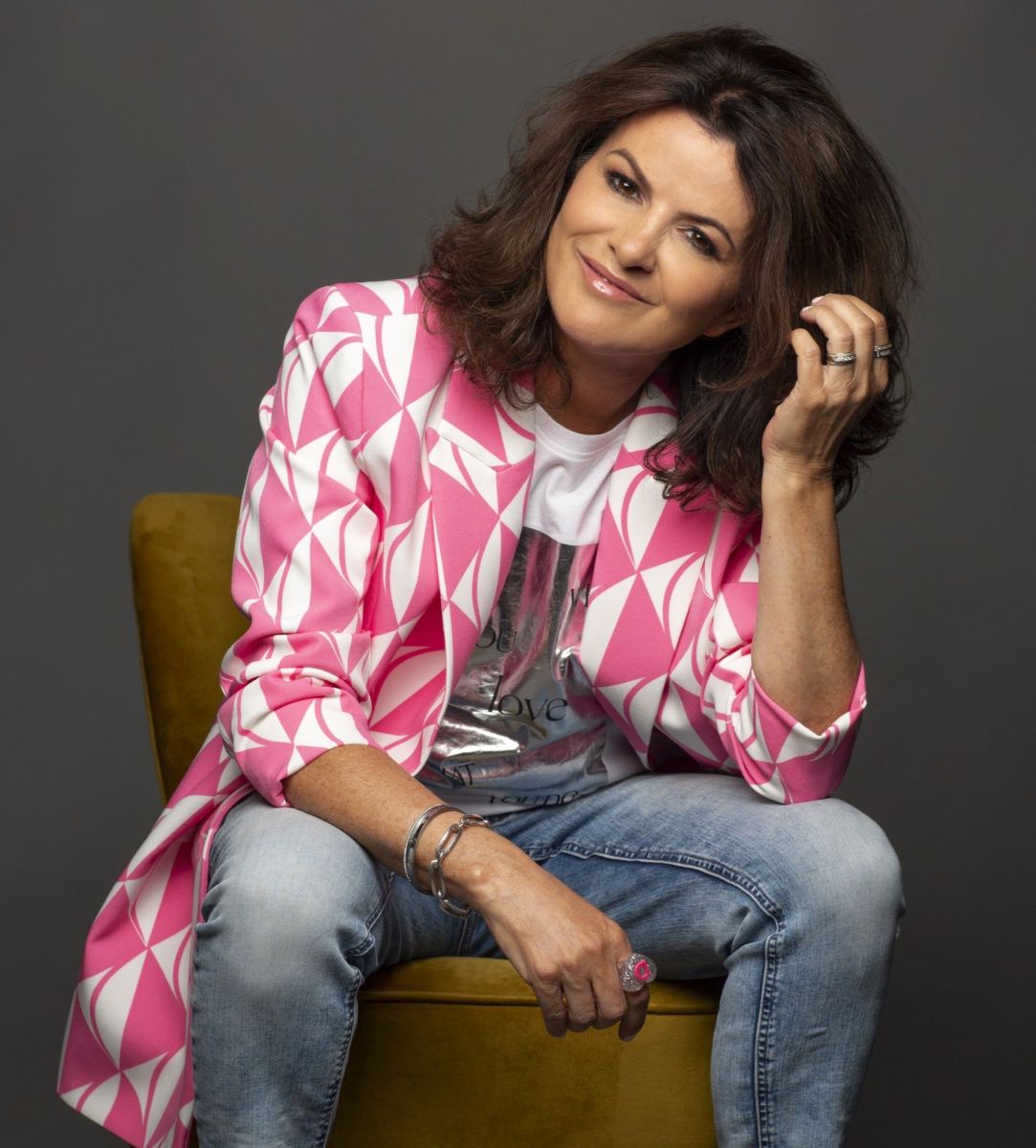
You started at a time when there weren’t many women doing stand-up. How has that changed the scene? I think one of the huge differences is that women are going to see comedy. Women are finally buying tickets to watch women. Thank god! There used to be a huge resistance to that. And I think it was just because they didn’t see it, honestly. I think there weren’t women in the business, so they went to see men. I think the women are flying at the moment. My god, they’re doing so well, and christ, I really love to see it. I didn’t see women doing stand-up, and if I had earlier, I would have started earlier.
So what was the turning point? What made you, as an actor, want to do stand-up? The first time I saw it… mind blown. And it was pure chance. My husband was working on the Cat Laughs Festival in Kilkenny and he said, ‘why don’t you come down?’ I went and watched live stand-up for the first time in my life. I will never forget that weekend as long as I live; I was so excited by what I was seeing. I think there were 40 men on the bill and there were three women. I made a point of going to see the women, and I was just like, ‘oh my god!’. I started writing material in the car on the way home.
What other changes have you seen in stand-up over the years? The other big change is what social media does for people. Anybody who’s got some healthy social media can sell themselves, and that’s new. I was in the same room as Troy Hawke, played by Milo McCabe, and he was sold out. He had been sold out before he got to Edinburgh. This is new to me. So I went, ‘you’re sold out for the whole run?’ and he’s going, ‘yeah, it’s TikTok, it’s the followers’. People are selling out from having made it online. That’s the biggest change. The gatekeepers are gone; and that is wonderful. You used to have to get on the telly or just work the roads relentlessly and do it old school, word of mouth.
Is there anything you’d still really like to do? I still just want to be in a very, very successful Amazon or Netflix show. That’s where I want to go. And I don’t want to stop doing stand-up. I’m loving my stand-up. But it’s nice to break it up and have somebody else write for you. I’ve done quite a bit of telly, series like Moone Boy, for example, but they’re relatively small. I haven’t had a shot at a big streamer show. I want to just have that experience.
Deirdre O’Kane: Work In Progress, The Stand 3, 11–17 August, 7.25pm; The Stand W Edinburgh, 15 & 16 August, 5.30pm.