Festival Mouthpiece: Coco The Time-Travelling Tart
Max Norman, the man behind the woman that is socialite/historian/walking HR complaint Coco The Time-Travelling Tart, asks the burning question: when exactly did we stop laughing at art?
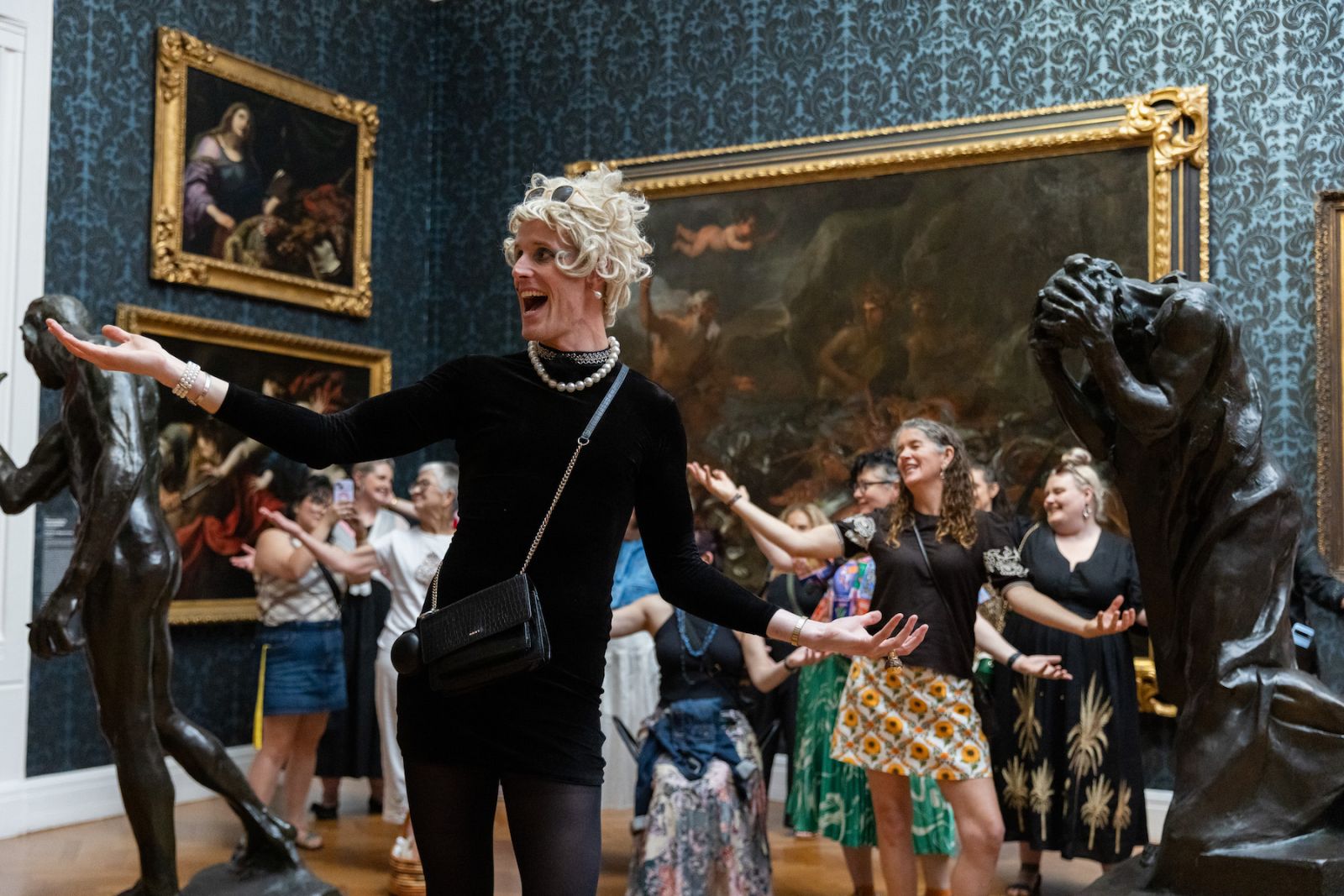
The first thing most of us do when we step into an art gallery is lower our voice. It’s as though we’ve entered a sacred space. Shoulders straighten, footsteps soften, and suddenly we become terribly worried about saying the wrong thing. We scan the descriptions, searching for the ‘correct’ interpretation before we’ve even taken in the work itself.
But who decided art had to be so serious? History certainly didn’t. One of the greatest misconceptions about art is that it belongs to academics and experts. In reality, artists were some of history’s biggest jokers. Botticelli pokes fun at abysmal male stamina in ‘Venus And Mars’. Hogarth packs his paintings with merciless gags mocking English society. One medieval manuscript I saw recently shows a merman curled on his back while the devil fires an arrow up his arse. Monastic kink? Artists have always been playing with us. Somewhere along the line, we simply stopped laughing.
The people in the paintings are no different. Portraits aren’t simply crusty old faces. They’re records of hopes, heartbreaks, fragile egos and impossible ambition. Kings, queens, aristocrats and merchants all wanted to be remembered in the best possible light. Scratch beneath the surface and you’ll usually find someone desperate to be loved, admired, feared or simply not forgotten. That’s the gossip I find irresistible.
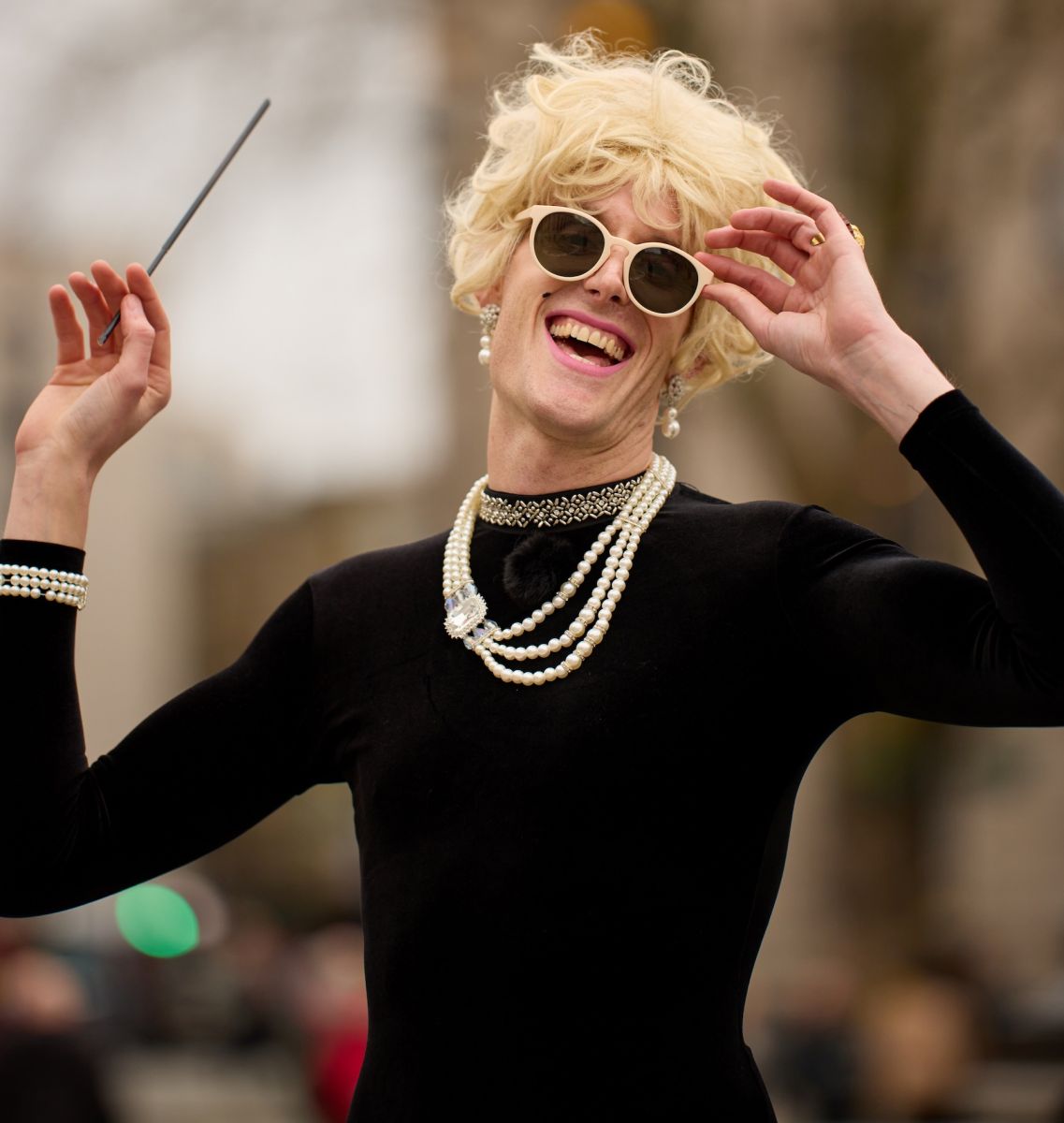 As a comedian with a history degree who spent much of his childhood being dragged around museums by his artist mother, I’ve realised that laughter is often the quickest route into curiosity. The moment someone laughs, they’re engaged. Suddenly they’re asking questions and spotting details they might otherwise have missed. Humour helps us connect with the past and, in doing so, realise we’re ultimately all the same.
I think that’s why I love history so much. I’m not searching for facts. I’m searching for people; for guidance on how to navigate this strange and sometimes scary business of being human. Strip away the crowns, armour and marble statues, and aren’t we the same? For thousands of years we’ve fallen hopelessly in love, dared to dream, made spectacular mistakes, simmered with jealousy, grieved deeply and somehow found a way to carry on. I find that strangely comforting. Knowing that Roman Emperor Marcus Aurelius filled his private journal with reminders to stop worrying and get out of bed in the morning has an odd way of making me feel less alone. History reminds me that, whatever I’m feeling, someone has almost certainly felt it before.
At the heart of my work with my comedy character Coco The Time-Travelling Tart is play and storytelling. By day in Edinburgh, I’ll be leading comedy tours at the National Galleries Of Scotland, uncovering the scandal, secrets and wonderfully human stories hidden behind the masterpieces. By night, Coco takes audiences on a wildly chaotic journey through history at the Fringe. Whether I’m in a gallery or on a stage, the aim is exactly the same: to make history feel gloriously alive. Because history isn’t really about the past. It’s about understanding ourselves a little better.
Coco’s Art History Comedy Highlights Tour, National Galleries Of Scotland: Portrait, 7–30 August, 2.30pm, 3.45pm; Coco The Time-Travelling Tart, Underbelly George Square, 5–30 August, 9.45pm; main picture: Jennifer Forward-Hayter.