Director Hassan Nazer on visiting Iran: 'Every time I go back, I get more scared'
Making movies under the gaze of an oppressive regime is not for everyone. To start our coverage of this year’s Glasgow Film Festival, director Hassan Nazer talks to Zara Janjua about the pressure of covert filming in his native Iran and the power of metaphor in getting his message out into the world
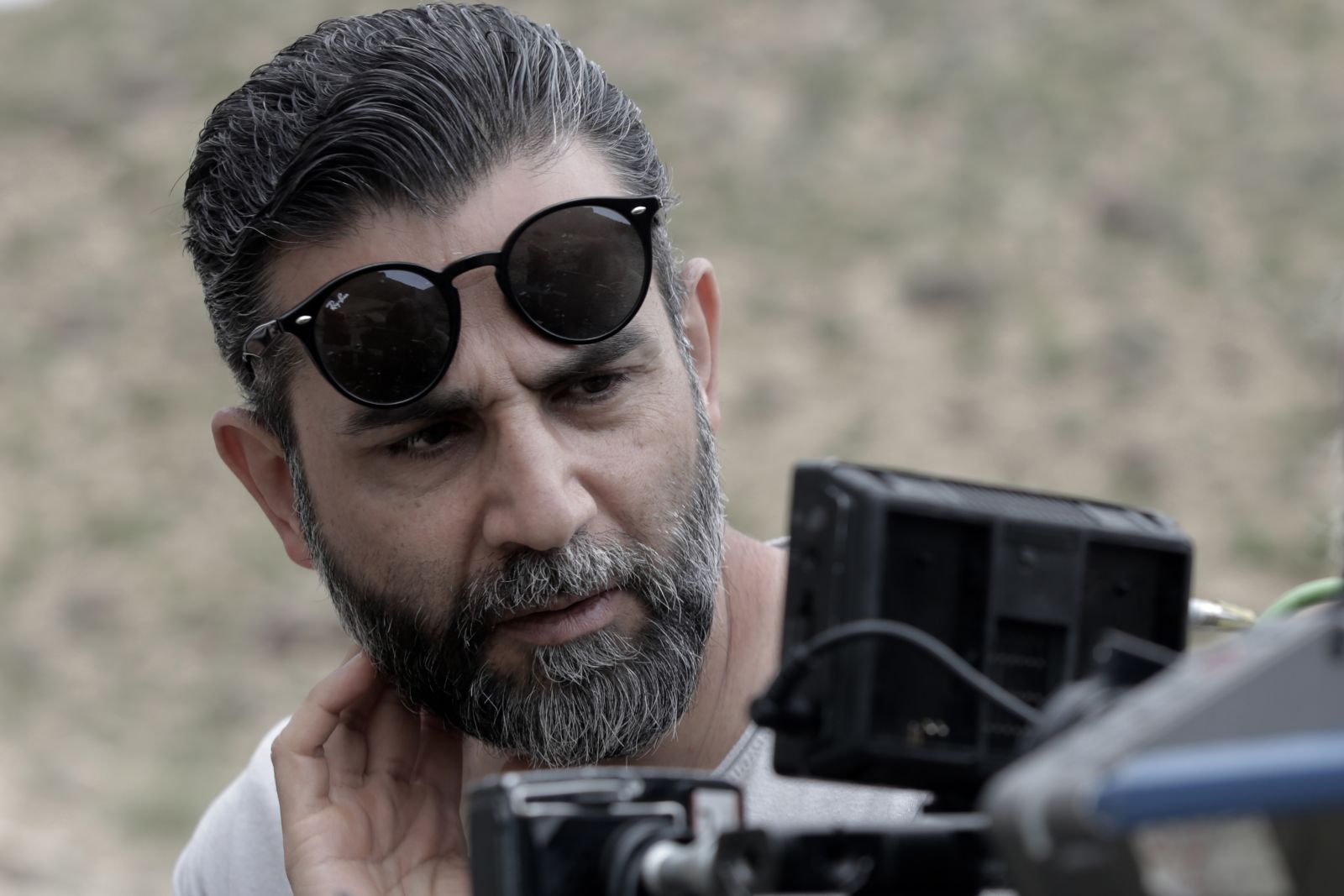
Hassan Nazer leans back, lifting his bronze mask award like it’s a dinner plate. ‘I picked up my first Bafta in the same hotel I was dropped off outside when I first arrived in Glasgow,’ he says, nodding towards the Bafta Scotland Best Feature Film trophy for Winners (2023). He’s speaking from his home office in Aberdeen, where a poster blending Scarface and The Godfather hangs beside him, and awards casually line the shelves behind. ‘When I came off the bus from London, I saw this building, this Hilton hotel,’ he recalls. ‘I never imagined I’d be back at that same place, 25 years later, collecting a Bafta.’
At 18, Nazer put women on stage for the first time in his home town, just outside Tehran. It was enough to get him red-flagged and his uncle smuggled him out of the country soon after. Before Scotland served him with a route into cinema, it dished up kebabs. In Glasgow, Nazer studied English by day and worked fast food by night at the fabled Diablero on Pitt Street, feeding clubbers spilling out of noughties haunts like The Shack and Trash. ‘There must have been like 200 people coming out at the same time,’ he laughs.
He moved to the north-east to study film and, along the way, transformed an antique shop into a restaurant. Café Harmony now serves Iranian and Mediterranean food, and for years the food industry has quietly bankrolled his films. It’s something he’s openly proud of. He admits to having asked AI what it knew about him, only for it to answer: ‘If you want to find Hassan, you can pop into Café Harmony.’
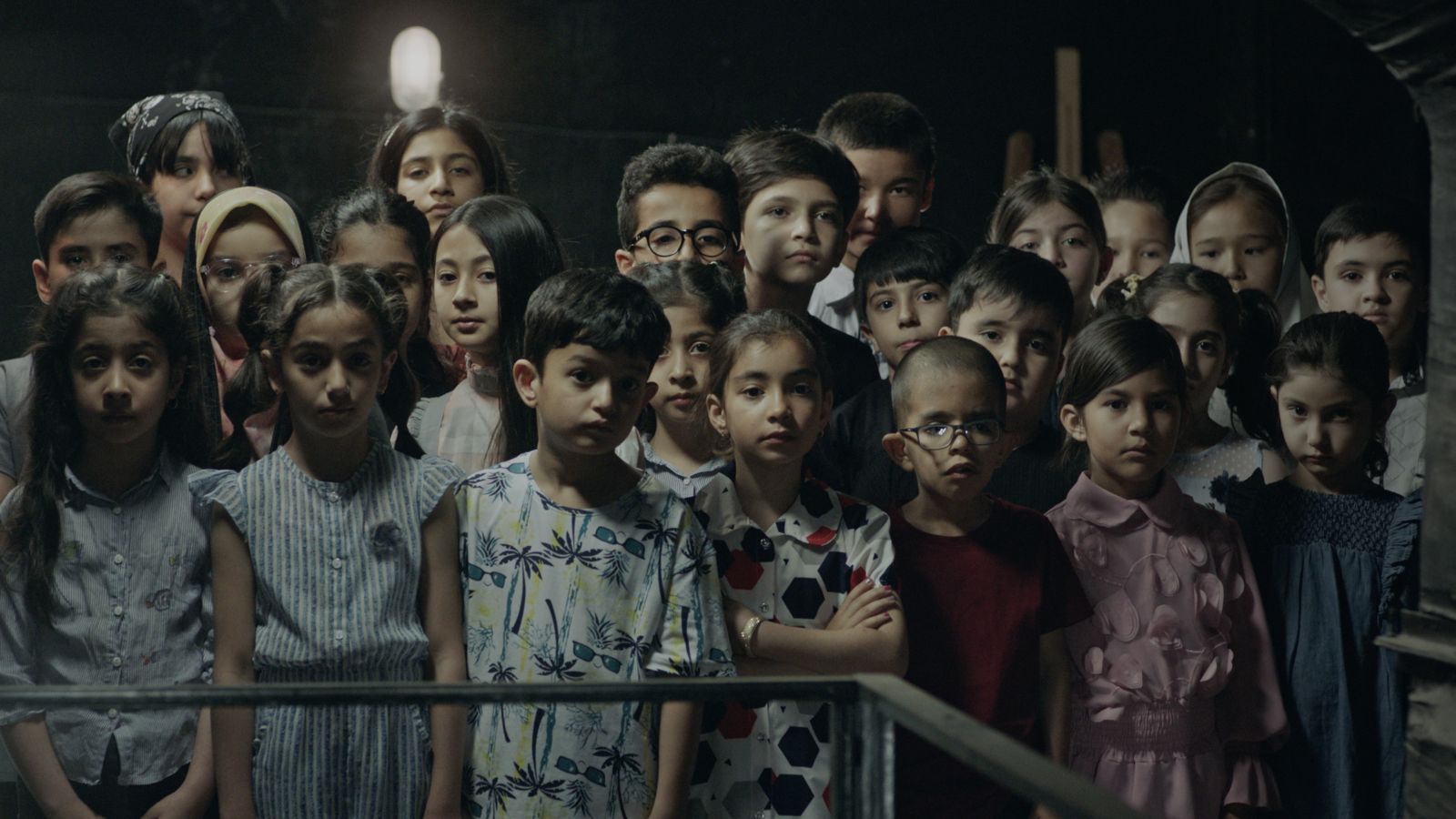
His new film, Without Permission, which has its UK premiere at Glasgow Film Festival, heralds years of graft honed into a distinct style. It follows a director making a film with children about love, while carefully subverting authority. And, like much of Nazer’s work, it’s autobiographical. Denied approval by Iran’s Ministry Of Culture, he shot the film quite literally without permission, presenting it as a documentary built around a deceptively simple premise: a director interviewing children. ‘I rolled my camera without even having a script,’ he says. The interviews are real, with the parents watching closely from another room. He chose remote mountain locations for their secrecy, backing up footage daily in case he was caught. Suspicion is baked into every frame. ‘The third eye is always watching you, and you might not know who they are.’
As a viewer, you’re certainly unsure initially whether you’re watching fiction or documentary. ‘Actually, it was intentional,’ he replies. The film opens with uncertainty: sound without image, an interrogation played out on a blank screen. It’s designed to place the viewer inside his experience, to create ‘some doubt and feeling of what I had to go through’.
Iranian cinema, he explains, runs on metaphor: ‘You can say something and mean something else.’ Metaphor allows for multiple meanings, which is essential when navigating censorship. But Nazer insists those restrictions also force creativity. In Winners, he couldn’t show the face of acclaimed filmmaker Jafar Panahi, who was playing a taxi driver, because he had been banned in Iran, as had his film Taxi. So, Nazer adapted. ‘I thought, I’m going to show him from behind to create this doubt.’
The cost, however, is personal. ‘Every time I go back, I get more scared,’ he admits, because meaning can always be weaponised. His films have been officially selected for the Academy Awards, but prestige offers no protection. ‘The censors don’t care about the awards,’ says Nazer. ‘They care about what I’m saying in the film.’ The more visible the work, the greater the risk: keeping a low profile can be self-preservation.
Next, Nazer is shifting continents again as director on Farida: The Girl Who Beat Isis, a UK-Germany co-production, which begins shooting in Morocco from March. It tells the story of Farida Khalaf, a Yazidi girl abducted when her village was attacked in 2014, and is co-written by Lauren Hynek, a screenwriter behind Disney’s 2020 live-action adaptation of Mulan. This means that, at least for a while, you may be less likely to bump into Nazer in Aberdeen, socialising at Café Harmony.
Without Permission screens at GFT, Glasgow, Tuesday 3 & Wednesday 4 March.