Ex:Re: Save As album review – A compelling voice
With a second release under the Ex:Re handle, Elena Tonra’s poetic flair establishes the Daughter frontwoman as one of the best songwriters of her generation, says Kevin Fullerton
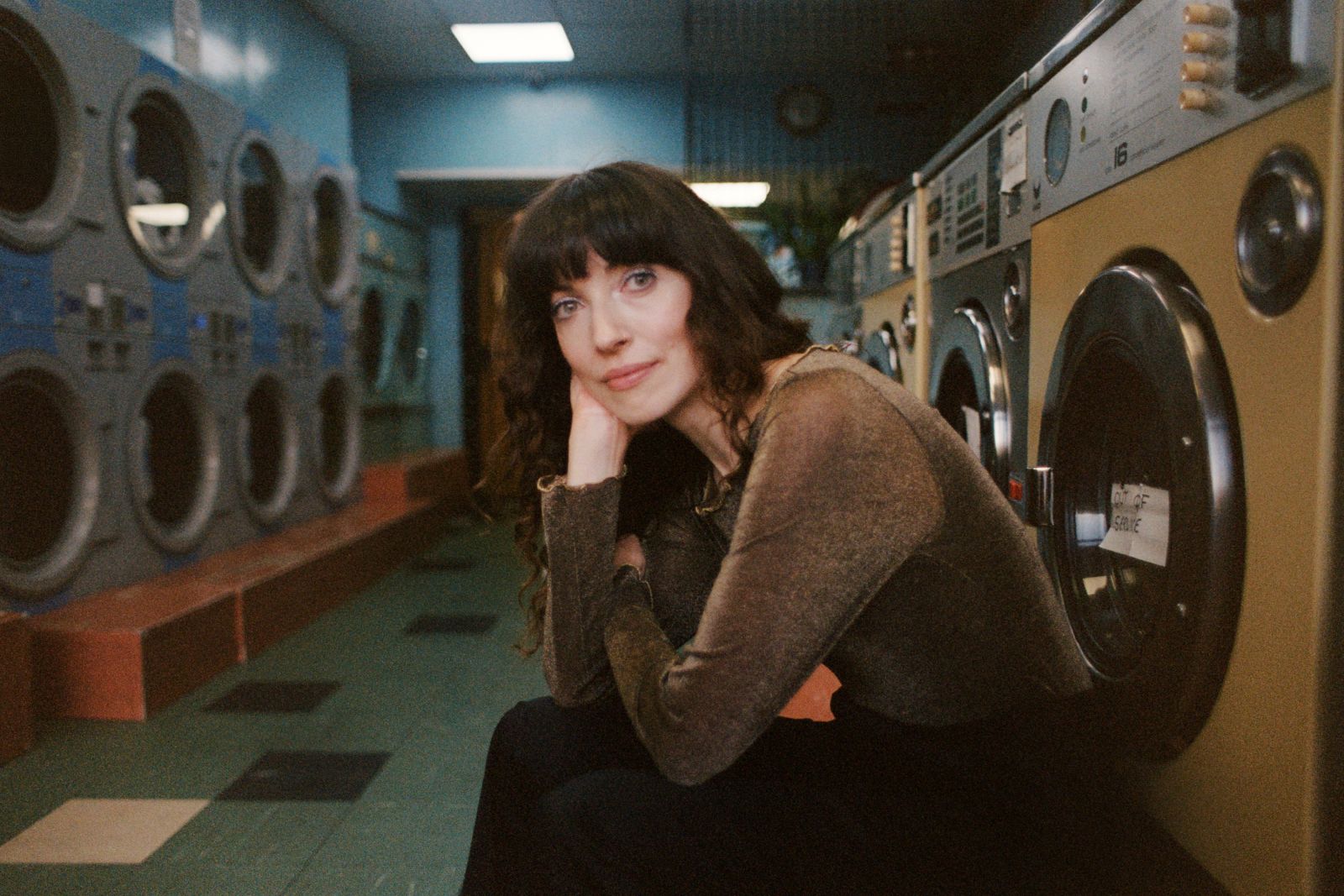
‘There’s no one here’ is one of the more common sentiments in Elena Tonra’s lyrical toolbox. As the lead in Daughter, and in her solo project Ex:Re, she cuts a figure of perpetual solitude, sometimes one of quiet reflection, but more often of dejection, anxiety and isolation. She seems to exist in two states: confident and dynamic musically (with an almost surgical control of her breathy vocals) versus trapped in an emotional stupor, examining her psyche with the blow-by-blow immediacy of rolling news.
Save As, her second album under the Ex:Re moniker, arrives in a similar cloud of gloom, staring inward and finding only a hyper-critical inner monologue for comfort. Its textures exude a more brittle and immediate sensibility than the swooning gloom of Daughter, aided by producer Fabian Prynn’s barren sound design and Tonra’s fraught poetry, which delights in turning everyday moments into spiralling screeds of self-doubt and verbal flagellation.

It may well be the fear of sounding too much like Daughter that propels the album’s thematically consistent but vibrant shift in tones: trip-hop rhythms on ‘Sleep’ open themselves to a lingering anti-dance while the anaesthetised drums of ‘Two Chords’ place ambivalent lyrics into a dour clatter of pianos and downtrodden cellos. Elsewhere, the same kind of mordant humour you’d find in Malcolm Middleton or Frightened Rabbit is shot through Tonra’s stories of distress. A prime example is ‘Frozen Aisle’, a woozy, authentically beautiful conflagration of slow-motion synths and mounting drums. It opens with a declaration: ‘I’ll make a fool of myself in the middle of the frozen aisle’, before the explanation: ‘I’m looking for ice-cream’. The drama of her thoughts may be unable to keep pace with this everyday banality but it could well be the best song of her career to date.
These small touches are brought into stark focus on the stripped-back, hurriedly strummed ‘Wasp’ or the murky, synth-driven ‘Language Of Love’, which foregoes melody for a slow teasing-out of disarray. Metonymy is Tonra’s neatest trick: a radio station comes to represent disassociation (‘I am a changing radio station/I’m suddenly another,’ she declares on ‘Radio Station’) while a wasp trapped under a glass becomes an extension of Tonra’s own character flaws. Poetic flair, which overwhelmed Daughter’s early work with melodrama, makes the push and pull of her stories coolly confronting.
Though billed as a solo project, the collaborative effort here is palpable. Respected synth experimentalist Hinako Omori lends her talents (do yourself a favour and listen to her gorgeous album Stillness, Softness), adding to the icy exterior with sustained notes, while cello from regular collaborator Josephine Stephenson provides a stately bassline of anguish. Yet Tonra’s ongoing internal warfare is the most fascinating element of her work. She remains one of the more compelling voices in indie, both hauntingly detached and caught in a visceral unravelling. With every new release, she has unassumingly become one of the finest songwriters of her generation.
Save As is released by 4AD on Friday 30 October; main picture: El Hardwick.