Gayle Chong Kwan on The Great Instauration: 'There is a joy in bringing these things to the fore'
Kicking off our science special, artist Gayle Chong Kwan talks to Claire Sawers about her epic new installation which confronts some deeply uncomfortable truths from Scotland’s scientific past
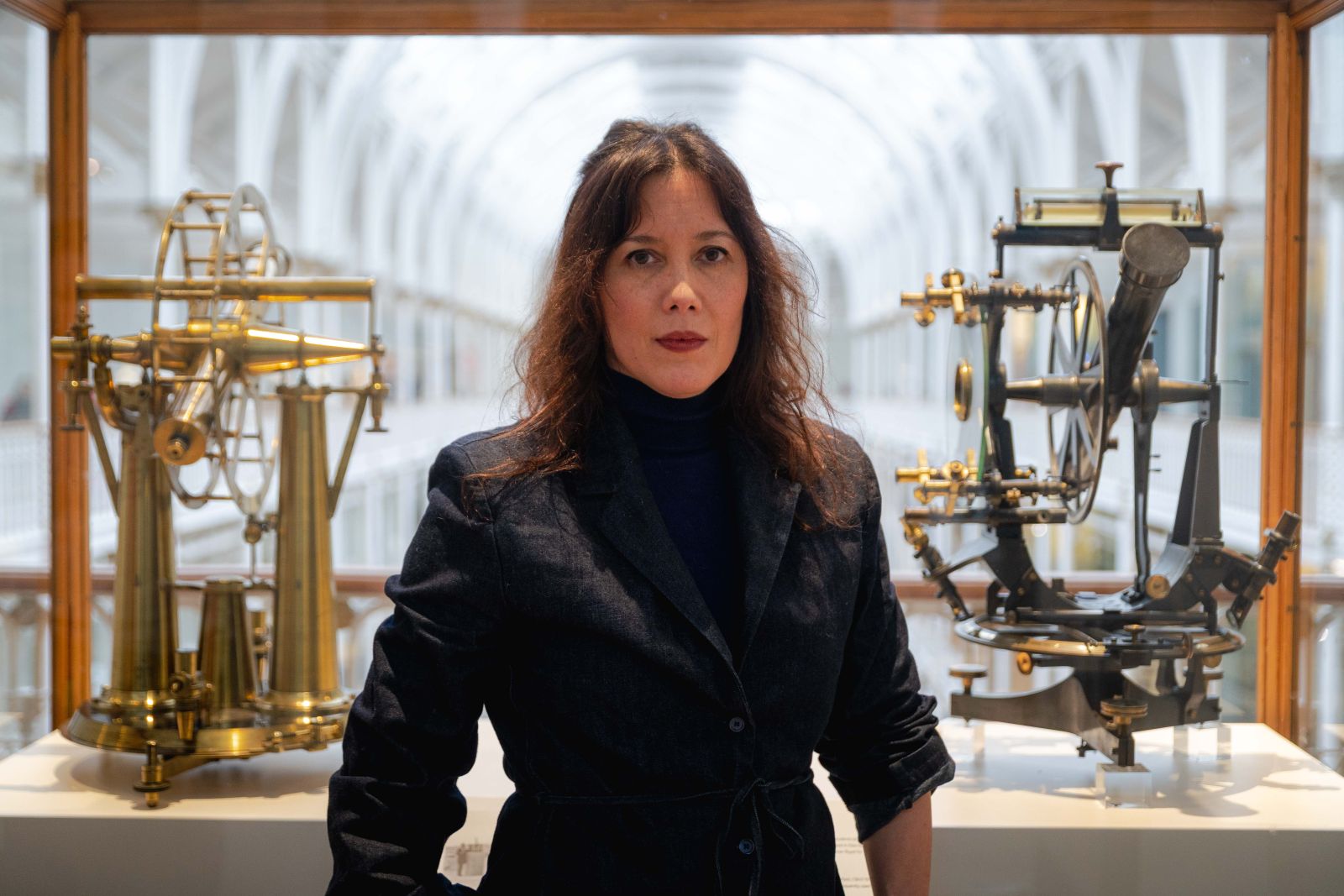
It’s not easy to squeeze the work of Gayle Chong Kwan into a nutshell. As a researcher, a number of her findings may shock you while her art installations could feel like stepping into a psychedelic dream. The London-based artist grew up in Edinburgh, the child of a Scottish mother and Chinese-Mauritian father, with her visual art and academic work sitting at the intersection of history, science and fine art. She often collaborates with museums and galleries, rethinking scientific histories and exploring colonial framings.
‘I’m always looking for the emotional punctum,’ Chong Kwan states. ‘The details that touch you, especially in quite dry material. Science has often been separated from emotion but I’m looking for these new boreholes into history. Ways to examine our ways of seeing. Which other ways of seeing have historically remained hidden? What effect does the male gaze have on science?’
As part of a co-commission from Edinburgh Science Festival and Edinburgh Art Festival with the theme of ‘science under the lens’, Chong Kwan has created The Great Instauration. Her underground, upside-down world filled with sculptures and fabrics hanging from railings and columns will be installed in the Grand Gallery at the National Museum Of Scotland where the young Chong Kwan used to visit with her mum in order to sketch. ‘The museum was a really important part of my childhood. As a child, it was a very active, sensory place. Fast forward to now, I’m fascinated by how archives are categorised.’
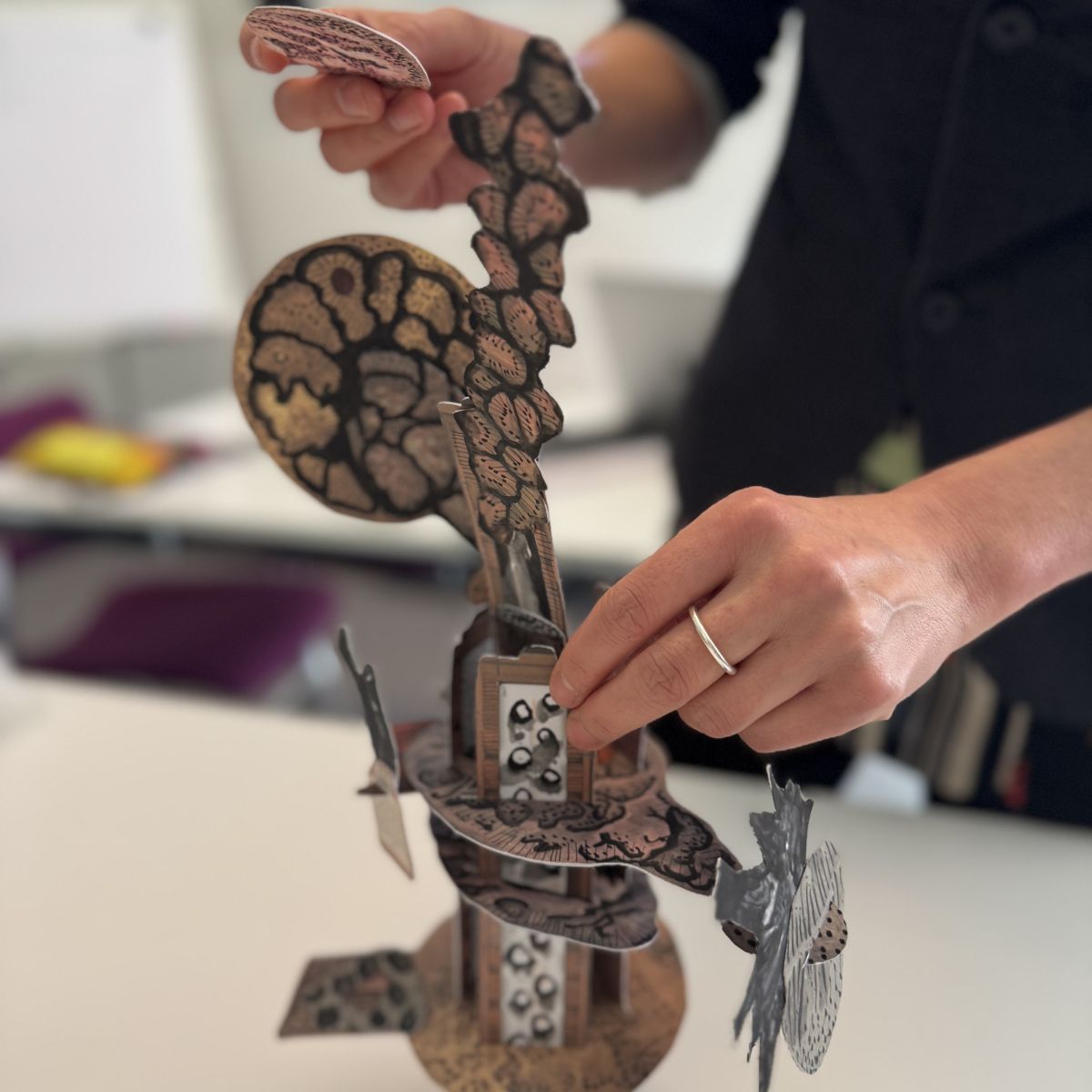
The museum was one of eight major collections that Chong Kwan was given access to; others included London’s Wellcome Collection, Swindon’s Science Museum Group Collection and Edinburgh’s Royal Botanic Garden and Surgeons’ Hall Museums. Her focus on six scientific instruments that she found in the collections (microscope, theodolite and thermometer among them) connects these seemingly innocuous objects with themes of exploitation and extraction behind the Scottish Enlightenment. ‘There was so much information, I almost felt myself becoming liquid,’ says Chong Kwan. ‘My brain dissolved. It was actually the most emotionally difficult research that I have ever done. Colonial rule, testing on humans, death of slaves by scurvy… horrific stuff. I don’t know if I can read about another Scottish doctor slave owner and his treatment of slaves ever again. I found myself crying sometimes when I had to give interim talks to NMS.’
The exhibition takes its name from Francis Bacon’s pivotal scientific and philosophical paper from 1620, which includes some problematic language. ‘There are all these references to “penetrating nature” and “lifting the skirts of nature”. You could write a feminist critique on the fact that Bacon was called “the father of modern science”; it’s been really tough to read that male, often violent gaze.’
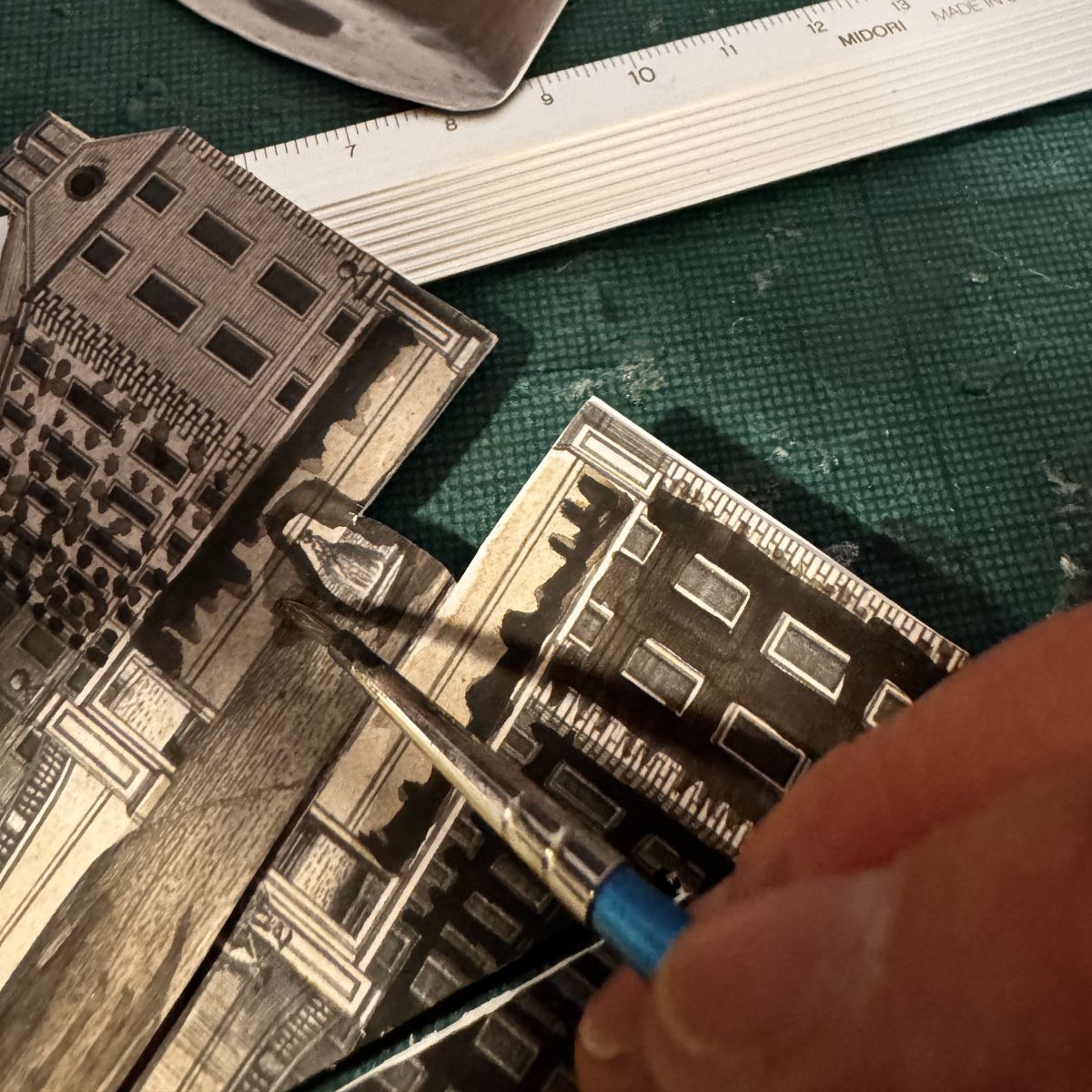
Chong Kwan’s treatment of the materials inevitably adds her own decolonising lens to the work. ‘This isn’t an academic exercise. I am an embodiment of the entire commission: being between different cultures, growing up in the 70s and 80s, looking and feeling different when Scotland wasn’t hugely multicultural. My dad came over by boat from Mauritius aged 18 to study dentistry at Edinburgh University; my Scottish family from Forfar went to Calcutta; my great-great-grandfather worked for the East India Railway Company; my Chinese family went to Mauritius, mainly as indentured labourers. They were tied to their work and there wasn’t much freedom within that. When the commission came up, I went, “this is me!”. My family make-up gives me the two sides of the colonial coin. I come not as a disinterested person to this.’
Chong Kwan appreciates the way in which the commission allows for a reimagining of some oppressive aspects of scientific methodologies. ‘I commend the Science Festival for wanting to look at these hidden histories. There is a current wave of recognition in Scotland over a lot of these complex histories and there is a joy in bringing these things to the fore. I can’t explain all of these things in language, which is why I make art. I work a lot with galleries and museums: should they be as they are? I don’t think so and I want them to change. I obviously care about them. You have to care when you work with them. I think there are other ways of being and I want to take things into people’s dreams and emotions.’
The Great Instauration, National Museum Of Scotland, Edinburgh, Saturday 4–Sunday 19 April, as part of Edinburgh Science Festival; main picture: Alex Howarth.
Related articles
- Gayle Chong-Kwan on The Obsidian Isle: The photographer talks about her latest exhibition, inspired by the blind third century poet Ossian
- James Chapman on new restaurant Confelicity: 'The food is going to be good quality for everyone, whether they’re gluten-free or not'
- Mele Broomes on her new dance company: 'We have been scattered across the world, but then we come together'