Matilda Shapland on creating nuanced fairytale heroines: ‘Everything added is flavoured by us’
Tipped to be one of the breakout musicals of this year’s Fringe, Bliss is ripping up the fairytale rulebook. Dominic Corr meets some of the cast to discover how this pop-rock romp is turning traditional once-upon-a-time adventures on their head
%20Pamela%20Raith_L%20(1)%20(1)%20(1).jpg)
For critics, our happily ever after occurs at the end of August, but for performers, those wishes and hopes burn brightest from the start of the month. Falling squarely into the latter category is Bliss, from the Olivier Award-winning producers behind Cabaret and The Curious Case Of Benjamin Button.
It is, by all accounts, one of the Festival’s most anticipated musicals, designed to shake the foundations of the city with a 17-strong cast of West End performers and pop-rock belts where the traditional fairytale model collides with the unstoppable concert power of a show like Six. But beneath the blinding sheen of high-budget spectacle and towering set pieces, Emma Lively and Tyler Beattie’s Bliss is aiming for something far more rebellious than your standard Disney-adjacent cash cow.
Turning the classic, pristine fairytale inside out, the narrative follows four princess sisters escaping their tower to confront a world where happy endings come with a rather extortionate price tag. Rather than inheriting a collection of sanitised, hollow archetypes, the performers are finding messy nuance inside the spectacle.
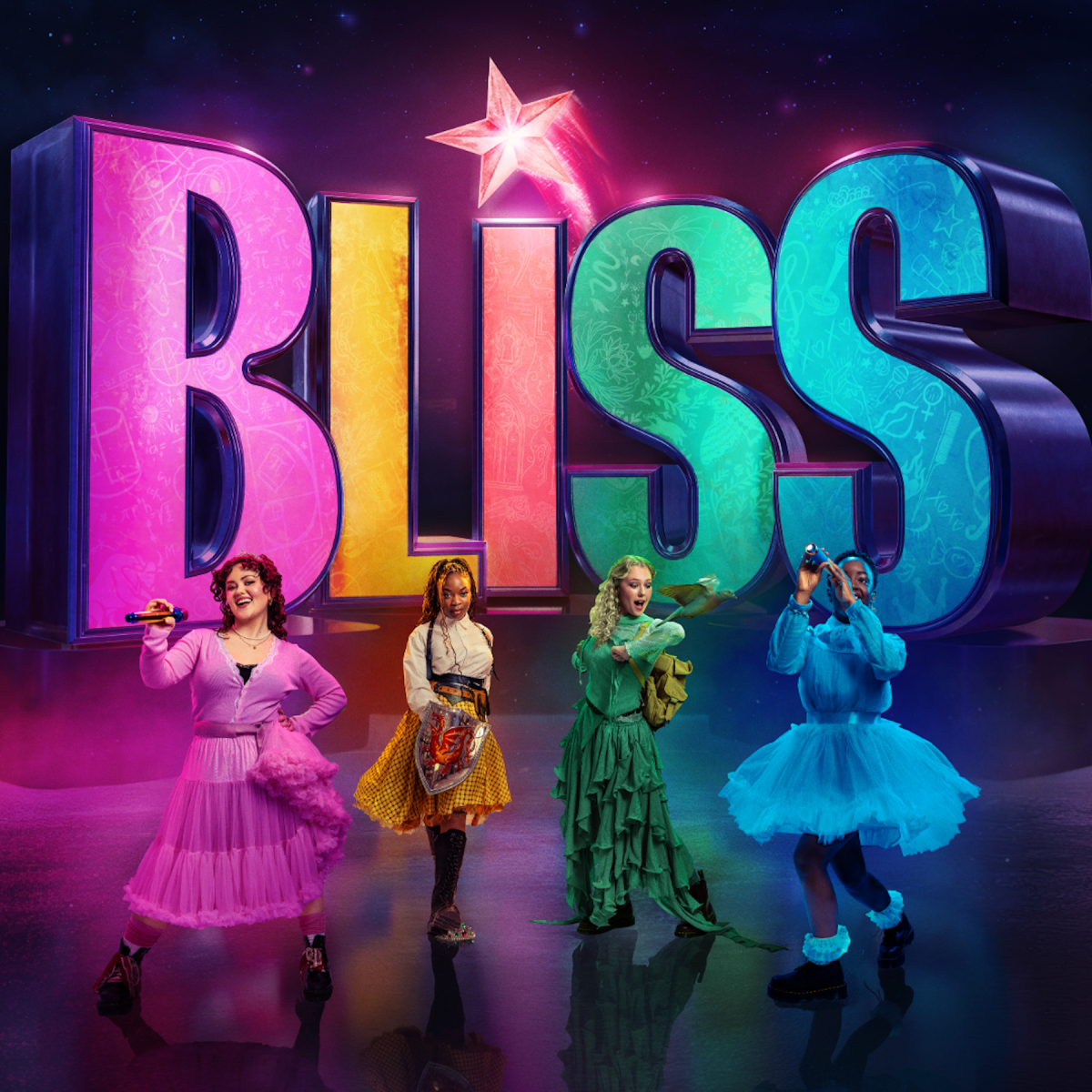 ‘We don’t really have many references to look back to in terms of developing our characters,’ explains Akshara Gunda (The Lunchbox Musical), who steps into the royal shoes of Princess Piper. ‘We are given a lot of liberty to find where the character lives within ourselves, rather than taking us to meet the character.’ It is a refreshing approach, allowing performers to bypass the usual constraints of a creative production line.
Matilda Shapland (Les Misérables), portraying youngest sister Princess Holly, echoes this liberating sense of ownership, noting that ‘everything added is flavoured by us’. Gunda reinforces that this lack of superficial perfection is precisely what makes the piece tick: ‘A big part of the girls, these sisters and their story, is that they’re not perfect.’
To convey this existential royal angst, Bliss relies on an eclectic score that Shapland describes as pop-rock at its core, featuring ‘moments that feel a little bit Sondheim-y in the sense that the music dramaturgically reflects what’s going on’. It is a musical landscape that refuses to stay in one lane, moving from radio-friendly choruses to complex, character-driven storytelling. And for those who fear a jukebox musical, Shapland emphasises how the production’s original songs are woven to interrogate traditional roles, offering diverse character opportunities while still capturing the genre’s roots in nostalgia and escapism.
Intended as a joyous smashing of the bones of westernised storytelling, Bliss isn’t waiting for permission to rip up the fairytale rulebook, acknowledging that all happy endings come with a cost, and seeking to include everyone within that fairytale world rather than just the privileged few.
Bliss, Pleasance Courtyard, 5–31 August, 1pm; main picture: Pamela Raith.