Sam Parsons on the price of his ethical meat: ‘We’re the same as the budget supermarkets’
With meat becoming a treat in cash-strapped times, the choice for many comes down to cost versus quality. But Suzy Pope discovers Butchery At Bowhouse in Fife’s East Neuk are fighting the corner for craft butchery, arguing their case on price, animal welfare and taste
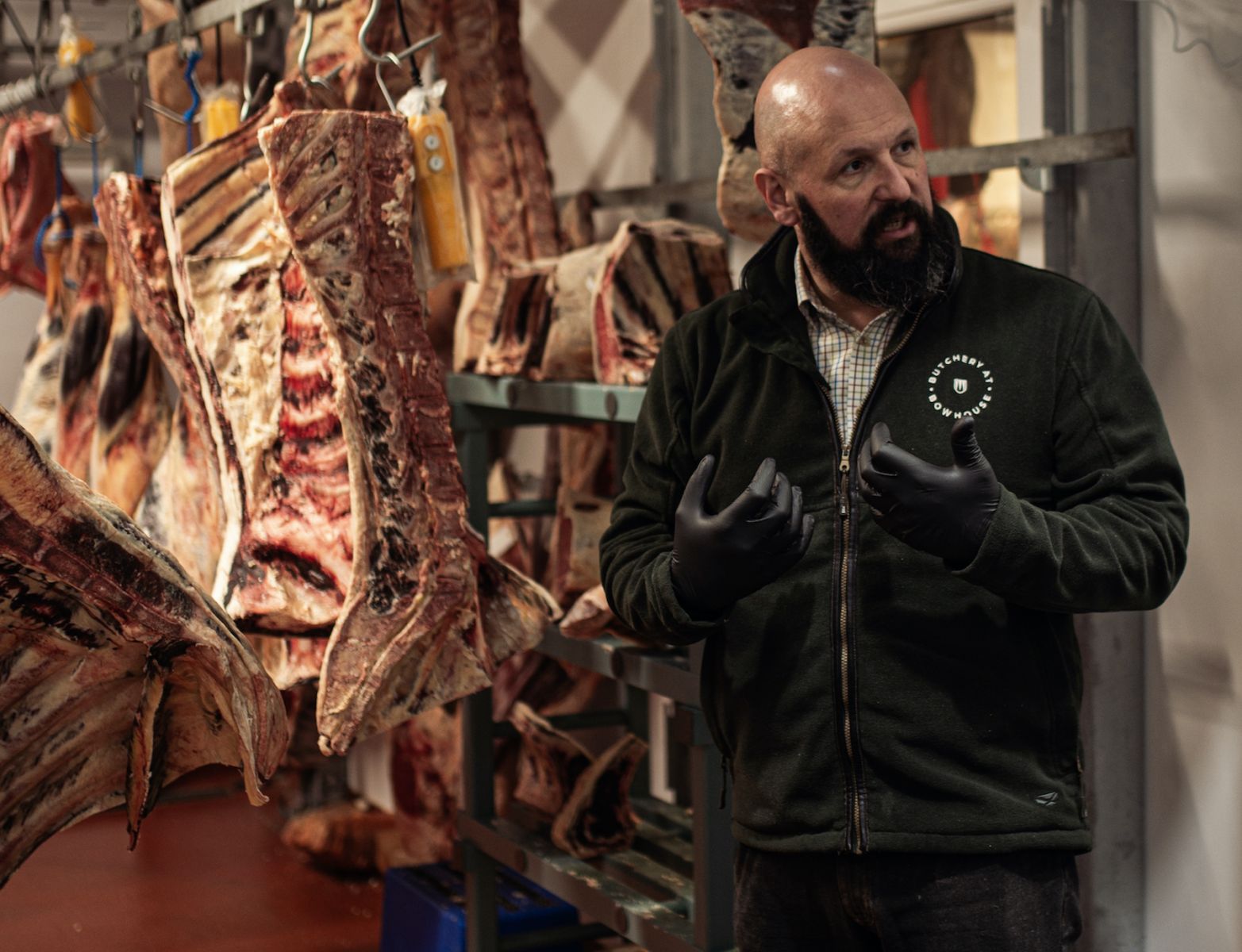
Euan Simpson is one of only 36 qualified craft butchers in Scotland. ‘I learned butchery here,’ he says, referring to Butchery At Bowhouse on the Balcaskie Estate in Fife’s East Neuk. ‘I used to be a supermarket manager, then I started working at Bowhouse and loved it. To me, it’s an art. So I treated it like a real skilled profession and studied for a diploma in craft butchery.’ Simpson talks about meat cleaving with the precision of a surgeon, following the seams of the animal’s body and understanding intricate anatomy as well as knowing which sauces and spices bring out the herbal undertones of lamb or richness of beef, and how long to cook a sirloin steak.
If butchery is an art, it’s a dying one. Pre-packed meat, wrapped in plastic and filled with water, is just too convenient and, on the surface, seems cheaper than a carefully considered cut from a butcher. In a world where we’re all time-poor and a cost-of-living crisis has pushed any meat into the treat category, it’s small wonder consumers choose convenience and cost over quality. However, Sam Parsons, estate manager at Balcaskie, urges everyone to ‘take water weight into account, then price-check us. We’re the same as the budget supermarkets.’
.jpg) Parsons leads seasonal Grass To Grill tours of the estate, where visitors come face-to-face with the Red Lincolnshire cows and Tamworth pigs in the paddocks, visiting the butchery before sitting down to a long-table feast of wood-fired mutton and beef. It’s a bold move, showing off the entire process from happily grazing cattle in the fields to facing their meat on the plate. But Balcaskie doesn’t shy away from honesty. At the butchery, there’s a window into the ageing room and carcasses are cut up in the open behind the counter, rather than taken behind a screen or to a back room. It’s no doubt confronting for some: a flash of feathers or ears as meat is prepped in front of you. Maybe not looking your food in the eye is worth the sacrifice of quality and taste.
Parsons leads seasonal Grass To Grill tours of the estate, where visitors come face-to-face with the Red Lincolnshire cows and Tamworth pigs in the paddocks, visiting the butchery before sitting down to a long-table feast of wood-fired mutton and beef. It’s a bold move, showing off the entire process from happily grazing cattle in the fields to facing their meat on the plate. But Balcaskie doesn’t shy away from honesty. At the butchery, there’s a window into the ageing room and carcasses are cut up in the open behind the counter, rather than taken behind a screen or to a back room. It’s no doubt confronting for some: a flash of feathers or ears as meat is prepped in front of you. Maybe not looking your food in the eye is worth the sacrifice of quality and taste.
And yet. There are no nitrates in Bowhouse’s bacon and every part of the animal is used and treated with care. ‘Even the mince is dry-aged,’ says Simpson. ‘Around 75% of the UK’s black pudding is made with imported dried ox blood. Ours is made with fresh.’
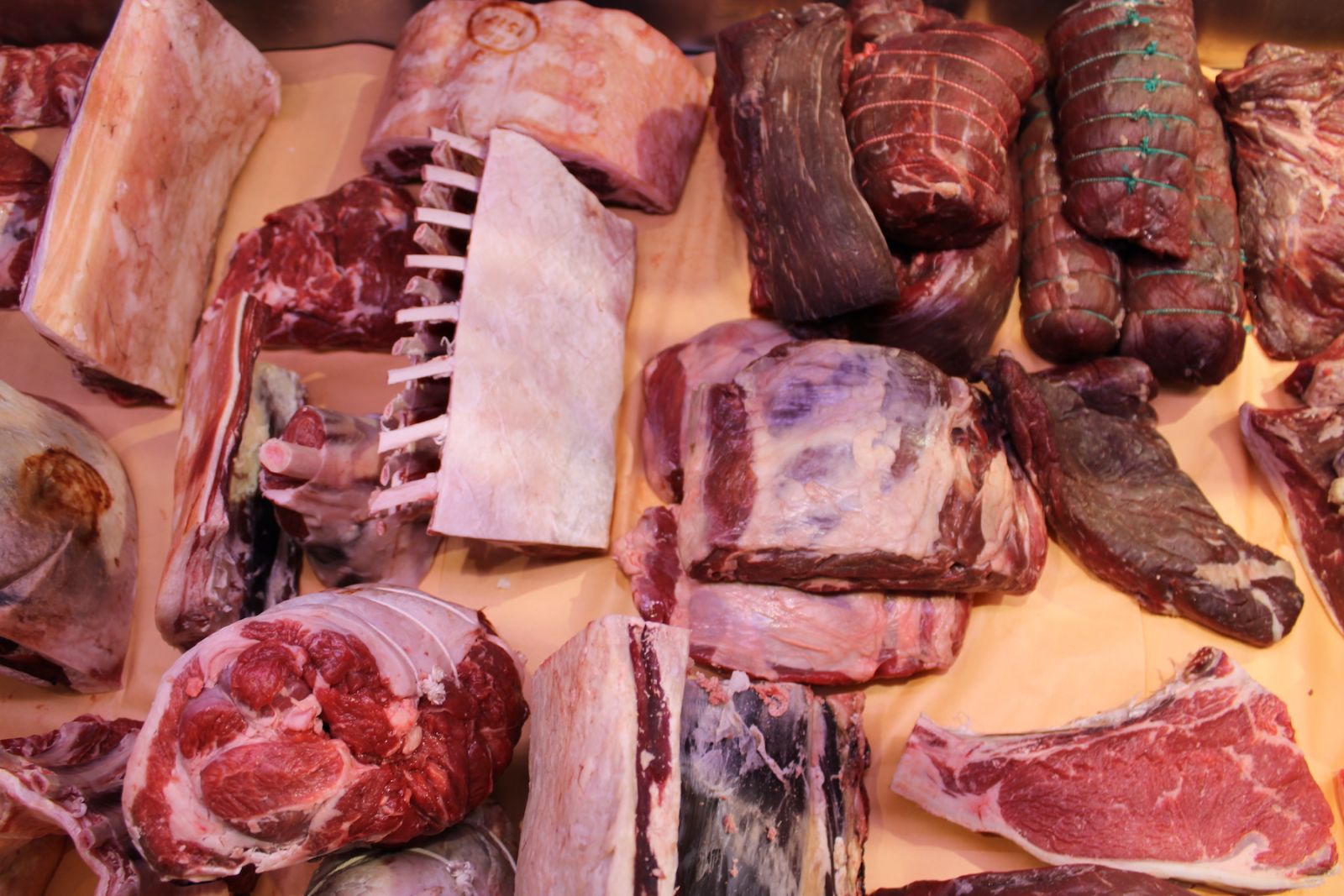 The Butchery shares a site with a huddle of other small-scale producers. As well as buying a cut of meat directly from the butcher counter, you can sample rich black pudding and deliciously smoky steak at Baern Café And Bakery next door. Their menu changes weekly, if not daily, depending on what’s coming out of the fields, veg patches and butchery that day. You’ll often find mutton, aged (of course) and cooked until tender in a fluffy focaccia sandwich, or Lincoln Red (the cow of choice at Balcaskie) beef shin, rose-pink in the middle, brought to life with sour and aniseedy fermented fennel. The difference in taste from a watery packet of diced beef from any supermarket is truly mind-blowing.
People like Simpson are resuscitating the art of butchery across Scotland. A carefully crafted cut of meat from a skilled butcher undoubtedly tastes better than any factory-hacked supermarket offering. According to both Simpson and Parsons, the difference in cost can be a lot less than you think and nothing is wasted. Their approach to butchery isn’t about hiding the mess, but showing the work and skill involved, honouring the animal and feeding people well, even as we choose to eat less meat overall.
Butchery At Bowhouse, St Monans, Anstruther.