The beautiful, plastic contradiction of Barbie
As a major new exhibition in Glasgow celebrates the world’s most famous doll, Greg Thomas ponders the beauty and the horror of Barbie
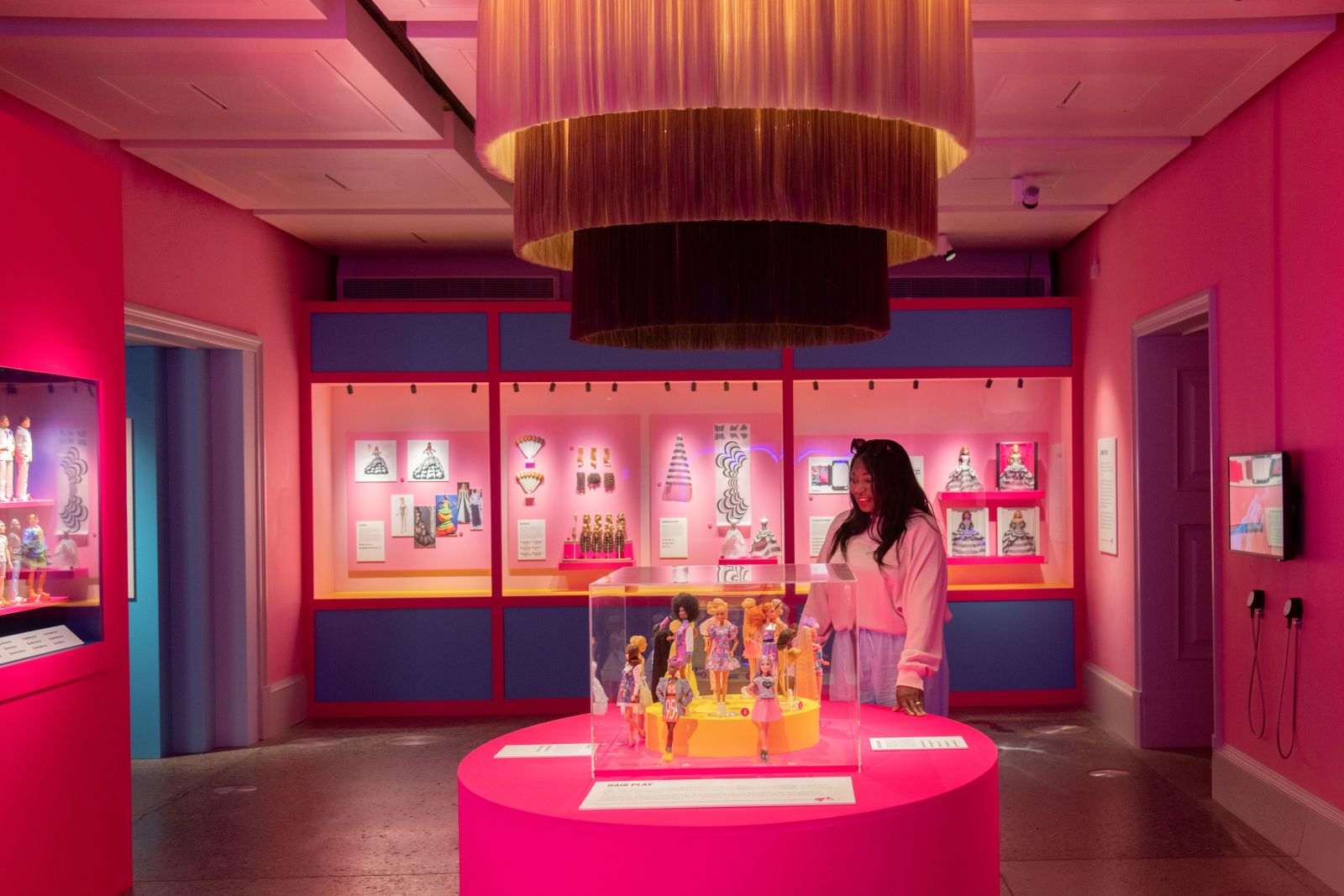
Why did they send a 40-year-old straight bloke who likes modernism to cover a Barbie show? I find myself asking this question as I shuffle past giant test tube-shaped display cases filled with skinny plastic dolls. They all look botoxed, though most of them predate by decades the cosmetic use of nerve-paralysing bacteria. It’s Glasgow Pride day and gaggles of mostly female pals in pink outfits and wigs have clearly planned their trip to Kelvingrove as part of a larger itinerary, ending at the march. There are mothers and young daughters too, including in the little playroom where a selection of period dolls are available to dress and pose, along with colouring pencils. I hand a robust-looking doll to my baby son who starts chewing on her head.
Barbie does nothing for me emotionally: as a brand, a cultural phenomenon or a work of Fordist mass design. But, of course, it is one of the most successful modern examples of all three. Moreover, much like when I was sent by this venerable outlet to review the Banksy show at Goma in 2023, the levels of delighted enthusiasm all around sweep me up to some extent. I also have to admit that, by the end of this visit, I found myself ruminating on all the beauty and horror of Barbie (an icon of neo-liberal feminism to rival Hillary Clinton) in a way that was bracing if not straightforwardly affirming.
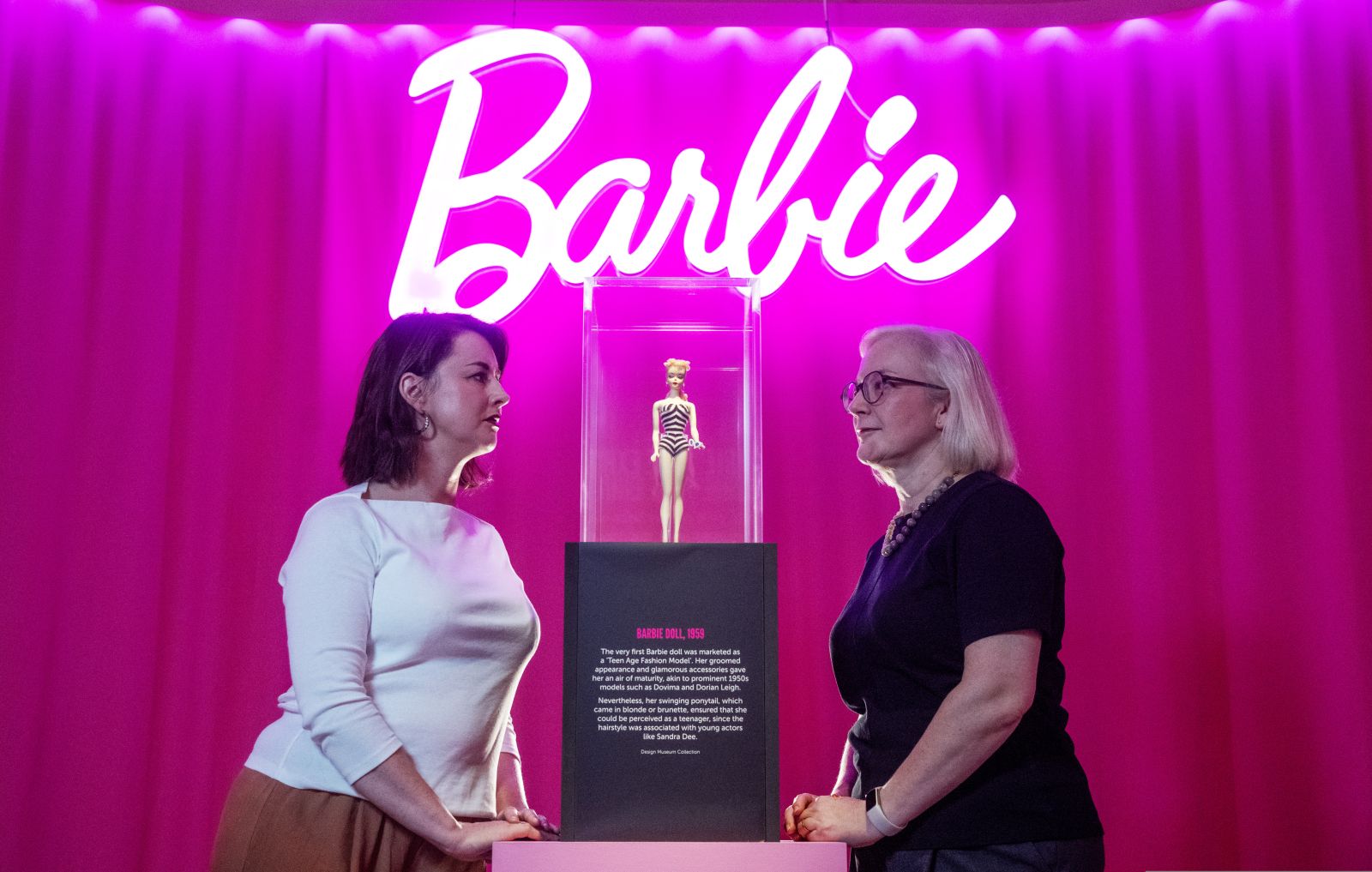
Barbie was launched in 1959, the creation of Ruth Handler, co-founder and first president of southern California’s Mattel toy company. She’d identified a gap in the market for a doll that looked like a grown woman rather than a baby, that allowed girls to fantasise about being adults rather than mothers: glamourous, fashionable, wealthy, independent, even working. Right from the start, Barbie embodied a paradoxical empowerment. Female success can be achieved on terms rigorously circumscribed by the male gaze and consumerist fantasy, she seemed to say. It involves looking good, marrying well, earning buckets. Given the bigotry of 1950s America, the soupçon of liberatory potential in there wasn’t nothing.
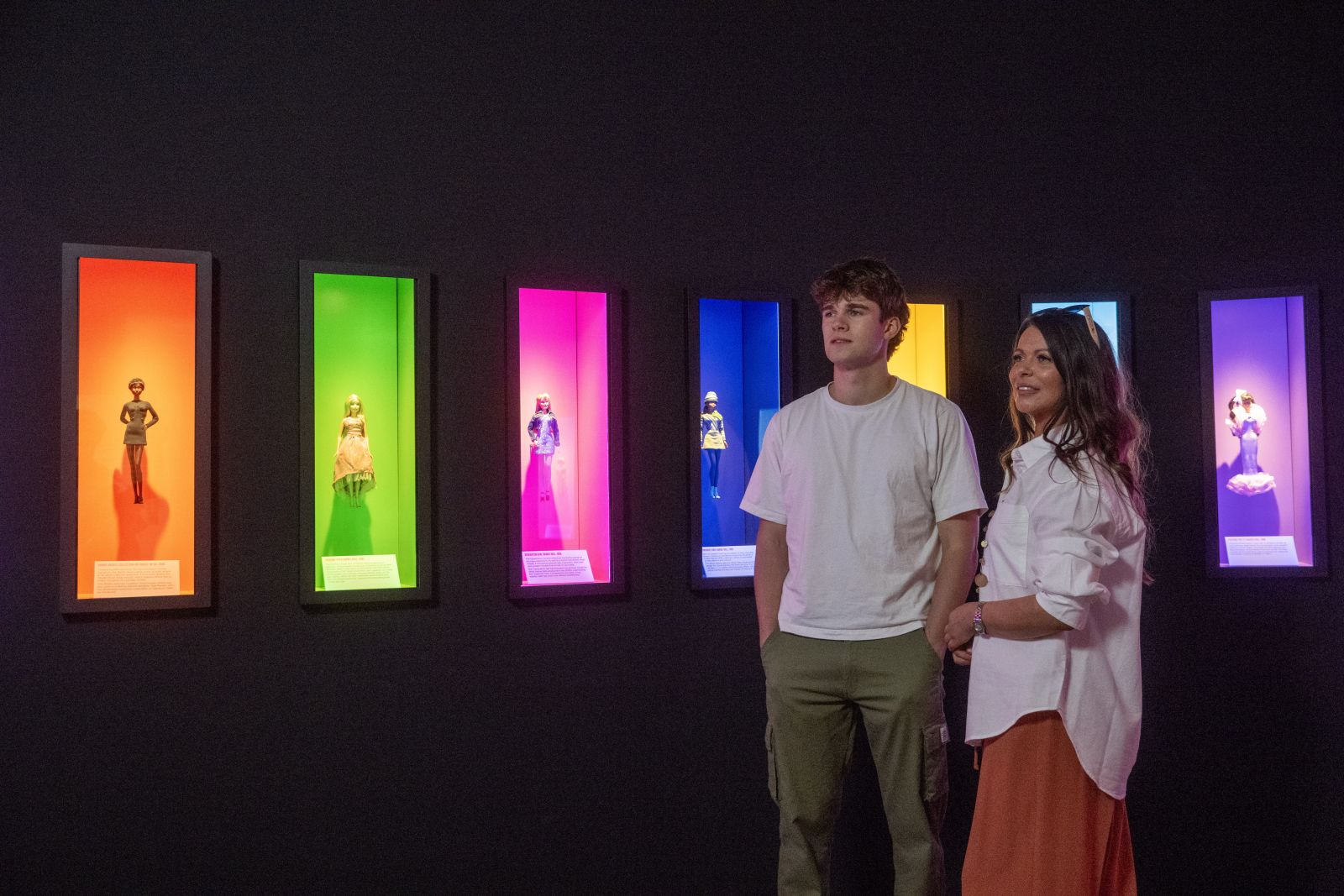
Over the decades since, Barbie has both absorbed the influence of the catwalk and fed back to it, with designers including Ralph Lauren and Vera Wang crafting outfits. Sixties dolls like Barbie’s British friend Stacey reacted to swinging Carnaby Street style and there’s even a sort of grunge-lite Barbie called Corduroy Cool from 1999. The architecture of Barbie’s Dream Houses has also channelled the zeitgeist over the years, reflecting So-Cal desert modernism and post-war modular building techniques.
More significantly, Barbie has presented a surprisingly progressive set of tropes for how womanhood might be defined. Christie, Barbie’s first black friend, hit the market in 1968. Since then, facial features and body shapes have been adapted to represent different ethnicities. The relaunched Barbie Fashionistas line of 2016 included thicker-set figures (though hardly fat) while a 2022 Laverne Cox Barbie celebrated black trans femininity.
Of course, all this has to be offset against the camply voluptuous original doll. More than that, the range of life choices presented to young girls through Barbie’s different styles, appearances, and occupations, from 1965’s astronaut Barbie to the Eco-Leadership Team Dolls of 2022, are all subtly reduced to forms of consumption and display. It’s healthy for children to project themselves into adult roles through play, but what if that play is all to do with what you’re wearing, what you could buy when you’re older? The irony of marketing a plastic doll to stop the planet being poisoned hardly needs pointing out.
It’s been said that over the course of the late 20th century, the conservatives won on the economy and the liberals won on culture. Barbie is the pneumatic embodiment of that tension. Girls, you can be whatever you want to be, but it will always feel like shopping.
Barbie: The Exhibition, Kelvingrove Art Gallery And Museum, until Sunday 18 October.