The Biba Story: 1964–1975 art review – Swinging with style
A new exhibition charting the rise and fall of fashion giant Biba successfully weaves crowd-pleasing nostalgia with touching tales of the brand’s impact on everyday people, says Allan Radcliffe
.JPG)
Not long after covid restrictions were lifted, I phoned my mum and caught her as she was leaving the Mary Quant exhibition at V&A Dundee with my auntie Edith. They were teens in the early-to-mid 1960s and, to my eternal envy, scored tickets to gigs by The Beatles and Rolling Stones at the city’s Caird Hall as rewards for putting up posters in the laundrette they worked in. They still loved 60s music and fashions and, when I spoke to them, they were reminiscing excitedly.
While Mary Quant’s miniskirts and berets were high end and would have been out of reach of these working-class girls, Biba, the fashion brand that began as a mail-order company and ran in varying forms from 1964 to 1975, was tailor-made for people of moderate means. Celebrities such as Cathy McGowan and Cilla Black may have put the company on the map, but Barbara Hulanicki, the designer who ran Biba alongside her husband Stephen Fitz-Simon and whose legacy is celebrated in this exhibition at Edinburgh’s Dovecot, had a clear mission. ‘I wanted to make clothes for people in the street, and Fitz and I always tried to get prices down, down, down.’
The wide-ranging display, curated by London’s Fashion And Textile Museum charts the rise and fall of Biba; from catalogue service through the opening of boutiques in Kensington and Brighton to the arrival of Big Biba, a seven-storey department store that sold everything from clothes to cosmetics, dog food, baked beans, nappies and even wine, packaged and labelled in gold art deco branding. It may seem far-out now to think of shoppers eating in the store’s Rainbow Room restaurant while being entertained by the likes of the New York Dolls and Liberace, but as this exhibition illustrates, at its height Biba was no ordinary shop or brand.
Yet these excesses, borne out of Hulanicki and Fitz-Simon’s zealous desire to expand while keeping prices low, would ultimately lead to Biba’s demise. Disagreements with the board led to the designer’s departure and in 1975 the company ceased trading. The precariousness of this business model is a theme that runs through the exhibition. In a video interview, we hear Hulanicki, now in her 90th year, wryly discussing an iconic pink gingham dress, of which 17,000 were sold through the Biba Postal Boutique in 1964, establishing the company’s reputation. The profit on each garment was tiny. ‘But all those ha’pennies add up,’ she laughs.
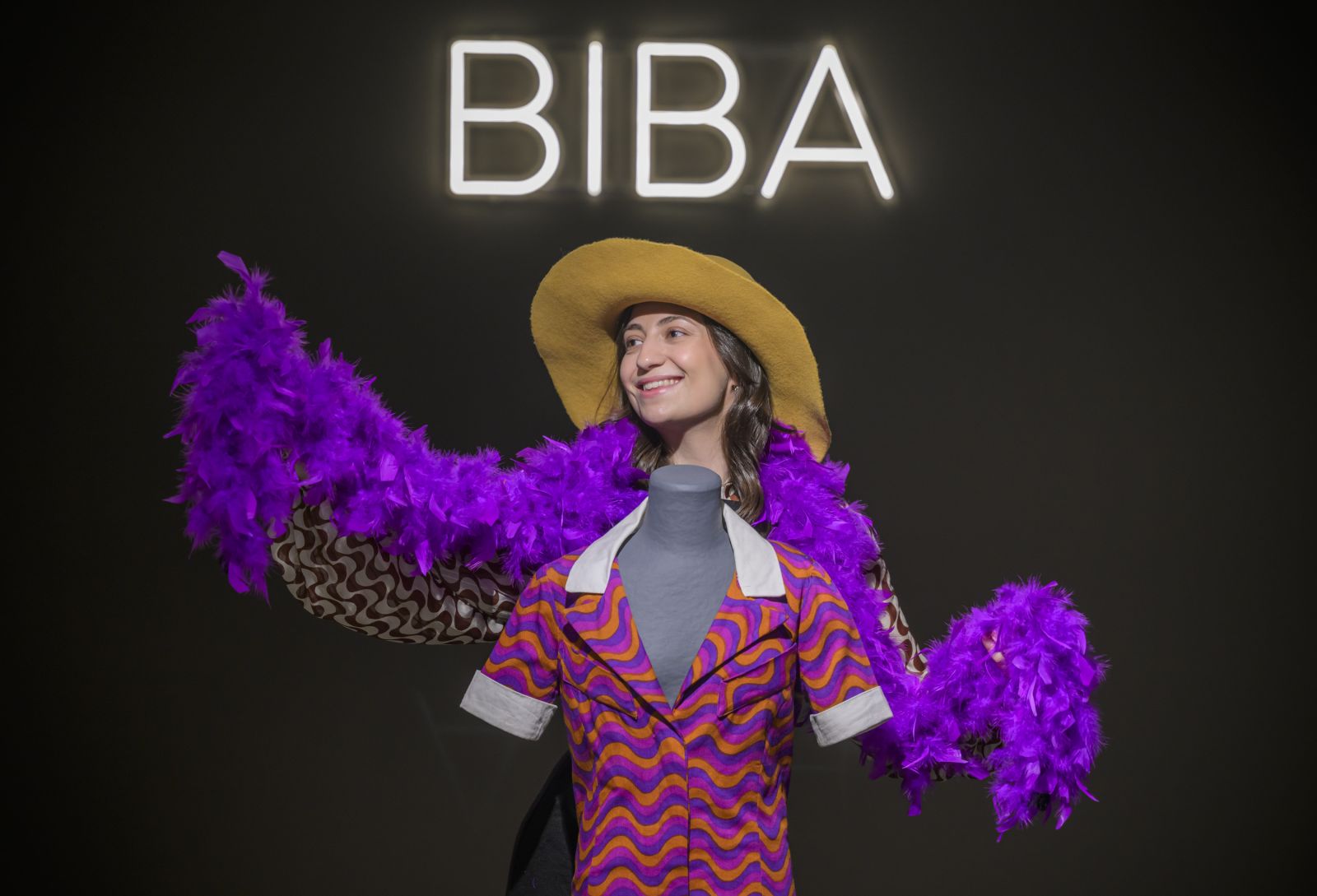
Financial ups and downs aside, the appeal of this show, which sprawls across the ground floor of the Dovecot complex, is nostalgic, even for those who weren’t around at the time (it’s striking how many young people are in attendance). Panels arranged around the room tell the Biba story chronologically, alongside photographs, cuttings and Hulanicki’s characterful sketches and illustrations. Inevitably, though, it’s the clothing displays that really make the space pop. Hulanicki sourced fabrics from all over Europe, and in her vibrant use of colour, tactile cloth, psychedelic swirls and signature floral patterns, you get a tangible sense of how Swinging Britain must have seemed to burst suddenly out of the fatigue and austerity of the post-war years.
.JPG)
The most moving part of the show is entitled ‘Bring Oot Your Biba’, which includes objects lent by members of the public. Accompanying written testimonies confirm the thrill and pleasure of people poring over the catalogue, ordering and awaiting the arrival of a new pirate blouse or tunic dress. There are even photographs of women wearing Biba on their wedding day. My late mum, who lived through the age of Biba, would have greatly enjoyed this exhibition. And I love it too, for the generous way in which it connects an intriguing chapter in the history of fashion design (so often viewed as remote from ordinary lives) to the people who wore the clothes.
The Biba Story: 1964–1975, Dovecot Gallery, Edinburgh, until Saturday 27 June.