Do Not Pass Go theatre review: Uncovering the woman behind Monopoly
Jordan & Skinner celebrate Lizzie Magie, the feminist inventor whose progressive board game became a fortune-making property empire
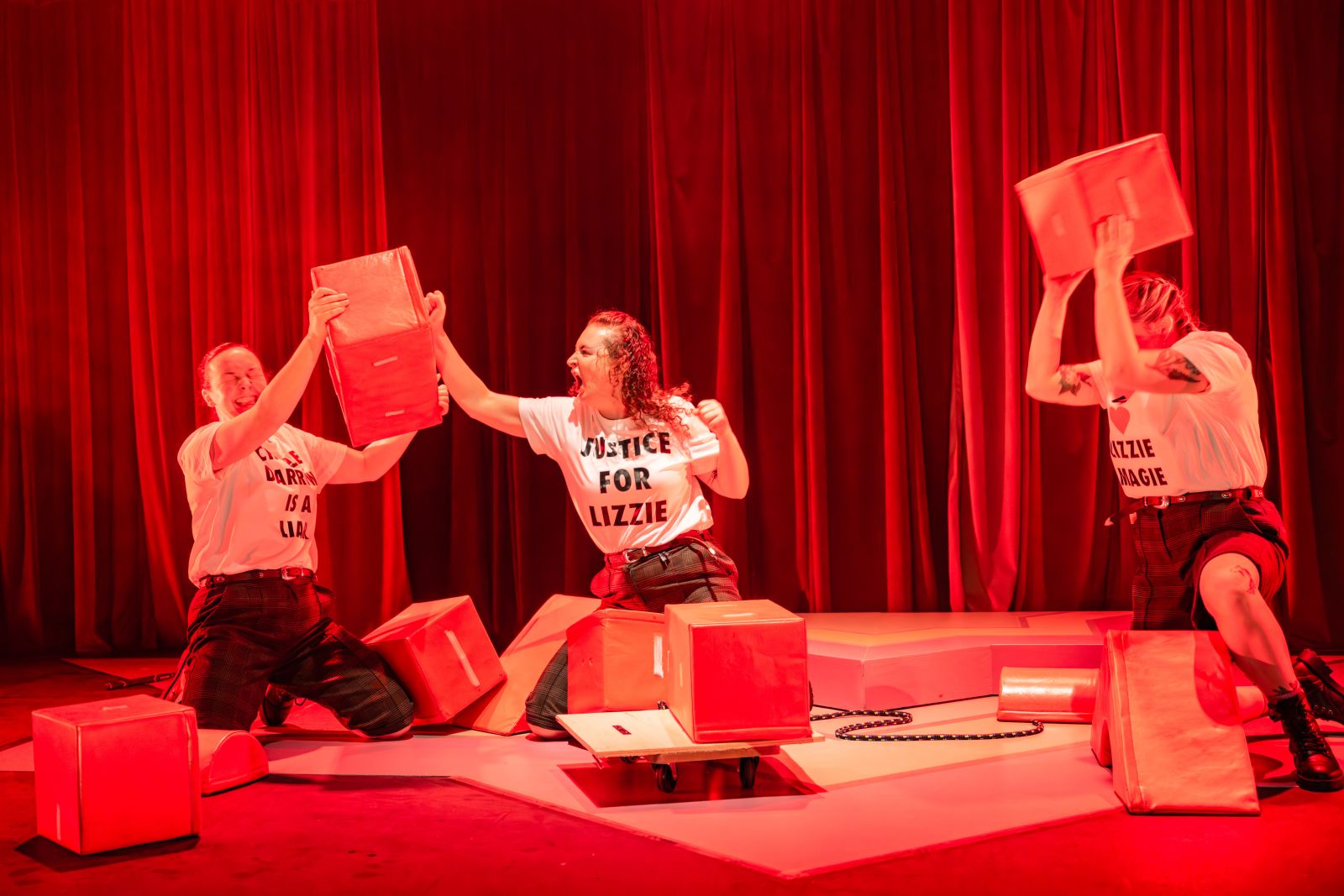
Lizzie Magie is hardly a household name, but her achievements and legacy have come into sharper focus in recent years. Born in Illinois in 1866, the pioneering feminist supported herself as a typist before creating The Landlord’s Game, a board game aimed at illustrating progressive taxation and redistribution of wealth. As this playful devised piece from Jordan & Skinner shows, there is a rich irony in the fact that her creation was the basis for Monopoly, a paean to amassing wealth that made millions for the men who patented and distributed it while Magie went penniless.
Performed by a cast of three (Amy Helena, Melanie Jordan and Diane Thornton), Do Not Pass Go is less a conventional biography than a string of engaging vignettes, set to music and incorporating British Sign Language, that illustrate episodes from Magie’s life. The emerging popularity of the original game among students and Quaker communities is demonstrated using an assortment of tables and chairs. Characters from Monopoly are brought in to explain the single tax system developed by Henry George, of which Magie was a proponent. The Parker Brothers, to whom Charles Darrow sold the game without crediting Magie, are depicted as predatory monsters while Darrow appears in the guise of a silent movie villain.
The show, directed by Caitlin Skinner, tends towards overstatement at times, with spoken passages so cyclic as to be almost surplus to requirements. There is, however, something infectious about the more inventive storytelling aspects. Although the piece could be tighter, it feels appropriate that such a pioneering figure should be celebrated with an unconventional staging, bringing in politics and economics while pointing out contemporary resonances with a light touch.
Dundee Rep, Tuesday 3 November; Citizens Theatre, Glasgow, Thursday 5–Saturday 7 November; reviewed at Studio Theatre, Edinburgh; picture: Mihaela Bodlovic.