James Nelmes on the King's Theatre refurb: 'You’re always in the shadow of your forebears'
Edinburgh’s much-loved King’s Theatre is all set to swing open its doors again after a multi-year, multi-million pound refurb. Mark Fisher looks back at the building’s illustrious history, talks to key players about its rebirth and finds out what audiences can expect as the curtain goes up once more
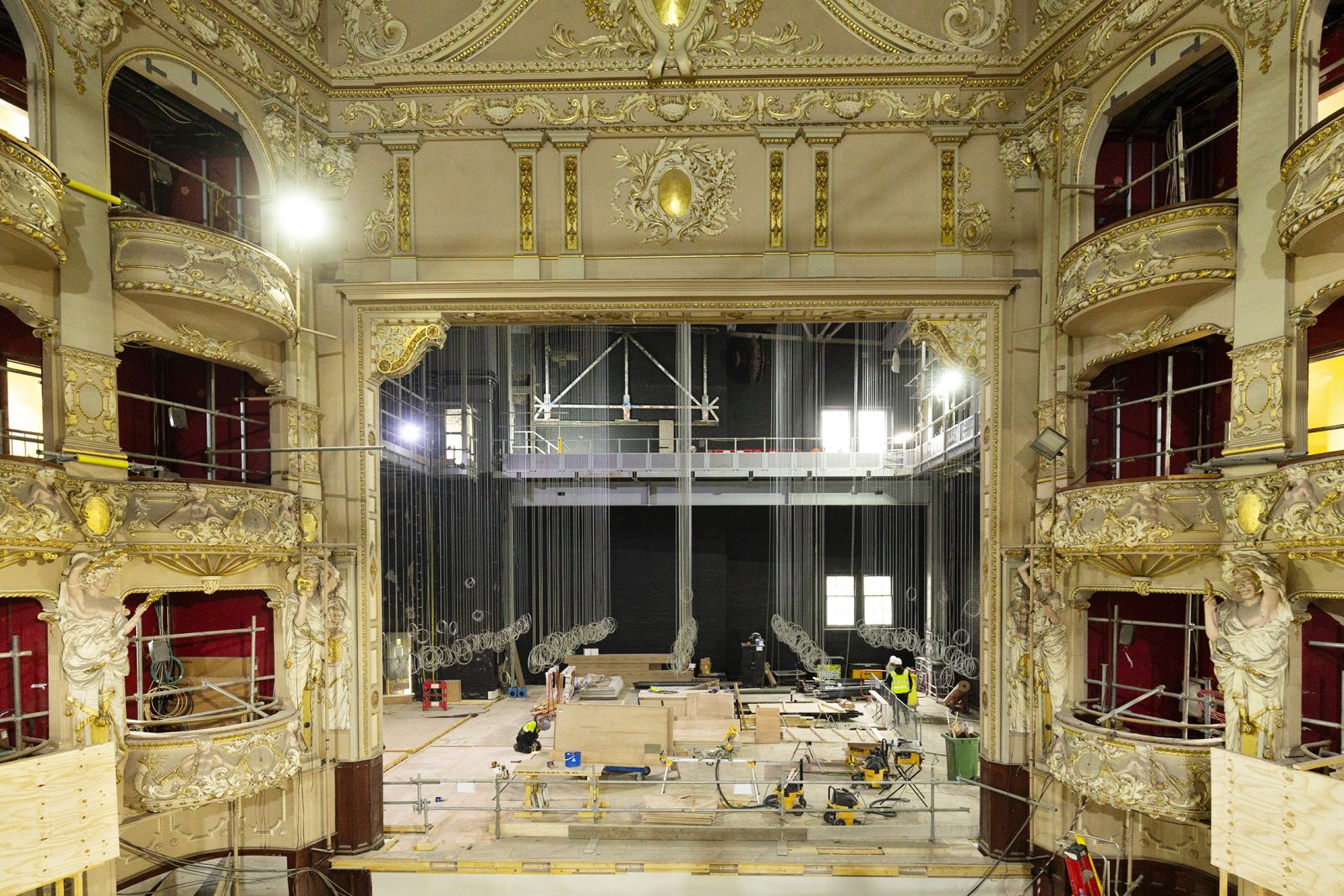
Edinburgh’s King’s Theatre is all things to all people. Want evidence? Just look at the first two shows after the Tollcross venue officially reopens following its three-and-a-half-year refurbishment. You could hardly have a bigger contrast. On the one hand, there is a recording of the podcast Wanging On in which Graham Norton and Maria McErlane dispense unreliable advice about life’s little dilemmas. Should be a hoot. On the other, there is Angels In America, Ivo Van Hove’s staging of Tony Kushner’s ‘gay fantasia on national themes’. It is performed in Dutch and lasts five hours. Should be great too.
Post-August, it’s the same: everything from a hip-hop musical to modern dance and a Yoruba retelling of Macbeth (Crown Of Blood). ‘We want to still have that mix of genres for the King’s,’ says Fiona Gibson, chief executive of Capital Theatres which operates the King’s as well Edinburgh’s Festival Theatre. ‘Our mantra is always to have a show for someone at least once a year.’ She points out that 90,000 residents contributed to the fundraising campaign for the refurbishment. The building is seriously loved. ‘It’s known as the People’s Theatre for a reason,’ she says.
With the refit completed, those people will have more space to enjoy the venue. That is notably the case in the expanded circle bar that now commands views up Home Street thanks to the relocation of toilets and removal of its frosted-glass windows. ‘When the light comes round in the evening, because it’s west facing, you get beautiful sunlight in those rooms,’ says James Nelmes, the architect from Bennetts Associates responsible for the scheme. ‘For pre-show drinks, it should be a great experience.’
Downstairs, there is a daytime café where the box office used to be and, on upper circle level, a magnificent gin bar, previously neglected. The thin strip of a bar beneath the stalls now has extra depth after they dug into the ground behind it. Up in the attic, with the rafters exposed, is a creative engagement studio for workshops, school groups and heritage projects. It is still recognisably the King’s, but there should be less queuing and not so much of a squash.
.jpg)
‘It’s a strong responsibility for all of us because we just know how loved the building is,’ says Gibson. That responsibility applies to the Edinburgh International Festival as much as it does to year-round programming. It was here, in the inaugural festival of 1947, that Princess Margaret and her sister, the future Queen, attended the Glyndebourne staging of Verdi’s Macbeth. If it were not for the lights fusing in the orchestra pit, it would have been the most glamorous of evenings.
Glyndebourne was a fixture for most of the next decade, establishing the King’s as the EIF’s home for opera, the place where Maria Callas sang in 1957 and Joan Sutherland performed in 1960 and 1961; the latter was the year John Gielgud directed Benjamin Britten’s A Midsummer Night’s Dream, two years before Britten himself conducted The Beggar’s Opera, starring his partner Peter Pears. The list of cultural giants (both performers and directors) continued into the 1990s: Claudio Abbado, Daniel Barenboim, Placido Domingo, Alexander Gibson, Jonathan Miller, Peter Ustinov…
From 1985, the EIF increasingly used the King’s for theatre and dance. Here you could see productions by Ingmar Bergman and St Petersburg’s Gorky Theatre, not to mention, in a surreal cross-cultural collision, Michael Clark dancing to the music of The Fall live on stage in 1988’s I Am Curious, Orange. Visits by choreographers Mark Morris, Pina Bausch and Bill T Jones in subsequent years were just as sensational.
‘Theatres are wonderful buildings to work with,’ says Nelmes. ‘The fact that they’re culturally important and beloved by lots of people is lovely.’ The famous names who have come this way are legion. Kenneth Branagh directed Siobhan Redmond, Emma Thompson and Richard Briers in A Midsummer Night’s Dream and King Lear. Yukio Ninagawa directed Alan Rickman and Suzanne Bertish in Tango At The End Of Winter. It is the theatre where Peter Stein staged his mighty productions of Chekhov’s Uncle Vanya and David Harrower’s Blackbird, and where Alan Cumming entered upside down (and bare bummed) in The Bacchae. Hosting world-class drama is one thing, but the King’s has a longer history as a palace of popular entertainment. From the 1930s until the 60s, The Half Past Eight Show (later Five Past Eight Show) could run for as long as 28 weeks over the summer with variety stars including Jimmy Logan, Rikki Fulton and Stanley Baxter.
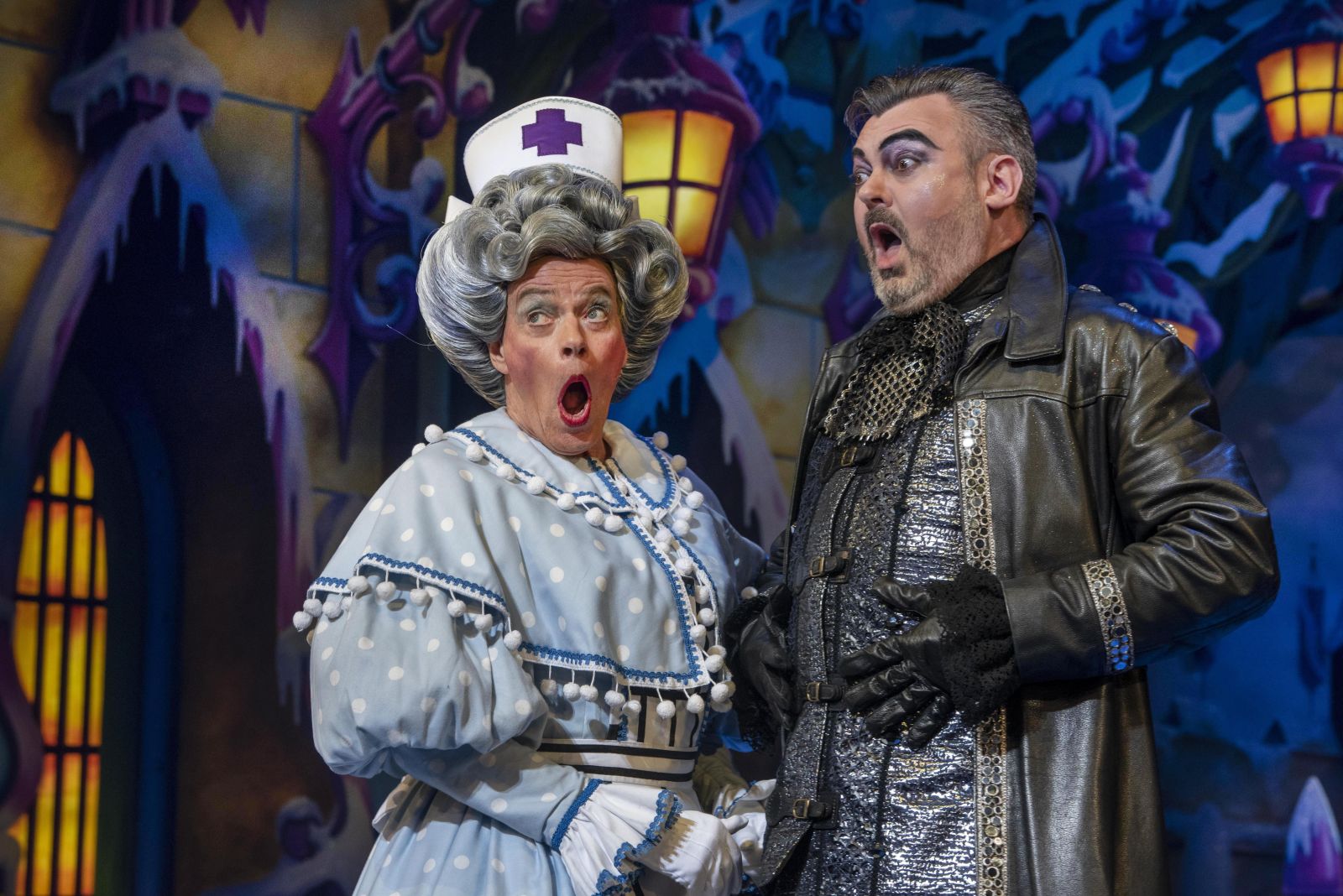
The Howard & Wyndham chain sold the theatre to Edinburgh City Council in 1969, but thanks to Baxter, the tradition of lavish Scottish pantomime was kept alive. The inheritors of that tradition include the current dream team of Allan Stewart, Grant Stott and Jordan Young, who will be itching to get back to the King’s for The Adventures Of Pinocchio this Christmas. ‘The panto cast have loved all the space at the Festival Theatre, but their spiritual home is the King’s,’ says Gibson. ‘They’re really looking forward to being back.’
Built by a syndicate of Edinburgh businessmen, the King’s was designed by Scottish architects James Davidson and JD Swanston and opened in December 1906 with a production of Cinderella. That it had six routes from street to seat reflected the social make-up of the era. ‘It depended on ticket price and, effectively, which class of society you came from,’ says Nelmes. ‘You only ever came through the front door and up the alabaster stair if you were wealthy enough to have circle seats or to be at the front of the stalls. We have changed the architecture to reflect our time and more democratised access to the arts.’
Now, in our egalitarian age, the side doors are gone. Where previously there were fire escapes, there are now staircases and lifts. The watchword for the redevelopment is accessibility. From the sloping pavement at the front to the step-free corridors backstage, the King’s is no longer an obstacle to navigate. ‘You’re always in the shadow of your forebears but you can’t be cowed by that,’ says Nelmes. ‘You have to be bold and brave, and think big ideas. I met a descendant of JD Swanston and she said, “surely as an architect, you want to knock it down and start again?” But not at all. You’ve got this wonderful asset to work with, so why would you do that? It’s nice to feel you’re part of that lineage, keeping things going.’
A refurbishment in the 1950s pushed back the wall of the upper circle, while reducing capacity from 2500 to 1500. That was further reduced to 1330 with a refit in 1985. The latest changes include the return of the back wall to its original position, the removal of two rows in the upper circle, and the installation of a control room, bringing the capacity down to 1125. ‘In comparison to the West End theatres, it’s still quite a big theatre,’ says Gibson. ‘The West End producers are super excited because they have really missed that size of venue here in the city.’
Those producers may reap the benefit of a fly tower that is 4.5 metres taller, making room for bigger sets, and the levelling of the 1:22 raked stage, allowing for a wider range of touring productions, notably dance and physical theatre. ‘It means we can improve productivity,’ says Gibson. ‘Get-in and get-out times will be much faster.’ After such a long process, how will she feel when opening night finally arrives? ‘It’s going to be very emotional. It’s been an amazing privilege.
For full details of shows at King’s Theatre in August and beyond, visit the Capital Theatres website; main picture: Anneleen Lindsay.